

Japanese clothing is rich with history, symbolism, and seasonal tradition. Two of the most recognizable garments are the kimono and the yukata. At first glance, they may look similar: both are T-shaped robes wrapped left over right and secured with a sash called an obi. However, they differ in formality, fabric, season, and occasion.
Key differences between a yukata and a kimono
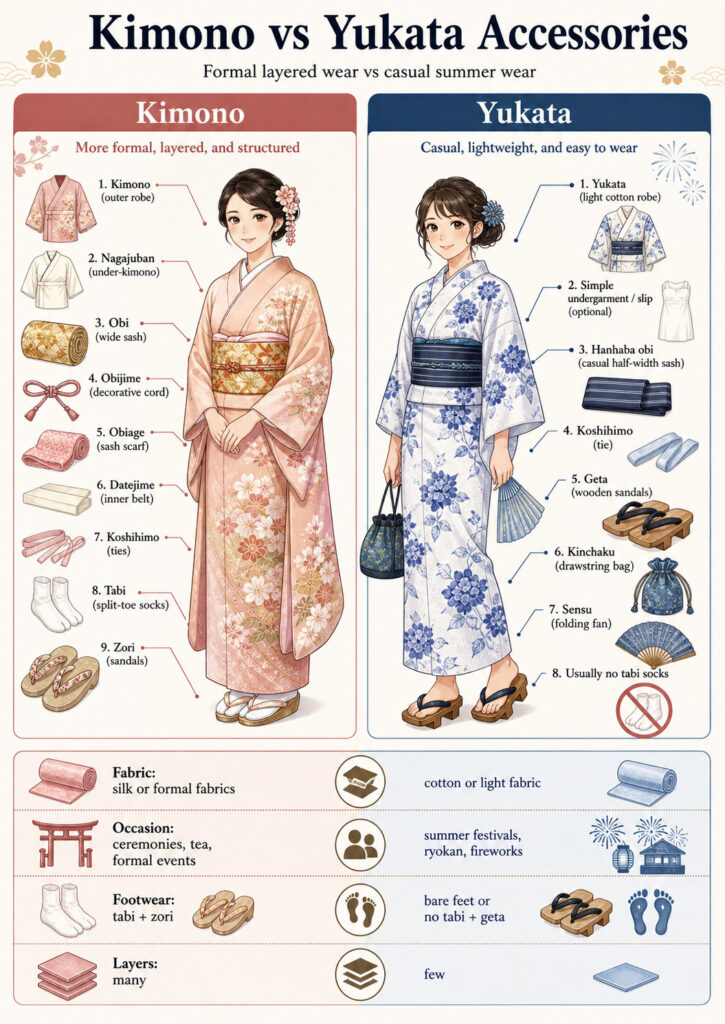
A kimono is usually more formal, layered, and ceremonial. A yukata is lighter, more relaxed, and closely connected with summer, festivals, bathing culture, and everyday comfort. They may share the same visual family, but they have very different moods.
Think of the kimono as refined and ceremonial, while the yukata feels breezy, casual, and festive.
What is a kimono
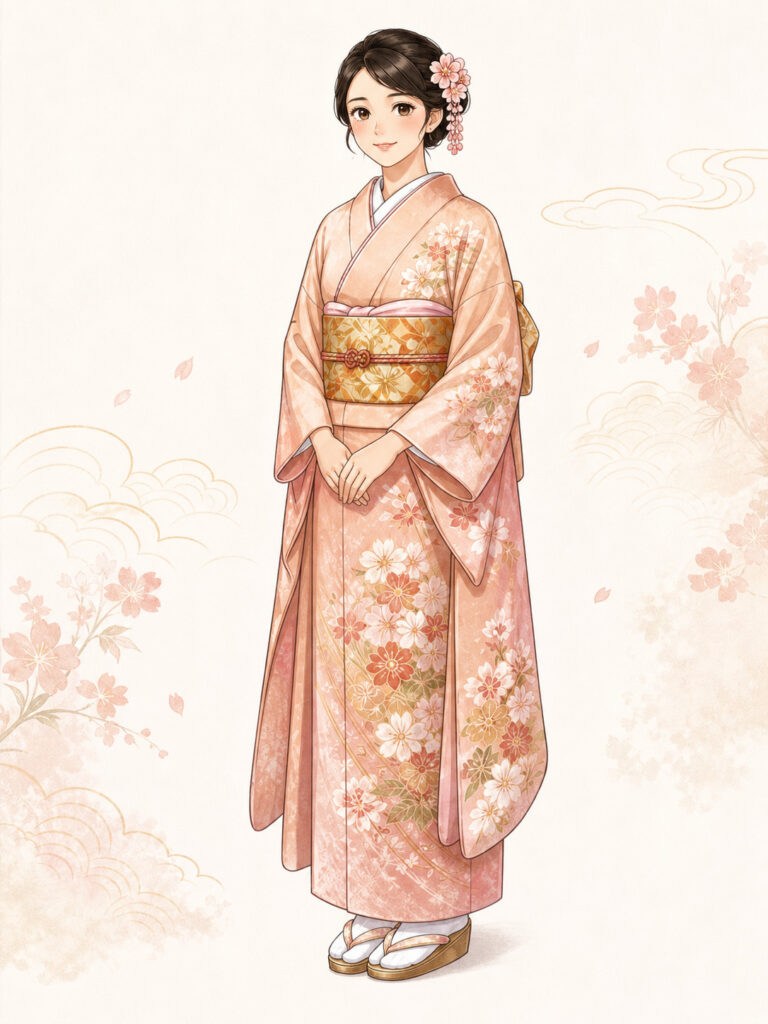
A kimono is the more formal and traditional garment. The word “kimono” literally means “thing to wear,” but today it usually refers to a full-length robe made from silk or other fine fabrics. Kimono are often worn for important events such as weddings, tea ceremonies, graduations, coming-of-age ceremonies, and other formal celebrations.
Depending on the occasion, the style of kimono can change greatly. Some are modest and understated, while others are richly decorated with embroidery, seasonal patterns, family crests, or luxurious woven designs.
One of the most important features of a kimono is its structure. A kimono is not simply thrown on like a robe. It is carefully arranged, folded, layered, and secured. Underneath, it is usually worn with a nagajuban, or under-kimono, which helps protect the outer garment and creates a clean collar line. Several ties and accessories are used to keep everything in place.
What is a yukata
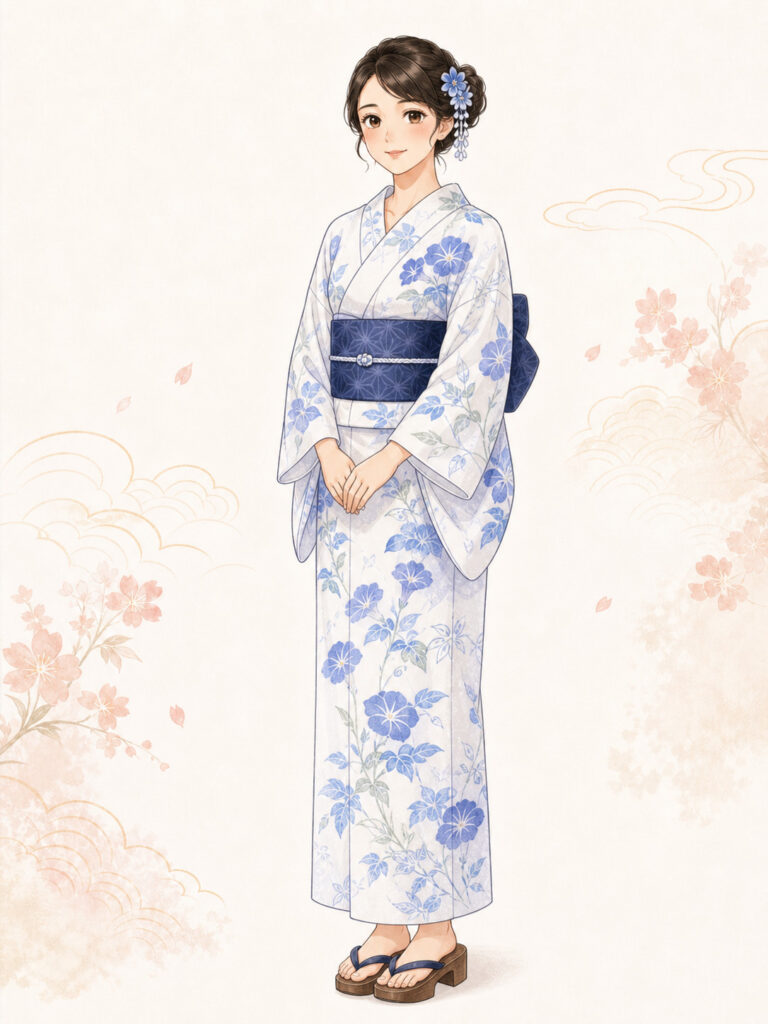
A yukata, on the other hand, is a more casual type of Japanese robe. It is usually made from cotton or lightweight fabric, making it comfortable in warm weather.
Yukata are commonly worn during summer festivals, fireworks displays, at traditional inns called ryokan, and after bathing in hot springs. Compared with kimono, yukata are simpler, lighter, and easier to wear.
Unlike the kimono, a yukata is not usually heavily layered. It is easier to put on, easier to move in, and easier to care for. The overall feeling is relaxed rather than formal.
Yukata patterns also tend to feel lively and seasonal. You might see flowers, fireworks, waves, dragonflies, fans, goldfish, or bold geometric prints. While kimono patterns can also be bright and expressive, yukata designs often have a playful summer energy.
The Biggest Difference: Formality
The easiest way to understand the difference is through formality.
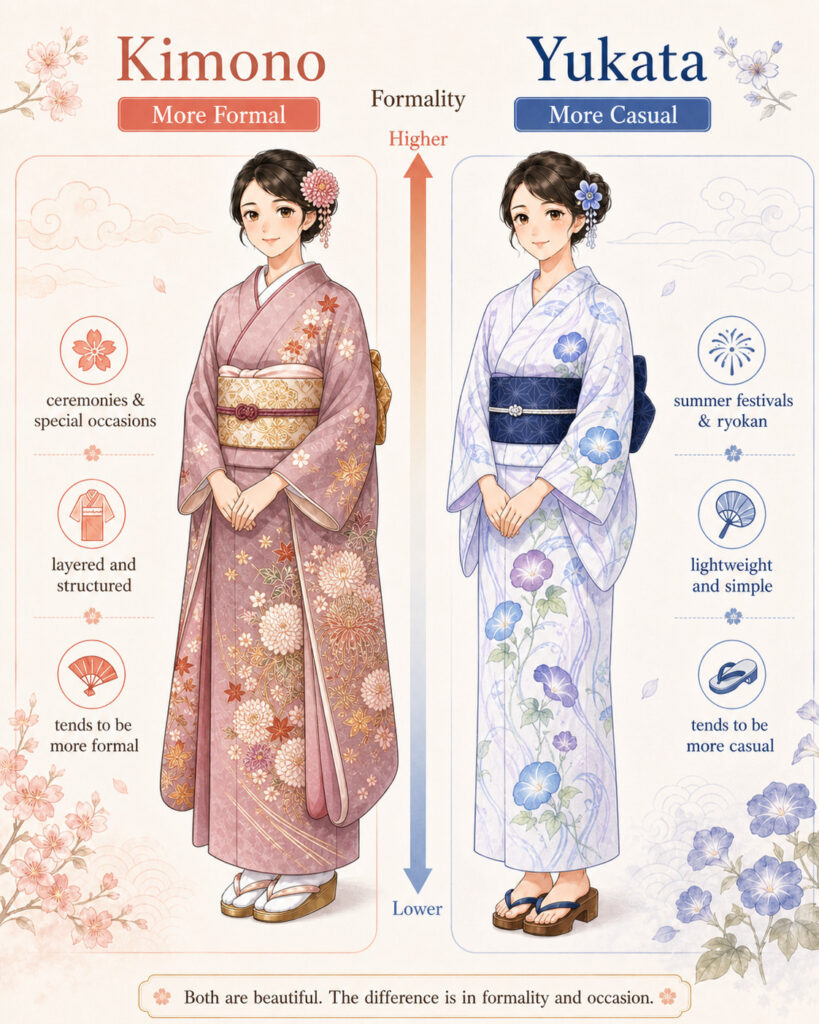
A kimono can be formal, semi-formal, or casual depending on its fabric, sleeve length, pattern, color, and accessories. Some kimono are suitable for weddings and major ceremonies, while others are more understated. Even so, kimono generally carry a more polished and traditional feeling.
A yukata, by contrast, is casual. It is not meant for formal ceremonies. It is the garment you wear to enjoy a summer evening, walk through a festival, relax at a ryokan, or take part in a light cultural experience.
In simple terms:
Kimono = formal or traditional occasions.
Yukata = casual, summer, and relaxed occasions.
Fabric and Layers
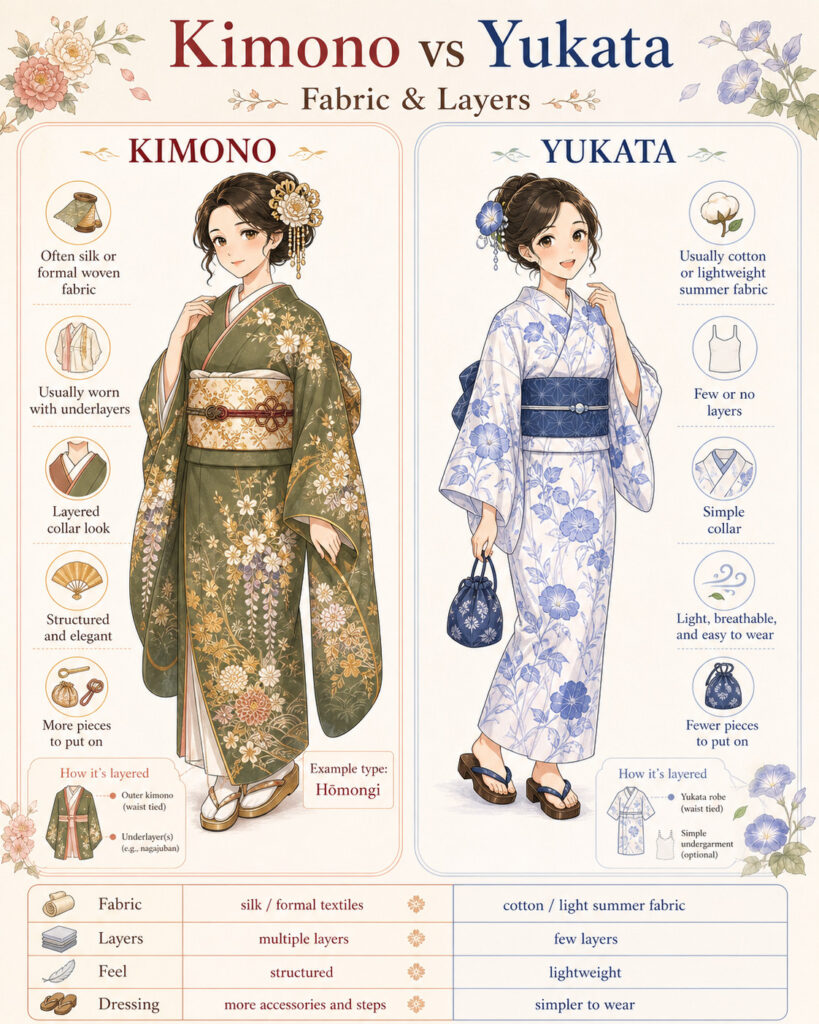
Fabric is another major difference. Kimono are often made from silk or other high-quality materials, although modern versions may also use wool, cotton, or synthetic fabrics. They can be lined or unlined depending on the season, and they are usually worn with underlayers.
Yukata are usually made from cotton or lightweight fabric. They are typically unlined and worn with fewer layers (or as they are). This makes them breathable and practical for hot weather.
The difference in fabric affects not only comfort, but also appearance. A kimono often looks more structured and formal. A yukata looks softer, lighter, and more relaxed.
How to Tell Them Apart
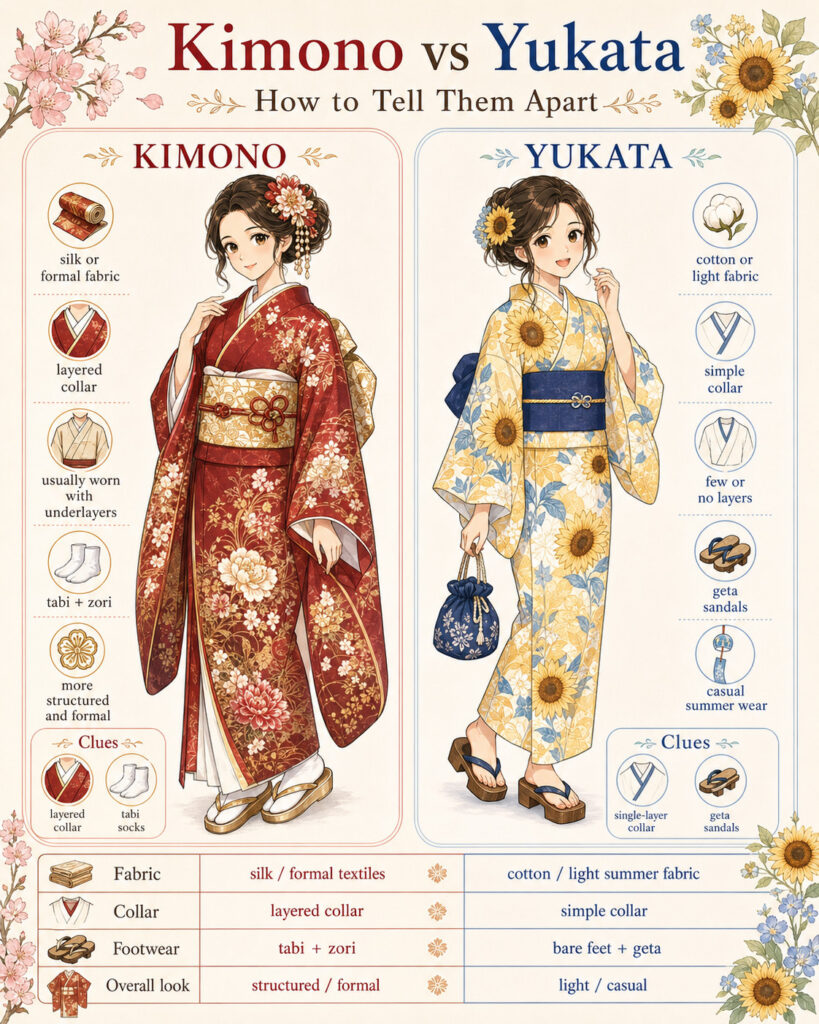
If you are trying to identify whether someone is wearing a kimono or a yukata, look at the details.
A kimono usually has a more structured collar because it is worn with an under-kimono. You may notice a second collar layer underneath. The obi may also look more elaborate, and the overall outfit often includes tabi socks and zori sandals.
A yukata usually has a simpler collar, a more casual obi, and is often worn with geta sandals. It is also common to wear yukata without tabi socks, especially in summer.
The overall impression is different too. Kimono often look formal and composed. Yukata look light, casual, and easygoing.
Kimono Accessories
A full kimono outfit usually includes several accessories that help shape and secure the garment.
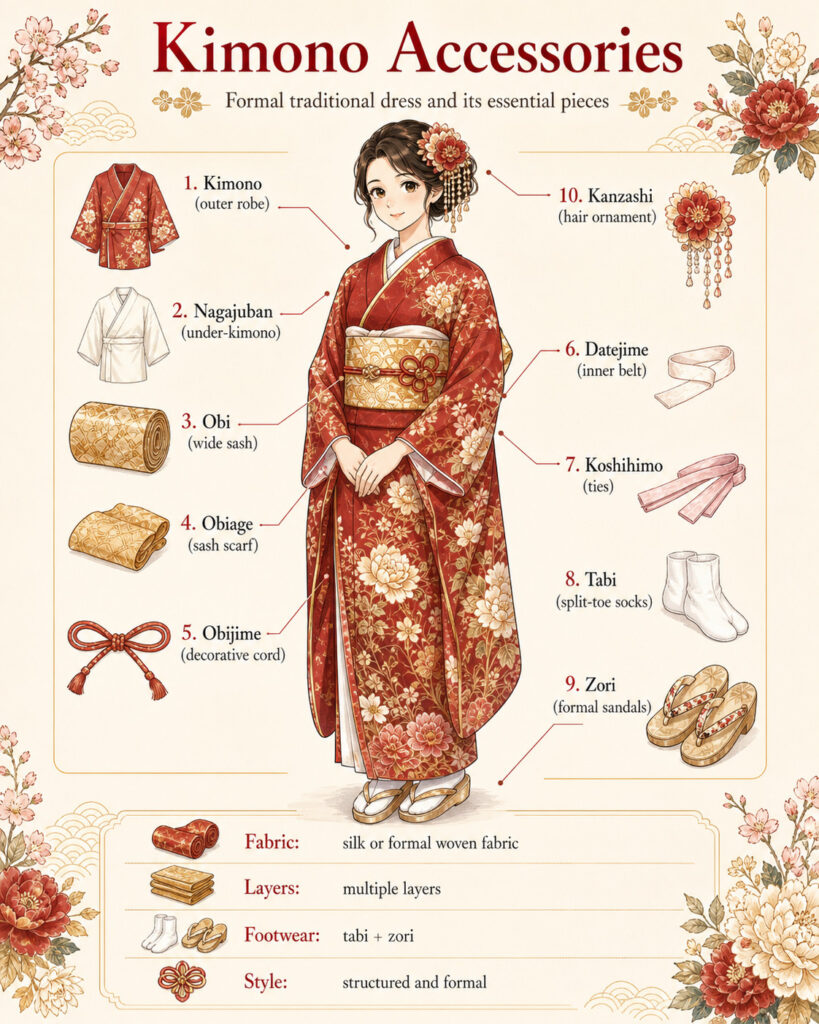
The nagajuban is worn underneath the kimono. The obi is the wide sash wrapped around the waist. The obijime is a decorative cord tied over the obi, while the obiage is a scarf-like fabric tucked into the top of the obi. Other items, such as datejime and koshihimo, are used underneath to hold the layers neatly in place.
For footwear, kimono are commonly worn with tabi, which are split-toe socks, and zori, traditional sandals.
These accessories are part of what gives kimono their refined, layered appearance.
Yukata Accessories
A yukata outfit is much simpler.
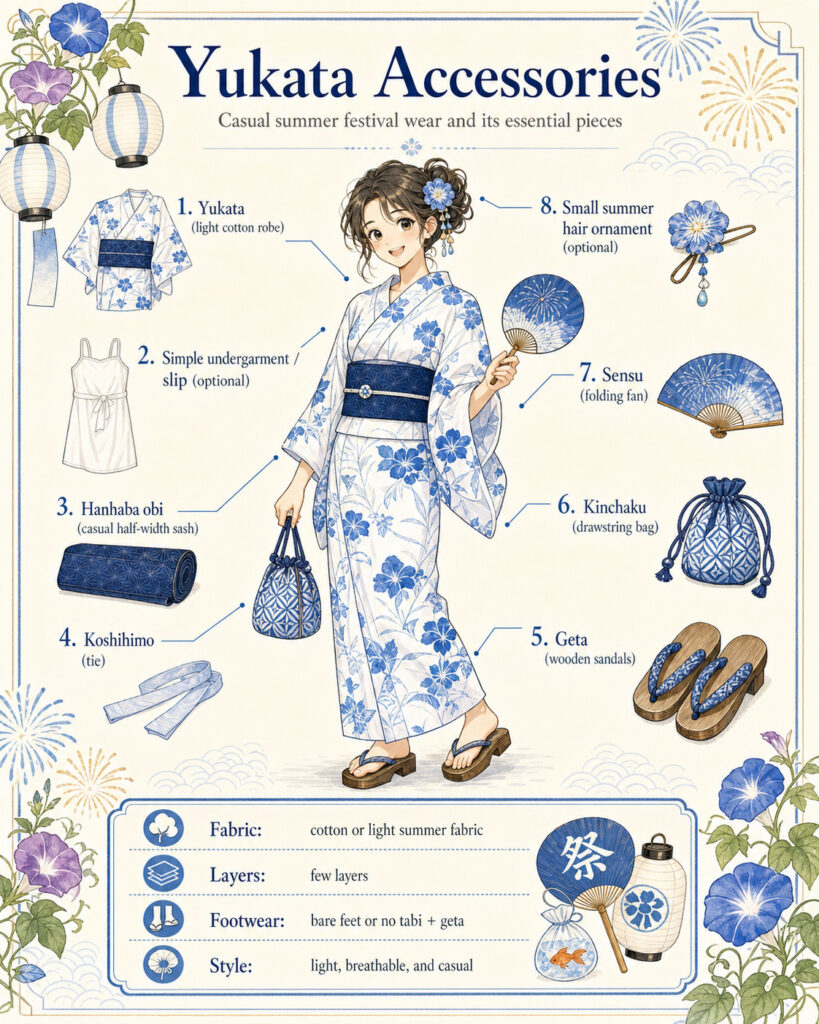
The main accessory is usually a hanhaba obi, a casual half-width sash that is easier to tie than many formal kimono obi. A koshihimo may be used to secure the yukata underneath.
Yukata are often paired with geta, wooden sandals that make a distinctive sound when walking. Many people also carry a kinchaku, a small drawstring bag, and a sensu, or folding fan, especially during summer festivals.
Compared with kimono accessories, yukata accessories are fewer, lighter, and more casual.
When to Wear a Kimono
A kimono is best suited for occasions where tradition, formality, or ceremony matters. These include weddings, tea ceremonies, graduations, coming-of-age celebrations, formal visits, cultural performances, and special photographs.
Wearing a kimono can feel like dressing for an important moment. It is not only about appearance, but also about respect, presentation, and tradition.
When to Wear a Yukata
A yukata is best for relaxed settings. It is perfect for summer festivals, fireworks nights, hot spring trips, ryokan stays, and casual cultural events.
For many people, the yukata is also the easiest introduction to traditional Japanese clothing. It is lighter, simpler, and less intimidating to wear than a full kimono.
Final Thoughts
Yukata and kimono may share a similar shape, but they tell different stories.
In simple terms, a kimono is formal, layered, and often made from finer fabric, while a yukata is casual, lightweight, and usually worn in summer. Both garments are important parts of Japanese culture, but they serve different purposes. Understanding the difference helps people appreciate not only their beauty, but also the traditions and occasions connected to them.
Both garments are beautiful in their own way. The difference is not that one is better than the other; it is that each one fits a different occasion, season, and feeling. Understanding that difference makes both garments easier to appreciate.
Ready to experience authentic Japan? Begin your search for an authentic ryokan with onsen.
