Overview
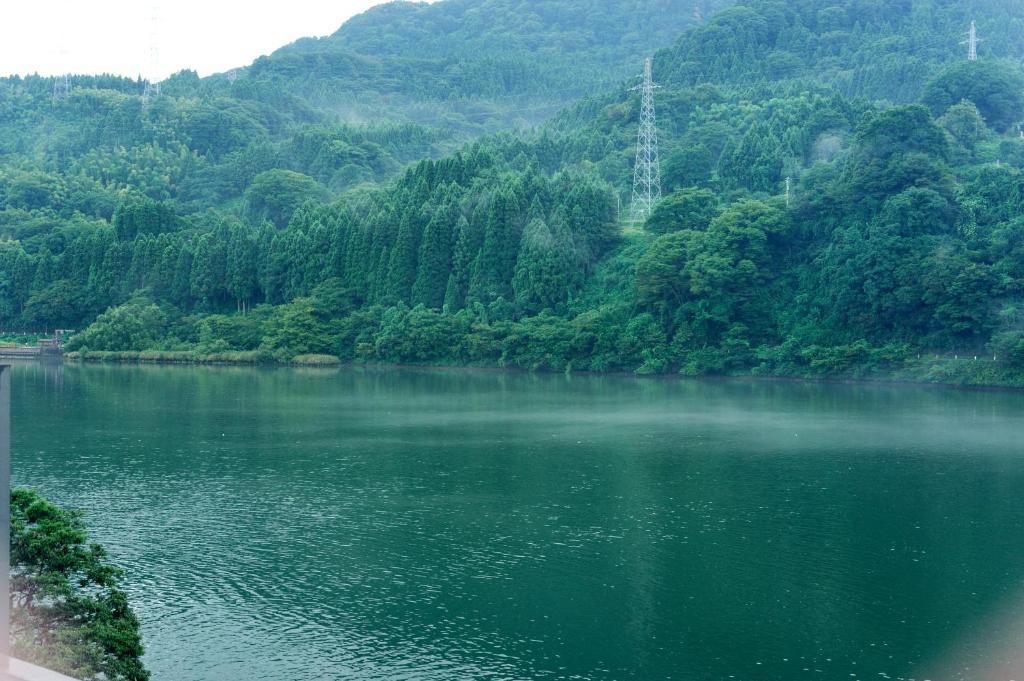
Stay beside the Jinzu River at River Retreat Garaku, a 23-room art hotel in Kasuga, Toyama City. The riverside setting brings together natural hot spring bathing, Toyama-focused cuisine, Japanese craftsmanship, and contemporary art within one small retreat.
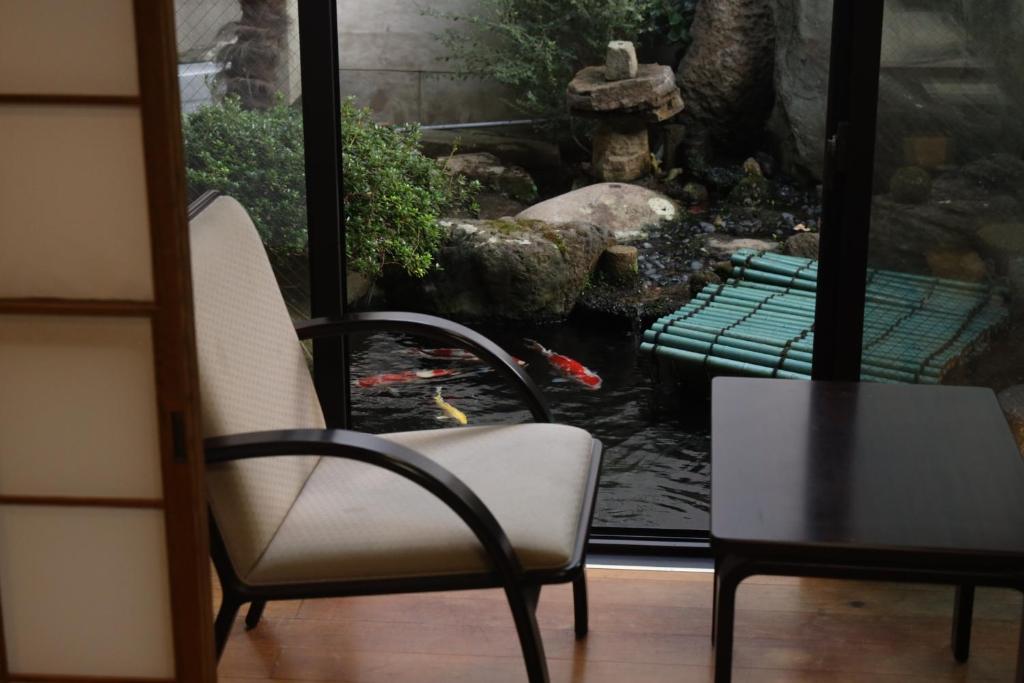
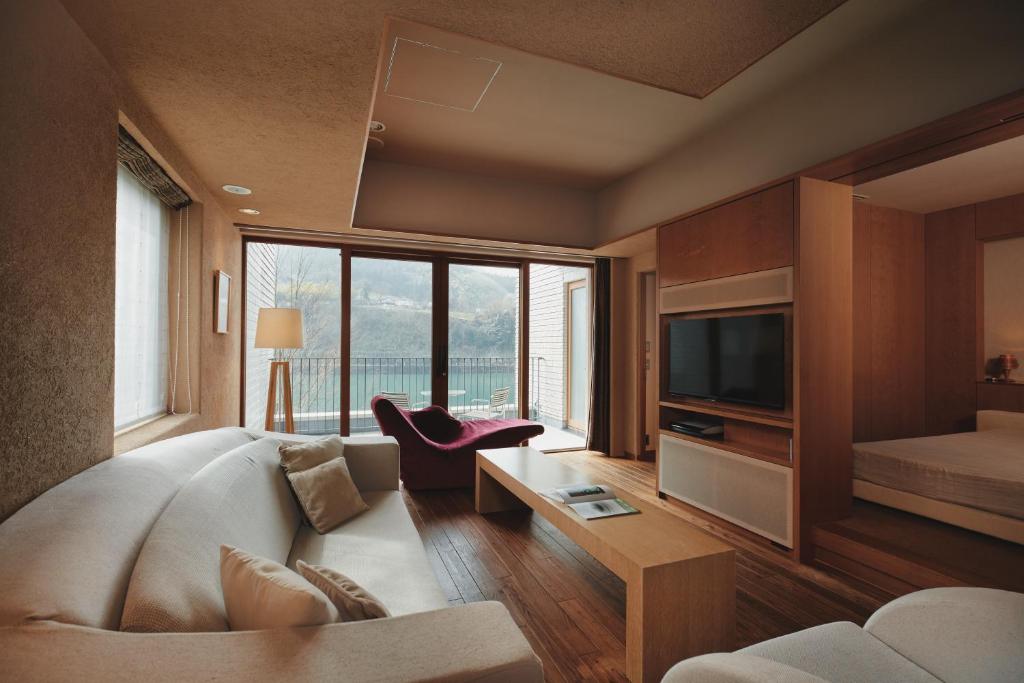
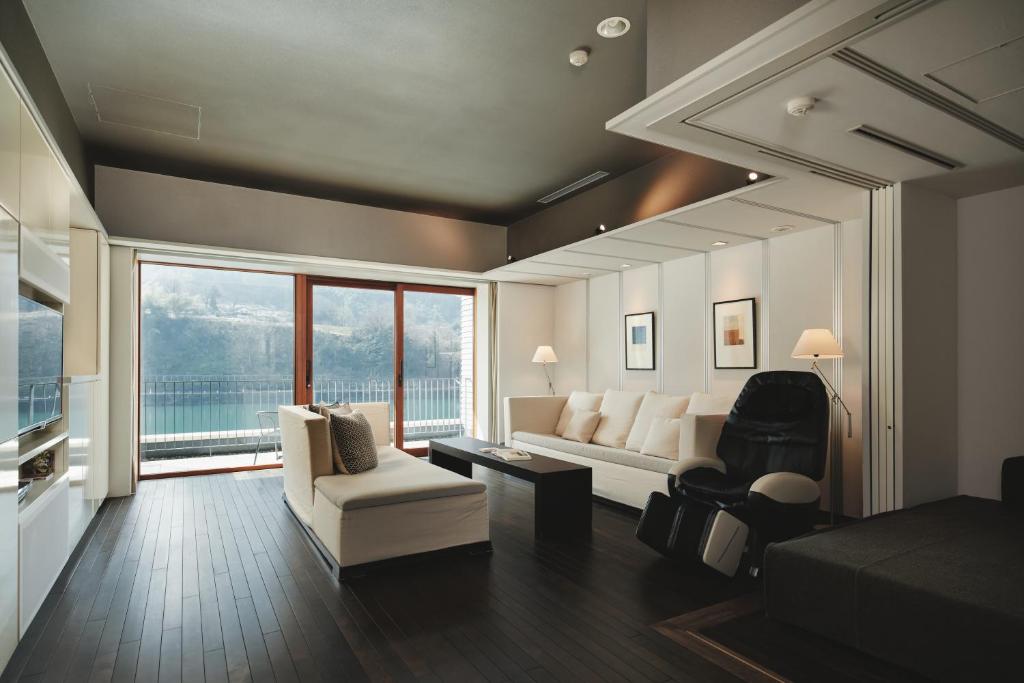
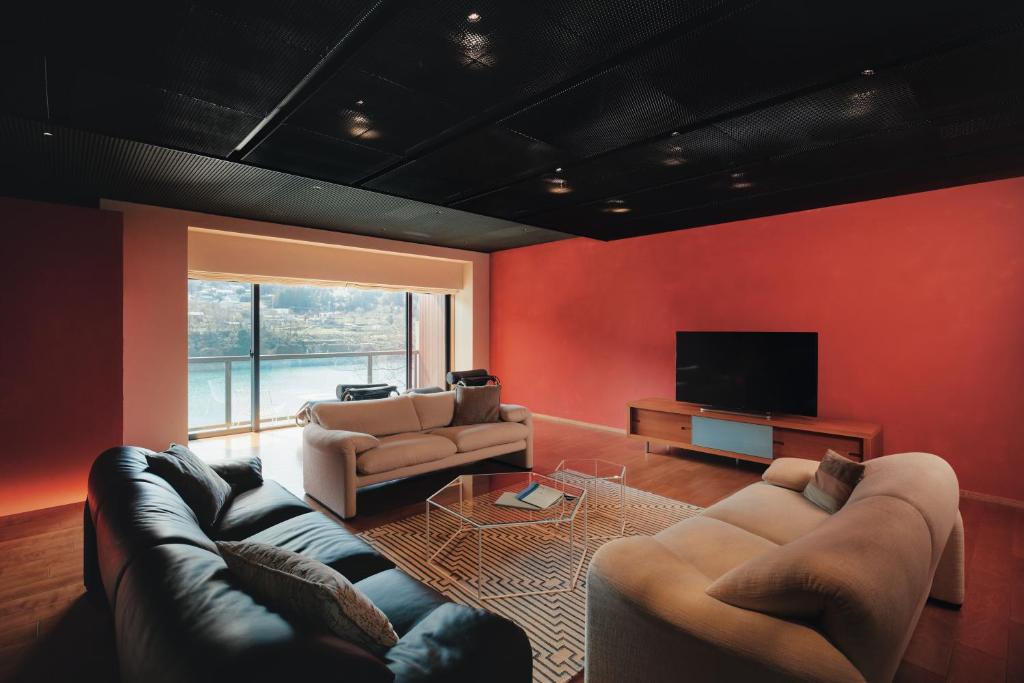
Every room follows a different concept, so your experience changes according to the space you choose. Some rooms place the river directly beyond the windows, four suites include private Kasuga Onsen baths, and two suites add their own dry sauna.
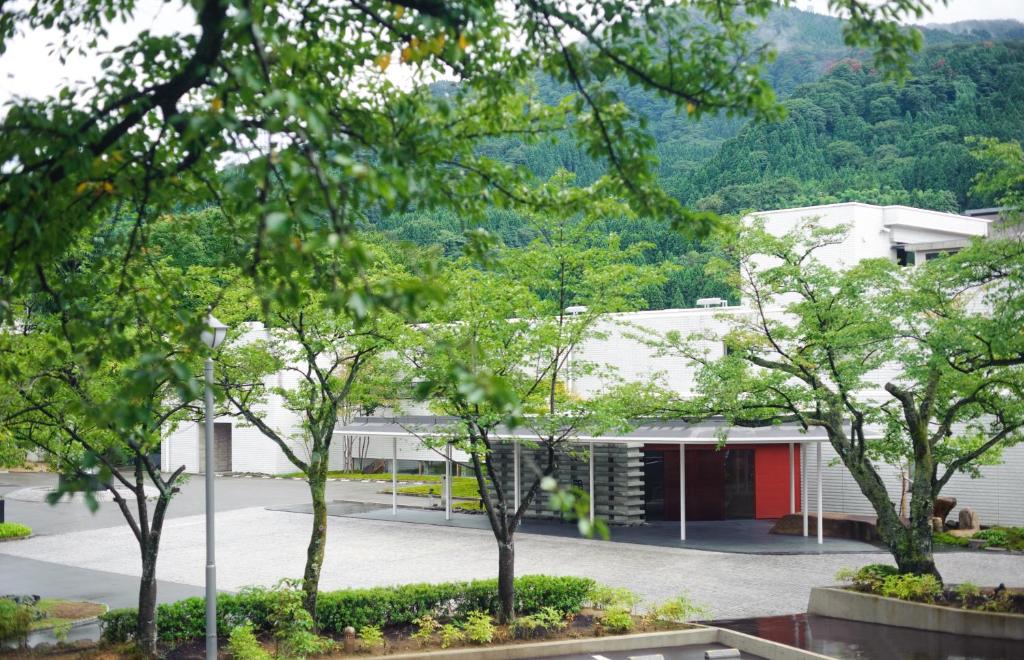
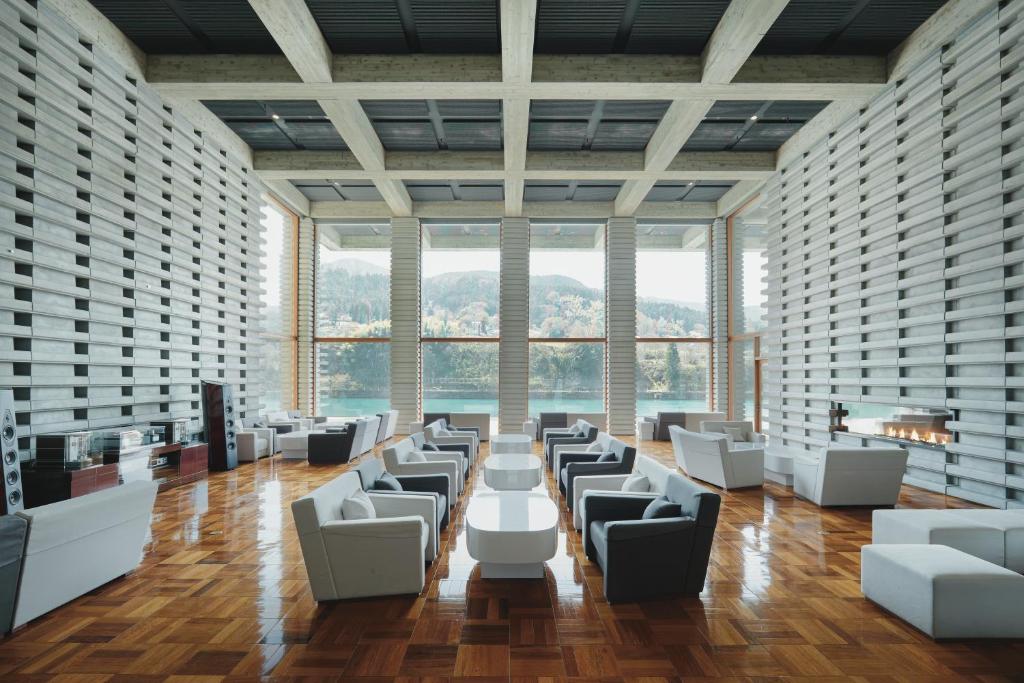
The Main Building opened in 2000, while architect Hiroshi Naito designed the Annex, which opened in 2005. Its concrete walls draw inspiration from traditional azekura storehouse construction, while covered walkways lead through the building toward the rooms, courtyards, and art.
You can spend your stay moving between the art collection, Trésonnier’s Toyama cuisine, the public hot spring baths, the overnight-only Spring Day Spa, and the landscape of the Jinzu Gorge.
Accommodation
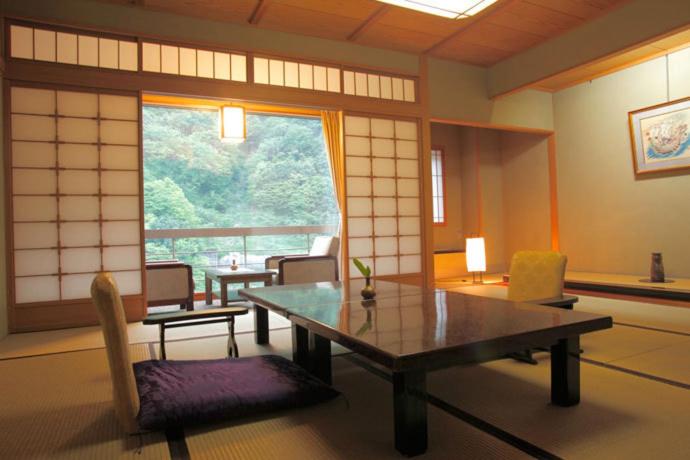
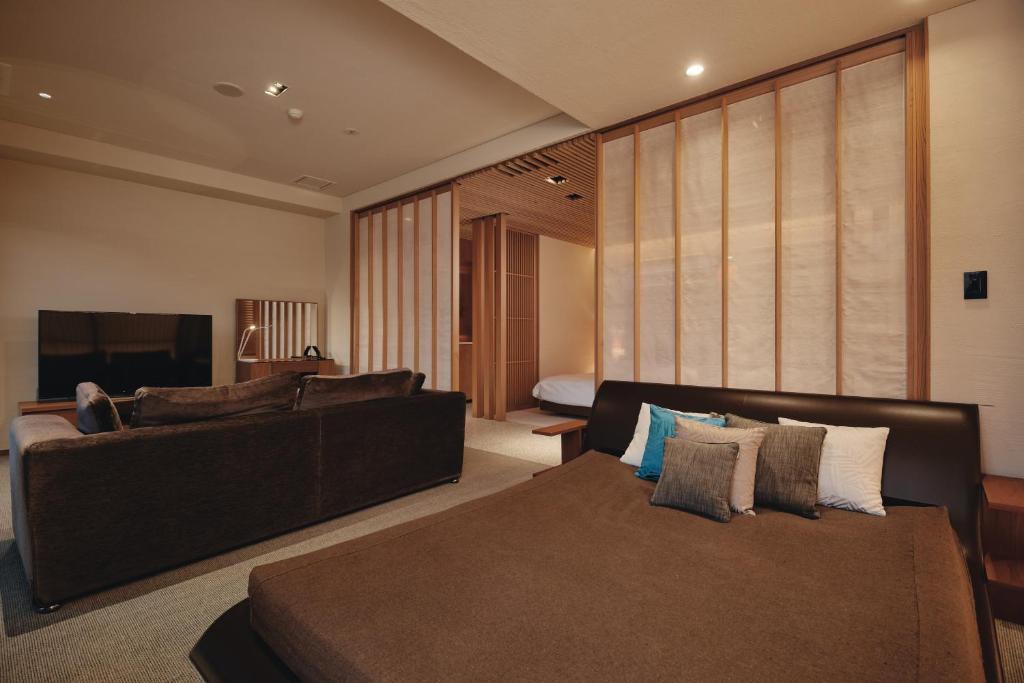
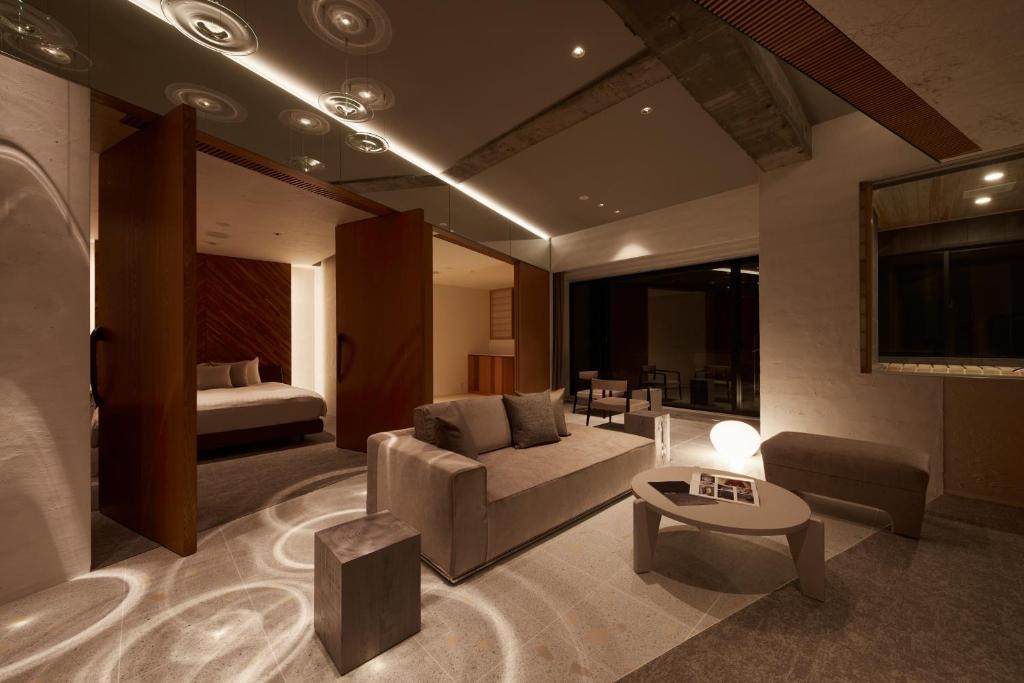
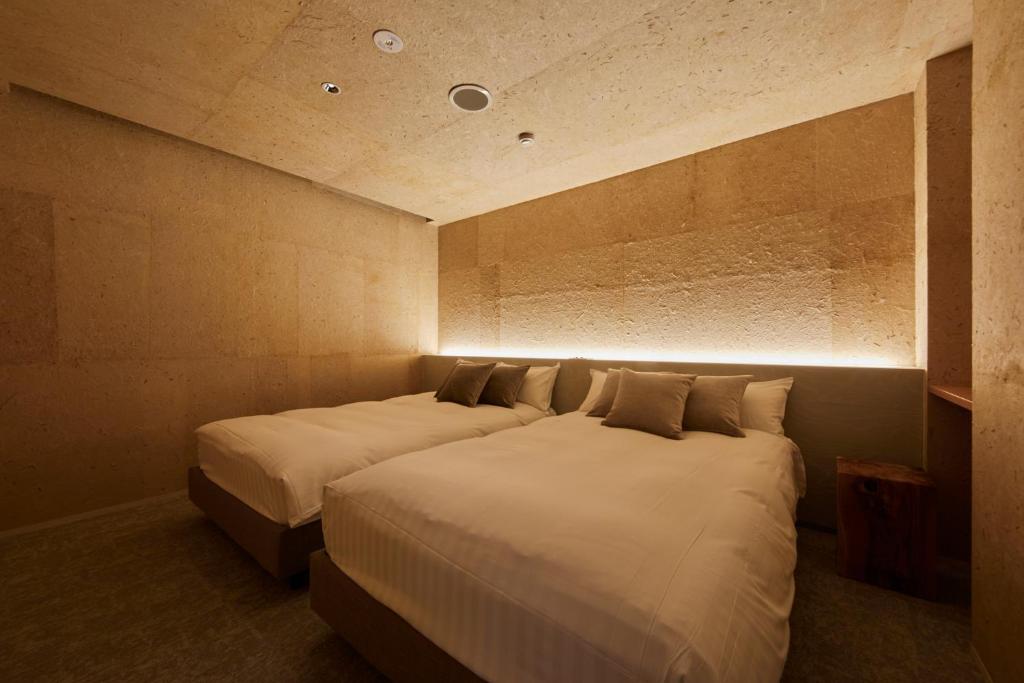
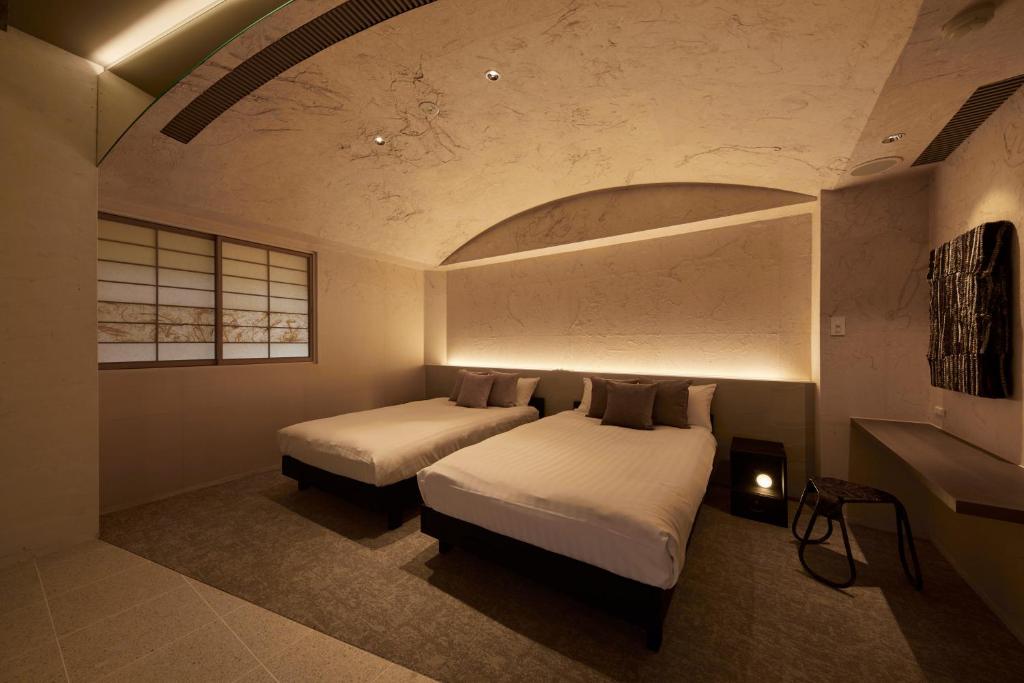
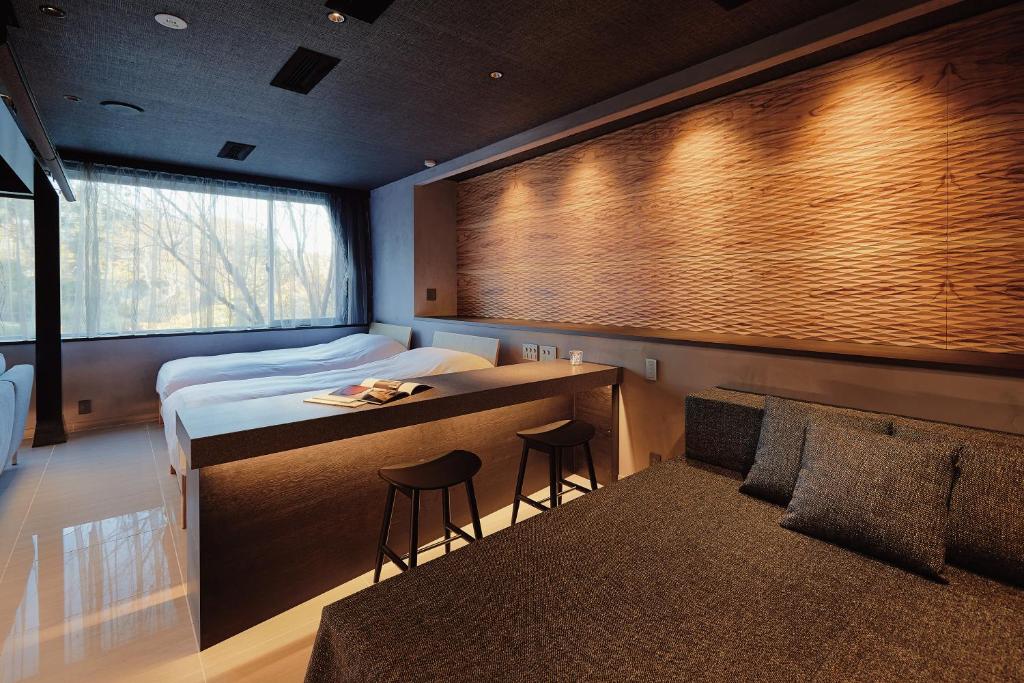
River Retreat Garaku has 23 non-smoking rooms divided between Suite, Modern, Comfort, and Standard categories. Room sizes range from 33 to 150 square metres, and no two interiors share the same design.
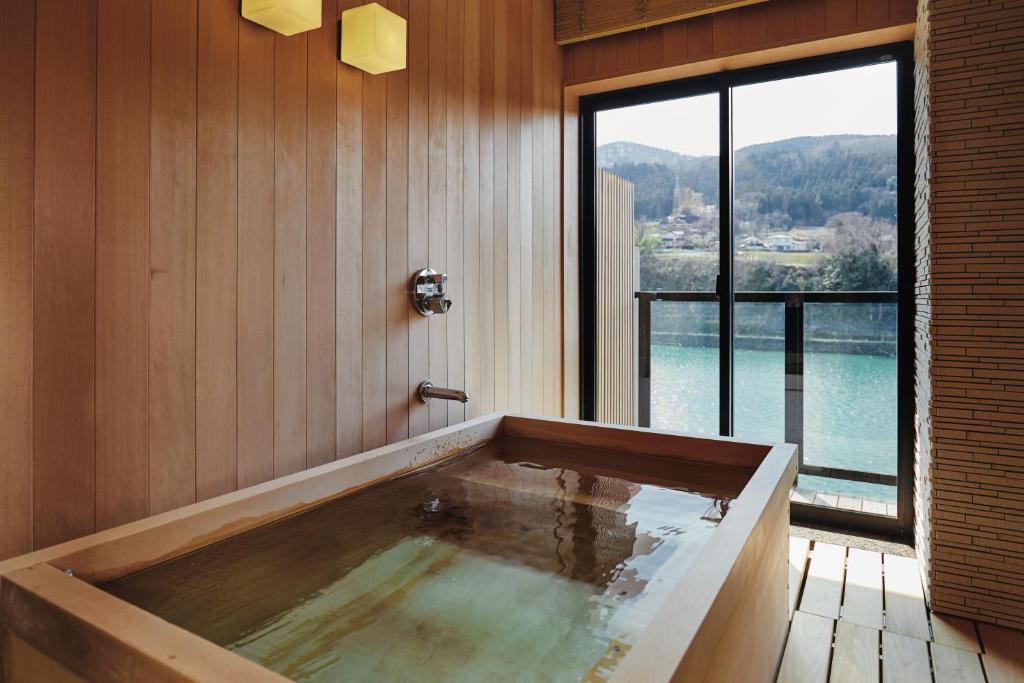
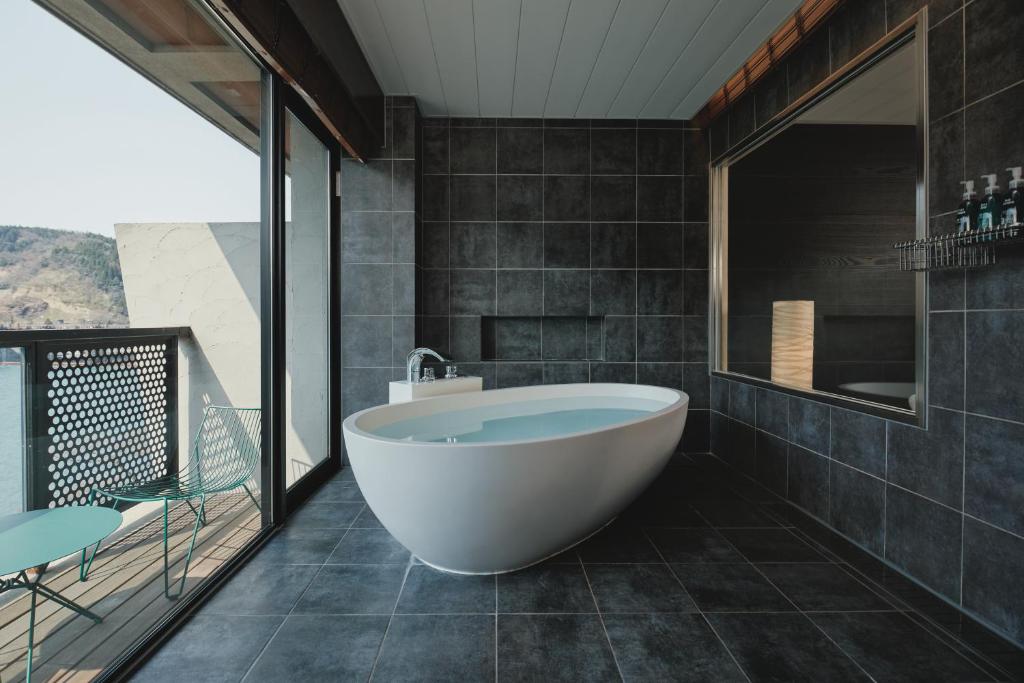
The four Annex Premier Suites with Onsen provide the most private bathing experience. Renka and Gengaku each measure 150 square metres and accommodate up to seven people. Both include twin beds, a terrace, courtyard art, river views, and a private hinoki bath supplied with Kasuga Onsen water.
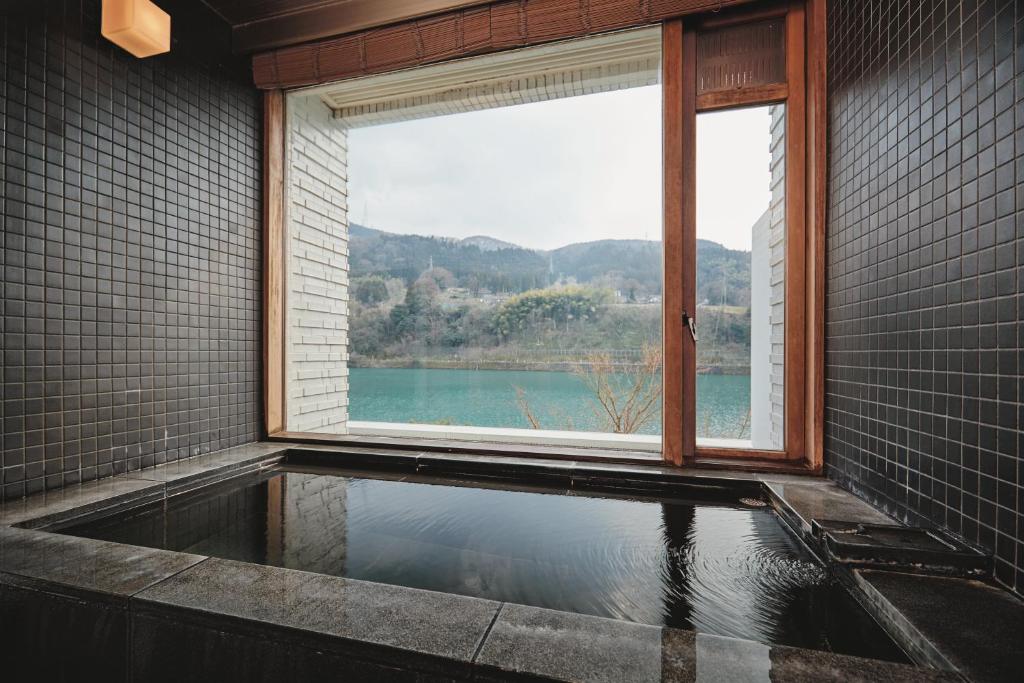
Hibika and Fusya each measure 115 square metres and accommodate up to four people. Hibika combines black and white tones with a private granite onsen bath, while Fusya uses tatami, shoji screens, and a private hinoki bath. Both rooms face the river and include a terrace.
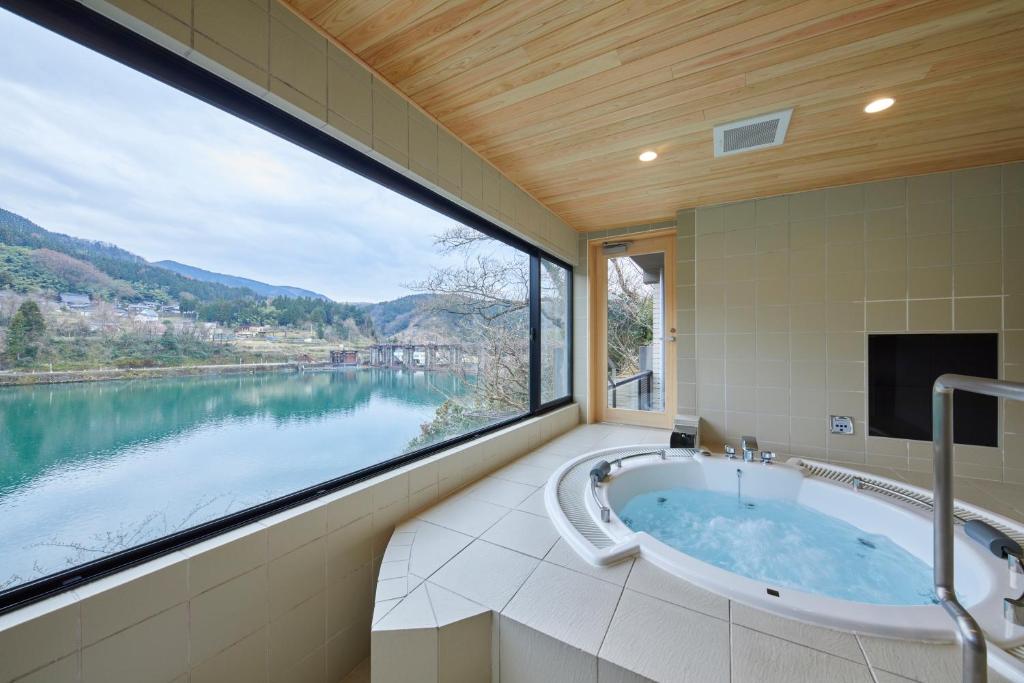
The 140-square-metre Grand Suite Kocho accommodates up to five people and has two bedrooms. One bathroom contains a river-view Jacuzzi, while the other has a Japanese umbrella-pine tub. These baths are not presented as natural hot spring baths. The suite also supports easier wheelchair use.
Kurumi is a 150-square-metre Annex Premier Suite with a river-facing balcony and Jacuzzi. Omoikurenai has the same floor area and adds a private dry sauna. Both rooms accommodate larger stays and look over courtyard art.
Suimon and Kansui each measure 100 square metres and have two bedrooms, a balcony, and river views. Suimon includes a Jacuzzi, while Kansui adds a private dry sauna.
The remaining Annex suites, Shirozakura and Shirotsurubami, each measure 115 square metres. Garaku also has three Modern Rooms measuring 72 to 80 square metres and four Comfort Rooms measuring 50 to 55 square metres.
Five Standard Rooms measure 33 square metres. England, Denmark, Rug, Asia, and Greece each follow a different international design theme. These rooms suit you when you want access to the complete hotel experience without the larger living areas of the suites.
Room equipment differs by category, but you receive original yukata, loungewear, tabi socks, slippers, towels, and toiletries. Organic Garaku skincare includes cleansing oil, face wash, lotion, all-in-one gel cream, and fragrance mist.
Mobile chargers and Bluetooth speakers can be borrowed. Rooms with larger bathing facilities also include bathrobes, shampoo, hair treatment, body wash, and additional towels.
Dining
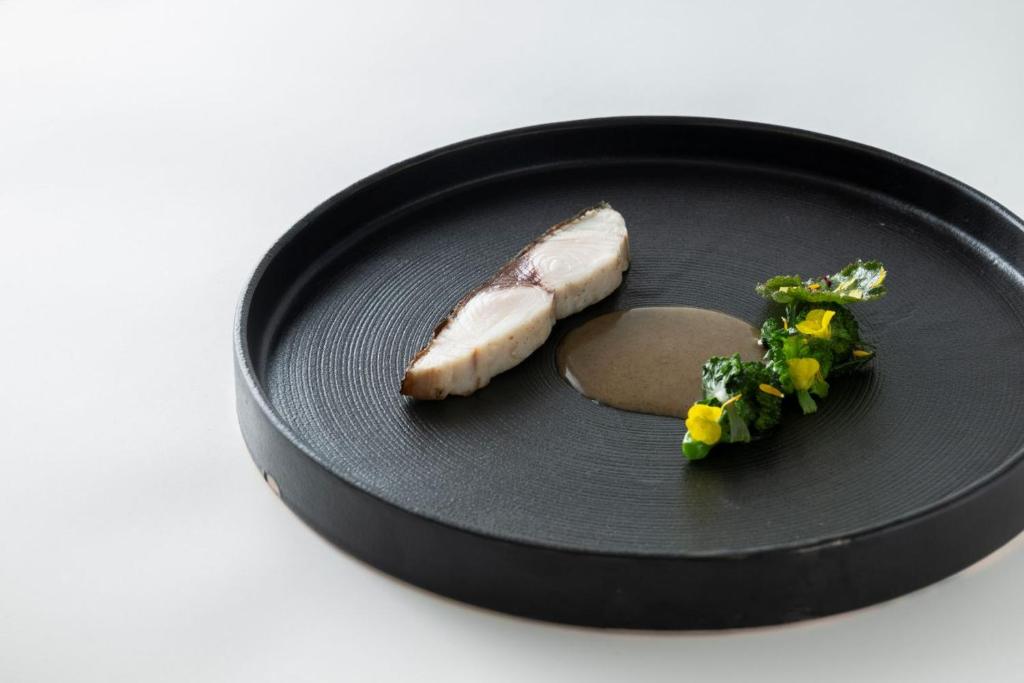
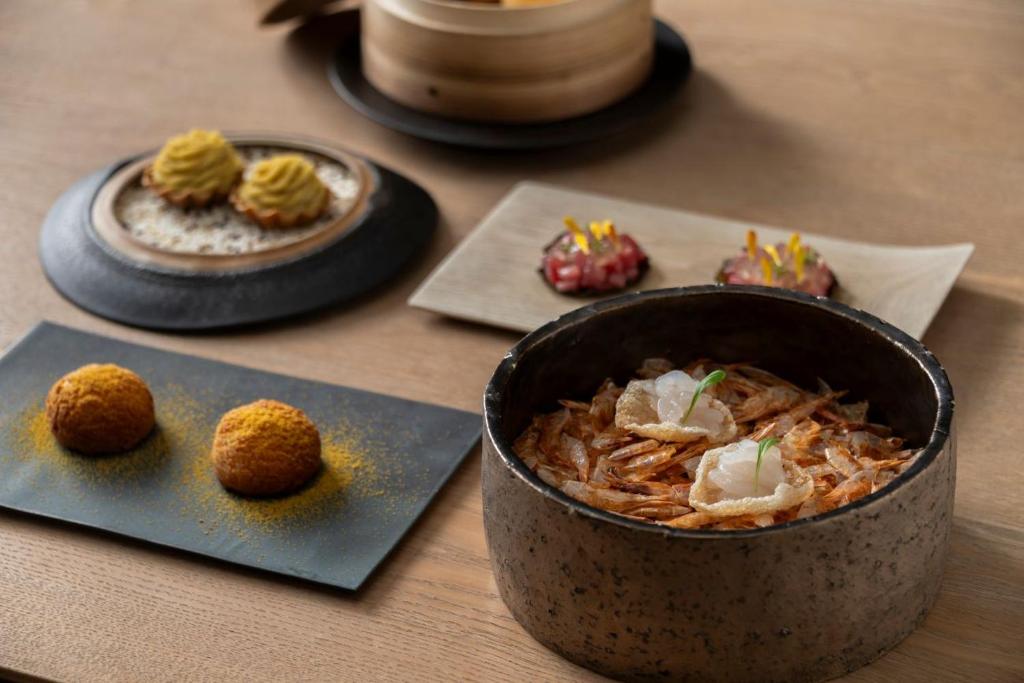
Trésonnier serves a full dinner course shaped by Toyama’s sea, mountains, rivers, farms, and traditional food culture. The restaurant combines French techniques with fermentation, ageing, and other methods connected to the region.
The head chef visits Shinminato Fishing Port to select seafood from Toyama Bay. Seasonal fish changes throughout the year, allowing the menu to follow the daily catch rather than rely on a fixed selection.
More than 30 crops grow without pesticides or chemical fertilisers at the restaurant’s own farm. Fish trimmings, bones, and kitchen by-products become compost, helping return nutrients to the soil rather than sending them to waste.
Spring and early summer bring wild mountain vegetables, while autumn and winter introduce local mushrooms. River ingredients may include ayu sweetfish, catfish, mitten crab, and softshell turtle, depending on the season and responsible supply.
Butter and cream are used carefully so that the flavour of the main ingredient remains clear. The course may move through vegetables, seafood, river ingredients, meat, fermented elements, and dessert without following one fixed style.
The tableware also forms part of the meal. Ceramic, glass, metal, and lacquer pieces from selected artists and craftspeople are chosen to match the colour, texture, and character of each dish.
Dinner begins from 6:00 p.m. The dining room uses timber, warm lighting, and contemporary art, while private rooms provide a more personal setting for celebrations or time together.
Breakfast is served from 7:00 a.m. to 9:30 a.m. in Rakumi, a Japanese dining space. The meal centres on Toyama-grown Koshihikari rice cooked in a clay pot, fish from Shinminato Fishing Port, seasonal vegetables, mountain plants, mushrooms, pickles, and handmade simmered dishes.
Selected accommodation plans include both dinner and breakfast, while breakfast-only and other arrangements may also be available.
Onsen and Wellness
Kasuga Onsen supplies the hotel’s natural hot spring facilities. The water is classified as a sodium chloride spring and has a smooth bathing texture that helps your body retain warmth after you leave the bath.
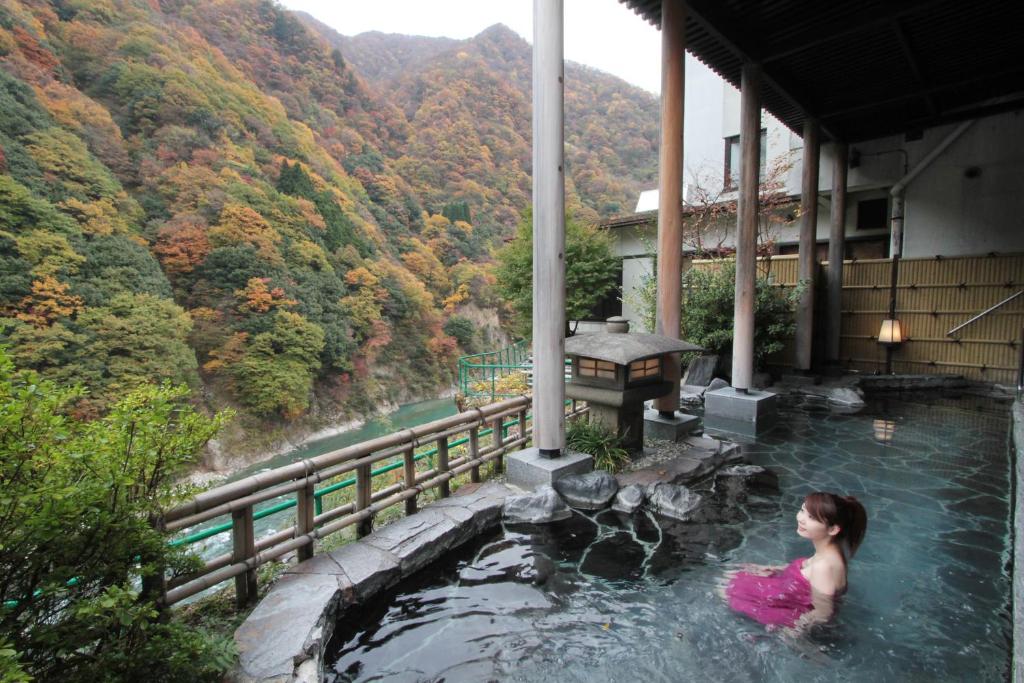
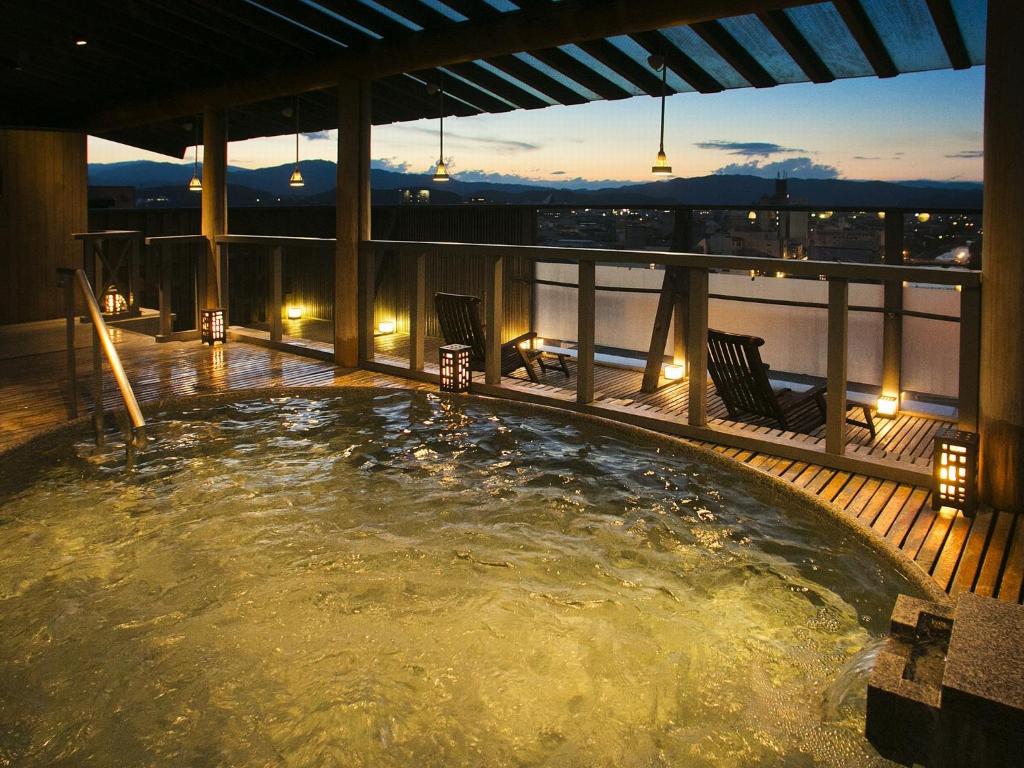
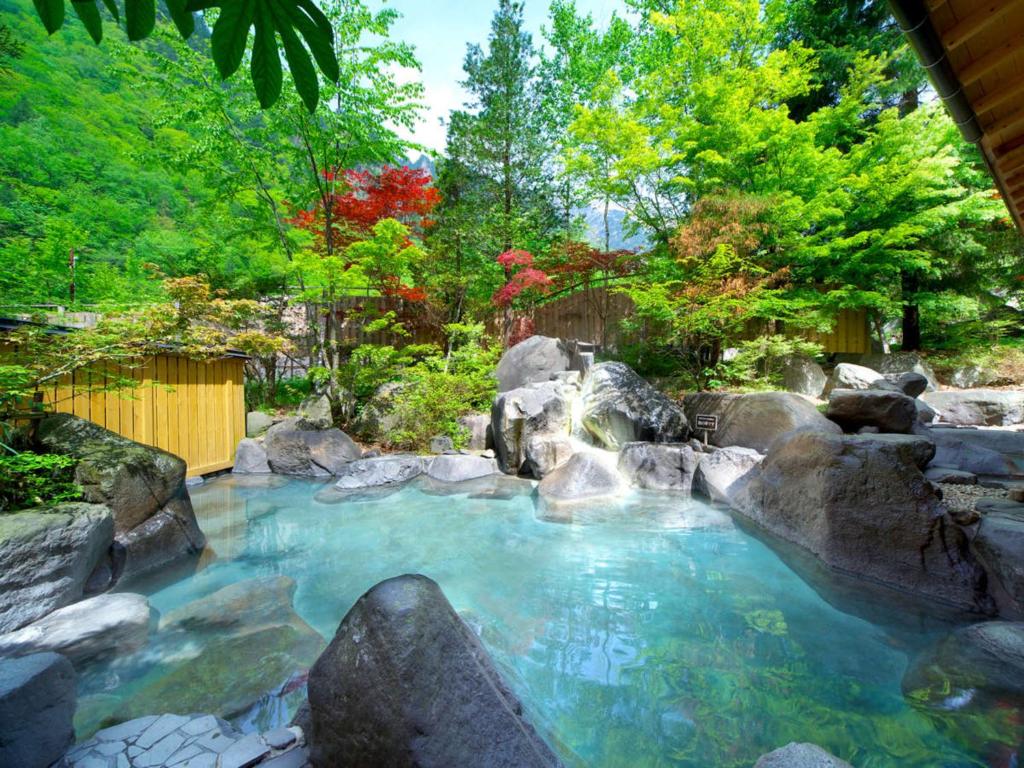
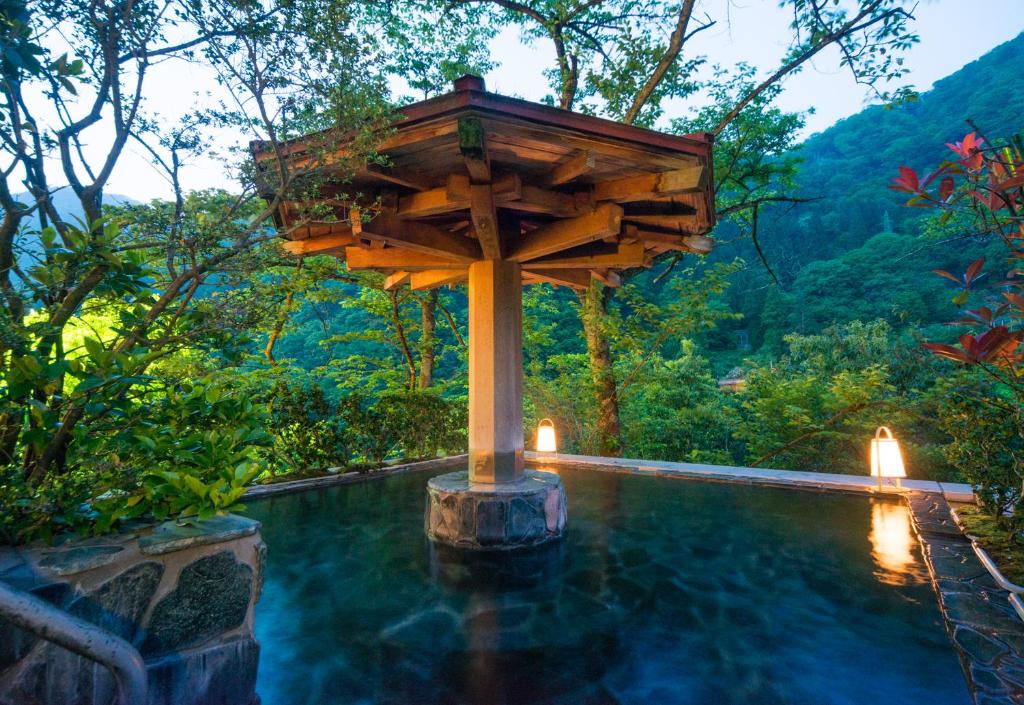
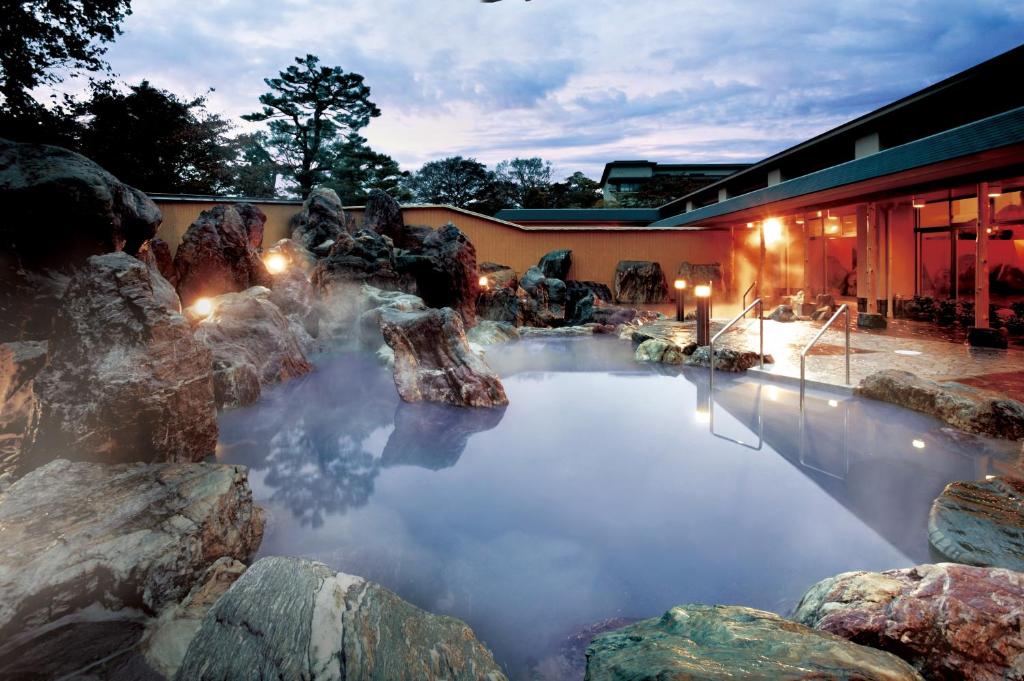
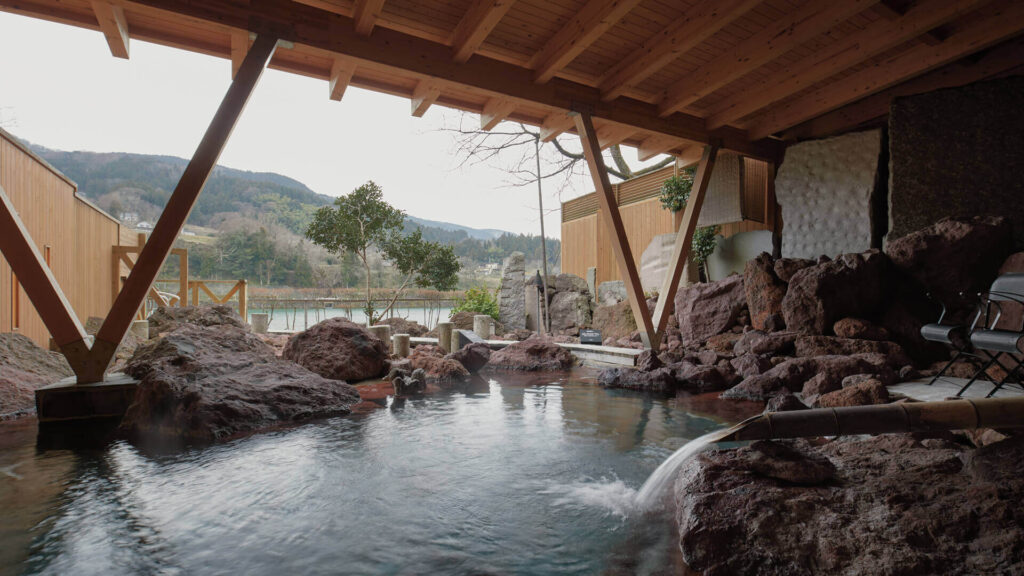
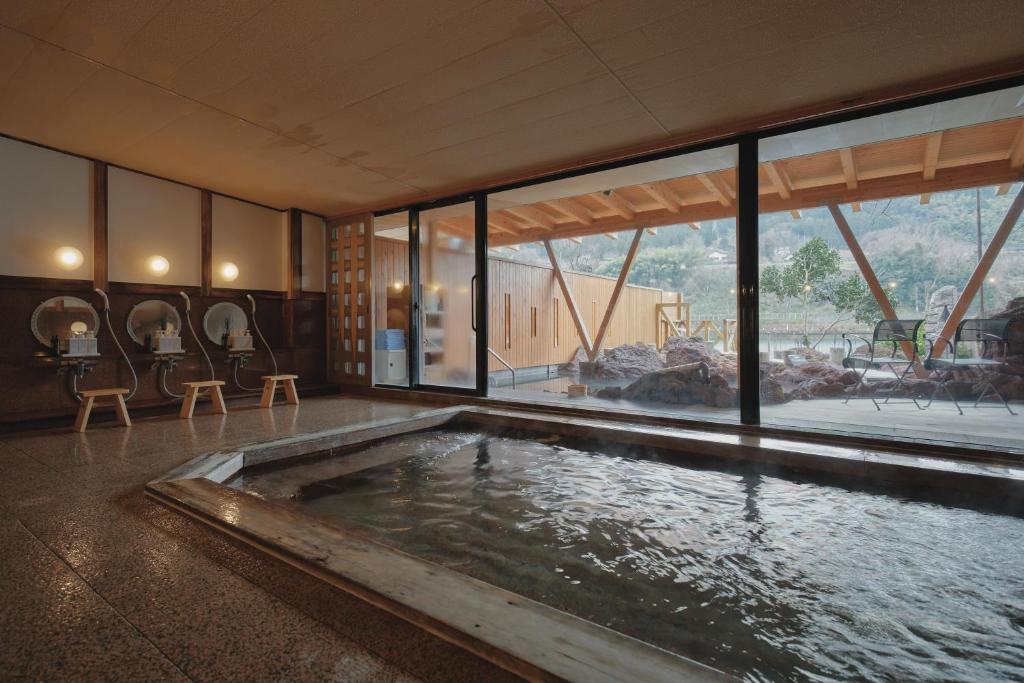
The shared onsen area includes indoor and outdoor baths. Contemporary interiors shape the indoor pools, while the outdoor bathing area uses red stone, trees, and views across the Jinzu Gorge.
The hot spring water is heated and diluted when required and managed through a circulation and filtration system.
The shared baths normally open from 11:00 a.m. until midnight and again from 5:00 a.m. to 10:00 a.m. The men’s and women’s sides change during the evening, allowing you to experience both bathing designs during an overnight stay.
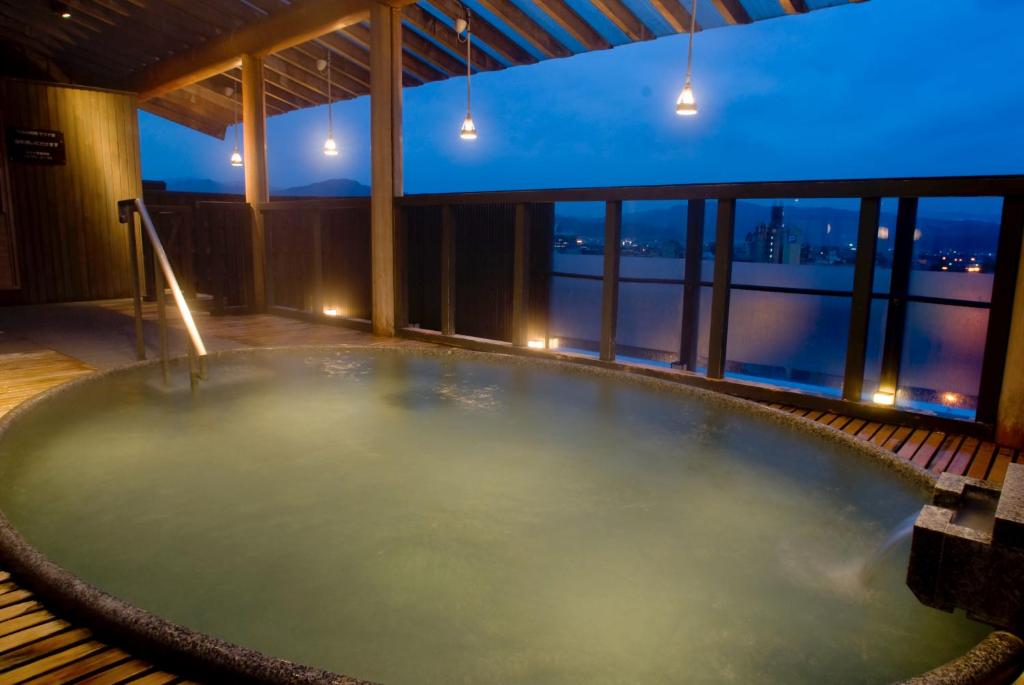
Spring Day Spa is reserved for overnight stays and normally opens from the afternoon until midnight. It contains a large Jacuzzi, an outdoor natural hot spring bath, private powder spaces, a dry sauna, and a cold carbonated bath. The women’s side also has a steam sauna.
A private open-air bath can be reserved by the hour during an overnight stay. Sessions are currently offered at selected afternoon and evening times. This bath uses natural Kasuga Onsen water and overlooks the river.
Four Annex suites have private indoor hot spring baths. Renka, Gengaku, and Fusya have hinoki tubs, while Hibika has a granite tub. These rooms allow you to use natural spring water without entering the public bathing areas.
Two suites provide private dry saunas. Omoikurenai has a Jacuzzi and sauna within its 150-square-metre layout, while Kansui combines a Jacuzzi and sauna in a 100-square-metre suite. Their Jacuzzis are not listed as natural onsen baths.
Yakutotoryu Spring Day Spa offers treatments using Japanese essential oils and elements connected to Toyama’s history as a centre of medicine. Sessions begin with a consultation and may include body treatments, head massage, facial care, reflexology, or herbal steam.
The treatment rooms use Toyama cedar, kuromoji, local silk, glasswork, and the sound of Takaoka copper orin bells. A private natural open-air bath is available as part of the treatment setting.
A reservable hot-stone room uses maifan stone and radium ore beds. Sessions last one hour and operate from the afternoon until late evening.
Guests with Tattoos
You cannot use the shared indoor baths, public open-air baths, or communal Spring Day Spa when you have tattoos.
For guaranteed access to natural hot spring water, choose Renka, Gengaku, Hibika, or Fusya. Each of these four suites has a private Kasuga Onsen bath inside the room.
The Grand Suite Kocho and the suites with Jacuzzis or private saunas provide private bathing, but their room baths are not listed as natural hot spring baths.
Facilities
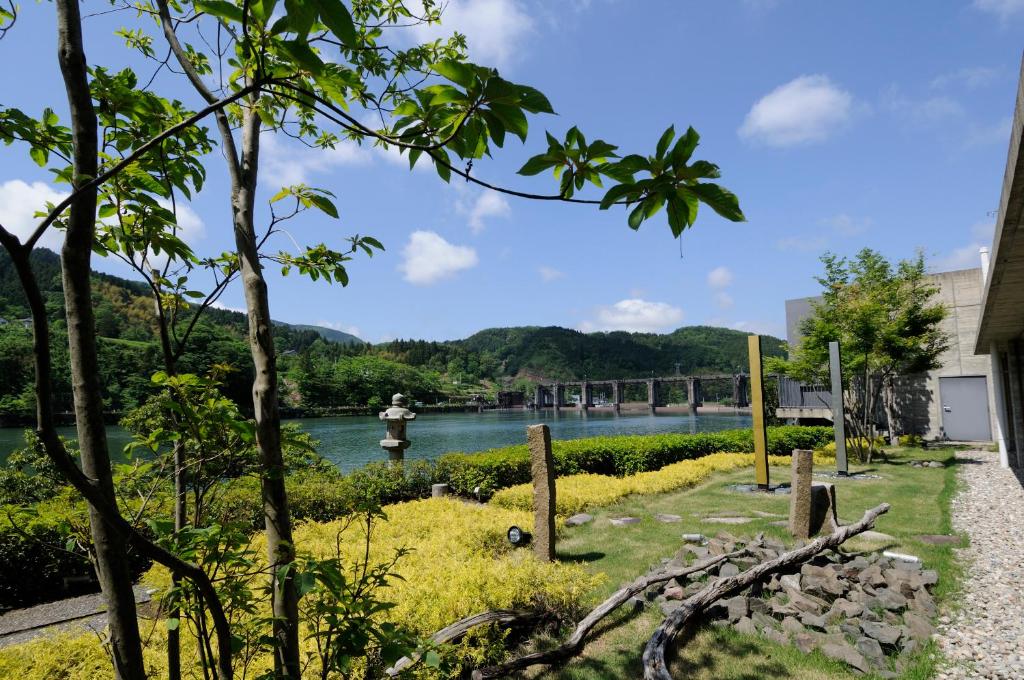
Contemporary artworks appear throughout the rooms, corridors, courtyards, gardens, and shared areas. Many pieces respond directly to their location, allowing the building, river, light, and changing weather to become part of the work.
The Annex was designed by Hiroshi Naito. Its architecture combines the delicacy of sukiya design with heavier textures inspired by Asia, using distinctive concrete walls and private walkways that lead toward the accommodation.
Two tea rooms provide contrasting settings for Japanese tea. Mushian follows a seated tatami style, while Gihoken uses chairs and tables. Tea experiences may be arranged according to the hotel schedule.
The library contains books on art, architecture, culture, travel, and other subjects. You can read here between meals, baths, and walks around the grounds.
The shop opens from 8:00 a.m. to 6:00 p.m. and sells original skincare, local food, Toyama crafts, artworks, and products used around the hotel. Fresh hotel-made bread is also sold on selected weekend and holiday mornings.
A museum hall supports exhibitions, events, and displays. The adjacent Rakusuitei Art Museum and Garden adds another art experience close to the hotel.
Free Wi-Fi is available throughout the property. Free on-site parking and electric-vehicle charging points are also provided.
Activities
Join the complimentary art tour held at 4:00 p.m. on Fridays and Saturdays. Hotel staff guide you through selected works and explain their artists, materials, settings, and links to the building. The tour normally lasts around 30 minutes.
Walk through the indoor and outdoor Art Walk independently at other times. Works by Japanese artists appear beside the river, within the gardens, along the corridors, and inside the courtyards.
An electric-assist mountain-bike experience takes you through the satoyama countryside between the Jinzu Gorge and Mount Sarukura. The guided route lasts around three and a half hours and connects the landscape with local stories and legends.
Hands-on cultural experiences include wagashi making at Toyama Castle Ruins Park, glassblowing and paperweight making at Toyama Glass Studio, and traditional kumiko woodwork.
You can also arrange a golf round at Kosugi Country Club, around 40 minutes away by car. The course follows the natural hills and welcomes both experienced players and beginners.
The Tateyama Kurobe Alpine Route is around 40 minutes away by car from the hotel’s side of Toyama. Other longer outings include the historic streets of Yatsuo, the museums of central Toyama, Takaoka’s national-treasure temples, and the traditional thatched villages of Gokayama.
Additional Features
Check-in begins at 2:00 p.m., and check-out is by 11:00 a.m.
JR Sasazu Station is around 15 minutes away on foot. A complimentary hotel car can provide transfers between the station and the property.
Toyama Station is around 40 minutes away by car, while Toyama Airport and Toyama Interchange are each approximately 20 minutes away under normal traffic conditions. A departure transfer to Toyama Station can be arranged by the previous day.
The drive from Kanazawa takes around one hour, while Takayama can be reached in approximately 90 minutes by Route 41. This position allows you to include Garaku in a longer journey through Toyama, Kanazawa, Gokayama, or northern Gifu.