

Finding an onsen in Japan when you have tattoos isn’t always easy. Most facilities still enforce a no-tattoo policy, and Hakone, despite being the most popular onsen destination from Tokyo, is no exception to that rule. Most of the time.
Tenzan Onsen is one of the rare traditional bathhouses in Hakone that openly welcomes tattooed guests. Our team was very excited to go check it out, try it for the day and bring you everything you need to know about it so you can replicate the experience.
Tenzan is a well-regarded, atmospheric facility with multiple outdoor baths, strong mineral waters, and the kind of wooden, forest-side setting that makes you forget you’re just 90 minutes from Shinjuku (yes, really!).
This guide covers everything you need to know before visiting, tattoo policy, facilities, spring quality, prices, access, and practical tips.
What Is Tenzan Onsen?
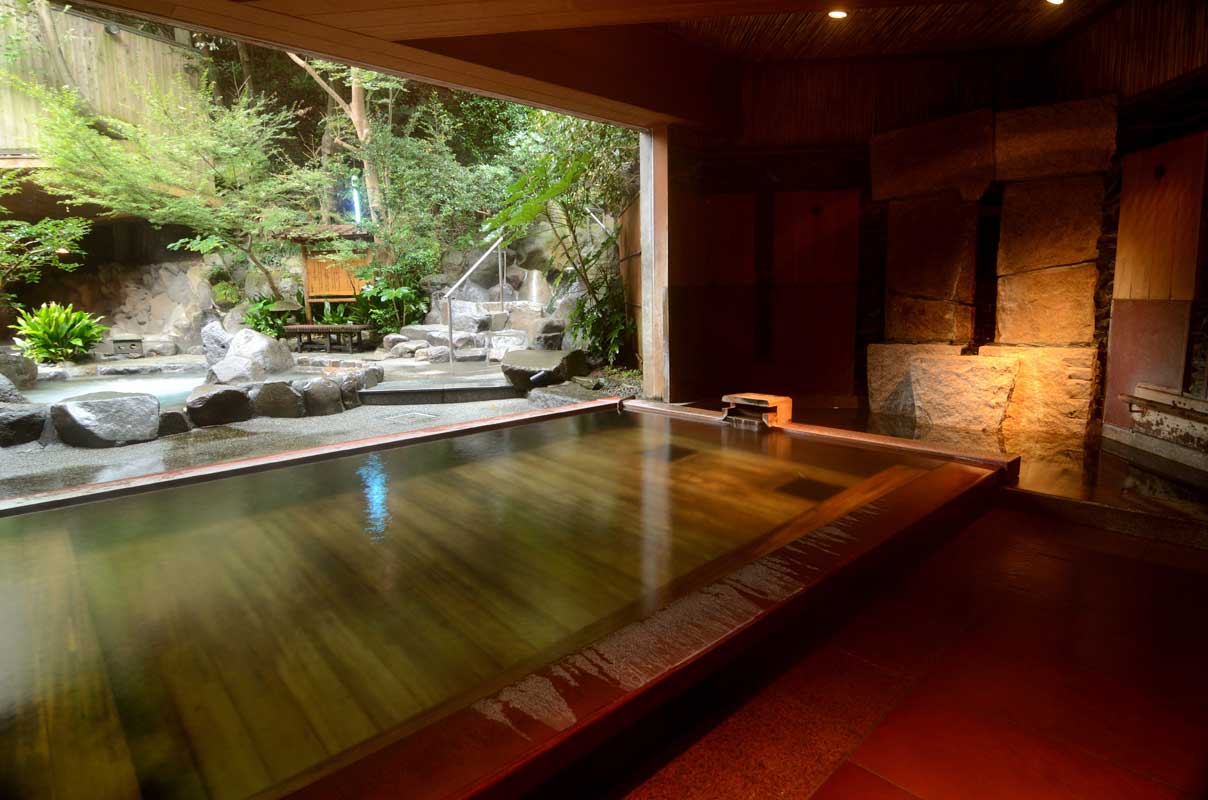
Tenzan Onsen (天山湯治郷) is a day-use hot spring complex in Yumoto, the oldest onsen town in Hakone. It sits along the Hayakawa River, surrounded by cedar trees and the quiet of the hills.
Unlike many onsen in Hakone that are attached to luxury ryokan, Tenzan operates as a standalone bathhouse you can visit without staying overnight. It’s popular with locals, repeat visitors, and travelers with tattoos who cannot afford a ryokan with private onsen.
The name roughly translates to “heaven mountain hot spring village”, and while that sounds dramatic, the atmosphere earns it.
Does Tenzan Onsen Allow Tattoos?
Yes, but with a small caveat. Tenzan Onsen has an explicit tattoo-friendly policy, which puts it in a small minority among traditional onsen in the Kanto region. When we entered the establishment we found an explicit note in English stating that if there are 2 or more visitors with tattoos, you are not allowed in, even if the gender is different. Since I was the only one with tattoos but my partner wasn’t, we were allowed in. So please be mindful of this when planning a trip to Tenzan.
A few things worth knowing:
- There’s no size or placement restriction mentioned, the policy is open
- The facility can get busy on weekends; the tattoo policy draws international visitors specifically (so only one with tattoos is allowed in)
- Staff are accustomed to international guests and the general atmosphere is relaxed and non-judgmental
If you’ve been turned away from onsen before due to tattoos, Tenzan is worth putting at the top of your Hakone list.
The Hot Spring Waters at Tenzan
Tenzan draws from seven springs located on or near the property, all piped directly to the baths via dedicated pipelines. There is no storage tank, which means that the water flows continuously from source to bath, so you are always bathing in fresh, unoxidised spring water. This approach, known in Japanese onsen culture as gensen kakenagashi (源泉かけ流し), is considered the gold standard and is far rarer than most facilities let on.
The volume is remarkable: 20,820 litres per hour, or roughly 500 tonnes of fresh spring water every single day. That throughput is what makes daily water replacement possible.
Tenzan’s seven sources produce two distinct spring types:
① Alkaline Simple Mixed Spring (Sources 92, 93, 101, 102, and 114) This is the spring type most associated with smooth, silky skin — sometimes called bijin-no-yu (beautiful skin water) in Japan. Alkaline simple springs are gentle, low in dissolved minerals, and feel noticeably soft against the skin. They’re well-suited to long soaks and are generally mild enough for sensitive skin.
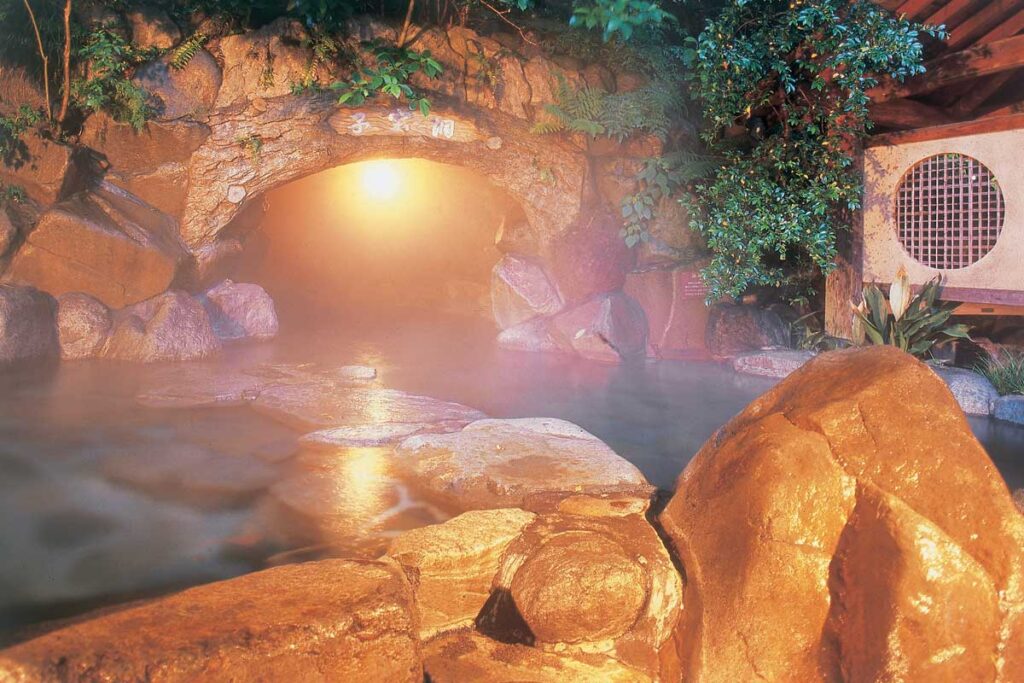
② Sodium Chloride Spring (Yumoto Source 115) The saltier of the two, sodium chloride springs are known for warming the body deeply and holding that heat after you leave the bath. The salt on the skin slows sweat evaporation, keeping you warm longer. This is the spring type feeding the cave bath, where the enclosed space amplifies the warming effect. It’s particularly effective in autumn and winter.
Different baths at Tenzan use different source springs, so the experience varies meaningfully depending on which pool you’re in — something most visitors don’t realise until their second or third visit.
Temperature Without Compromise
All seven source springs emerge extremely hot, some reaching 83°C, well above bathing temperature. Rather than diluting the water with cold water (which would reduce mineral concentration and water quality), Tenzan uses a heat exchanger to cool the water while keeping it chemically unchanged. Bath attendants then fine-tune the temperature and flow rate daily, accounting for season and outdoor conditions, to maintain each bath within ±0.1°C of its target temperature.
This level of precision is unusual. Most day-use facilities simply mix hot spring water with tap water to reach a comfortable temperature. Tenzan doesn’t.
Facilities at Tenzan Onsen
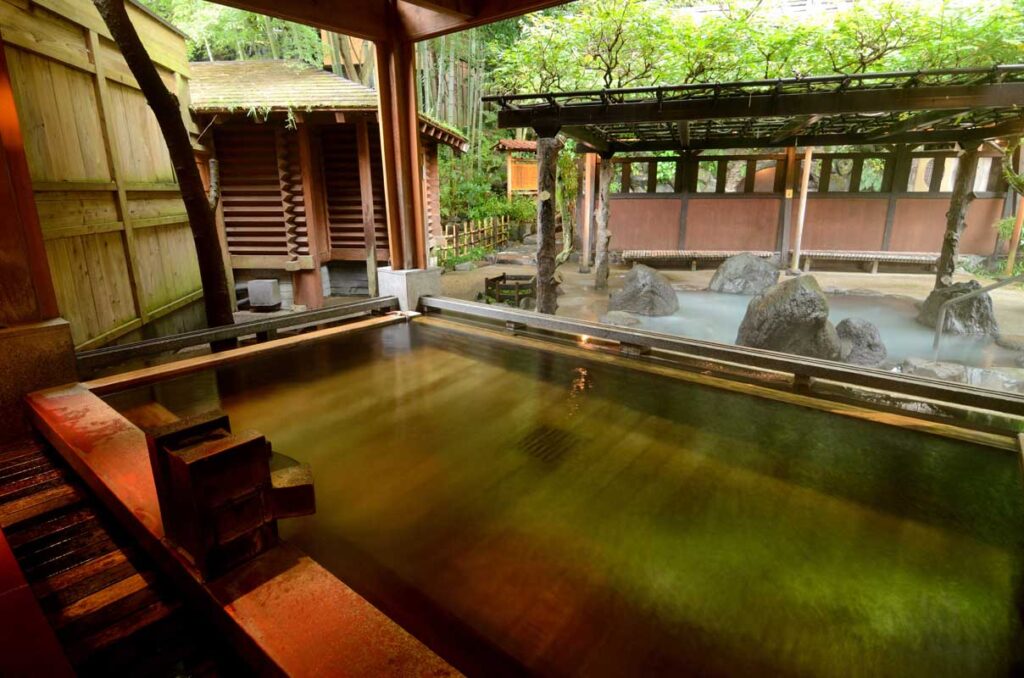
Outdoor Baths (Rotenburo)
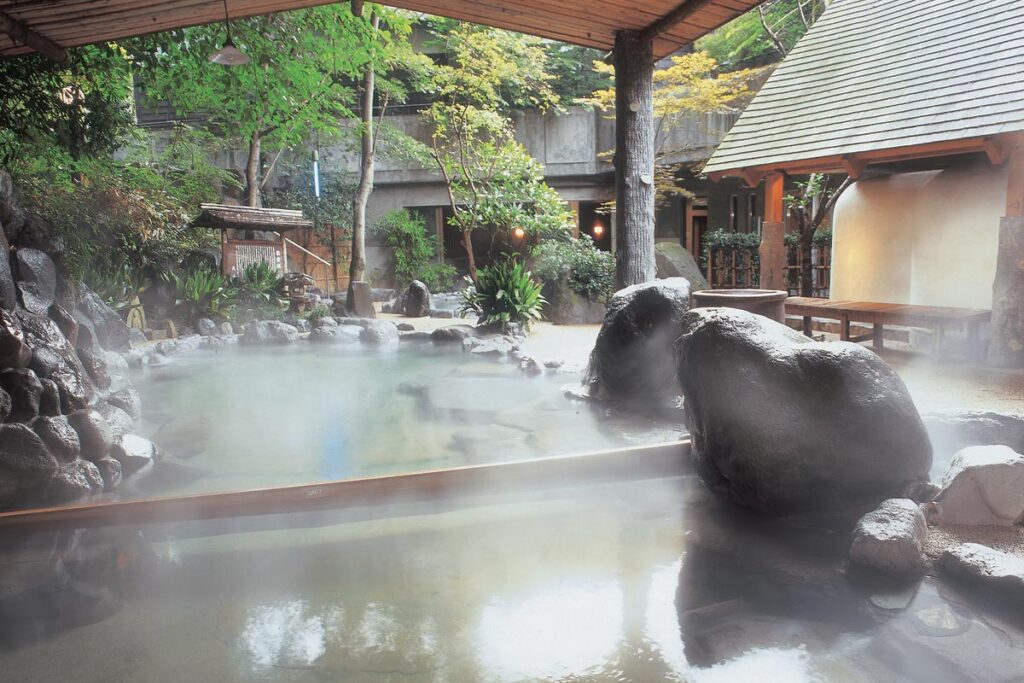
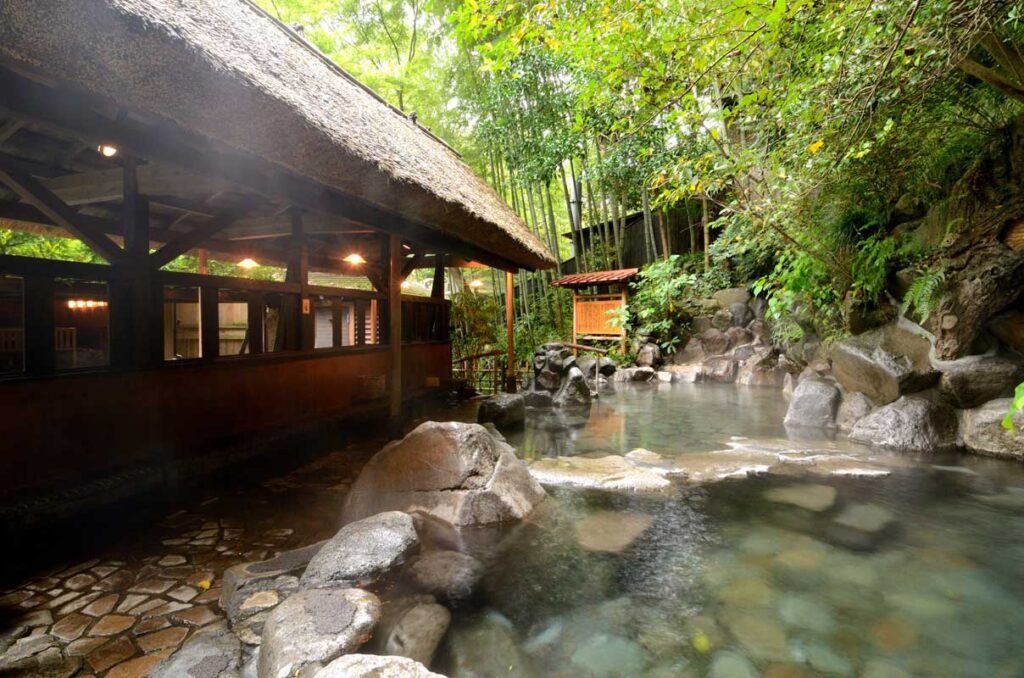
Four outdoor baths are spread across a wooded hillside above the Sukumo River, each fed by a different source spring at a different temperature. The setting, cedar trees, river sound, natural rock, does most of the talking. Some pools are enclosed in cave-like rock formations; others are open to the sky. The combination of alkaline and sodium chloride sources means the outdoor circuit gives you genuinely different water as you move between pools, not just a change of view.
Indoor Baths
The indoor bath area features hinoki (Japanese cypress) tubs finished with lacque, warm underfoot, naturally aromatic, and a deliberate contrast to the stone and rock of the outdoor area. Water here flows continuously from source, the same gensen kakenagashi system as outside. The indoor baths are the go-to option in heavy rain, or for guests who prefer a quieter, more private atmosphere.
Saunas
The men’s bathing area includes a kamaburo, a traditional steam sauna that uses hot spring steam rather than dry heat, with salt available at the entrance to apply before entering for deeper sweating. The women’s area has the kodakarado, a spring-fed cave sauna where sodium spring steam fills the enclosed space. Both are unusual features that go beyond what most day-use onsen offer.
Rest Areas and Food
Between soaks, tatami rest rooms provide a place to properly decompress, the kind of horizontal rest that makes an onsen visit feel therapeutic rather than recreational. Hot spring water is also circulated under the floors of rest and dining areas as geothermal underfloor heating, so the building itself stays warm without additional gas heating. This is probably one of the things that really blew me away, the level of care to ensure comfort.
The café-restaurant serves proper food. The facility leans into the toji (therapeutic bathing) philosophy: the expectation is that you stay, rest, soak again, and leave slowly.
Eco Approach
The shampoo, conditioner (Pax Naturon), and bar soap provided in the washing areas use naturally derived ingredients with no synthetic surfactants, silicones, or polymers — specifically chosen so that wastewater discharged into the Sukumo River doesn’t damage the river ecosystem. The heat exchanger cooling water is reused in taps rather than wasted. It’s a coherent environmental philosophy, not a marketing label.
Tenzan Onsen Prices and Hours
| Item | Detail |
|---|---|
| Adult entry | ¥1,450 (approx.) |
| Child entry | ¥700 (approx.) |
| Towel rental | Available on-site for ¥600 |
| Hours | 9:00 AM – 11:00 PM (last entry 10:00 PM) |
| Closed | Open year-round; occasional maintenance closures |
Prices are subject to change — confirm on the official Tenzan website before visiting.
Tenzan doesn’t require (nor does it accept) reservations for day visitors. You pay at the entrance, rent a towel if needed, and head to the changing rooms. Lockers are available. The onen specifically asks that you do not come in a large group.
How to Get to Tenzan Onsen from Tokyo and Hakone
From Tokyo (Shinjuku): Take the Romancecar from Shinjuku to Hakone-Yumoto Station (approx. 85 minutes). From the station, Please board the “Hakone Old Highway Line (K)” from “Platform 4” and get off at “Okuyumoto Entrance” (fare: 260 yen).
From central Hakone: If you’re already in Hakone (Gora, Miyanoshita, Kowakidani), take the Hakone Tozan Railway to Hakone-Yumoto and use the same as above from there.
By car: Tenzan has a parking lot. From the Hakone-Yumoto IC on the Odawara-Atsugi Road, it’s a short drive into the valley.
Tips for Your First Visit
Go on a weekday if possible. Tenzan’s tattoo policy is well known among international travelers and the facility can get crowded on weekends, particularly Saturday afternoons. Weekday mornings are significantly quieter.
Bring your own small towel or rent one. You’ll need something to carry into the bath area. Large towels stay in the changing room, small towels come with you (and go on your head, not in the water).
Plan to stay 2–3 hours. Rushing through an onsen defeats the point. Tenzan’s facilities reward slowing down since you have multiple pools, rest areas, and the river setting are best experienced without a schedule.
Try the cooler pools. Beginners often stay in the hottest bath to feel like they’re getting the “full experience.” The cooler pools are where you actually relax. Alternate between hot and warm for the best effect.
Eat lightly beforehand. A full stomach and very hot water is an uncomfortable combination. Eat something small, drink water, and avoid alcohol before bathing.
How Tenzan Compares to Other Hakone Onsen
| Facility | Tattoo-Friendly | Outdoor Bath | Day Use | Approx. Price |
|---|---|---|---|---|
| Tenzan Onsen | ✅ Yes | ✅ Yes | ✅ Yes | ¥1,450 |
| Hakone Kowakien Yunessun | ✅ Yes (swimwear) | ✅ Yes | ✅ Yes | ¥2,500+ |
| Tenseien | ❌ No | ✅ Yes | ✅ Yes | ¥1,500 |
| Hakone Yuryo | ❌ No | ✅ Yes | ✅ Yes | ¥1,800 |
| Most ryokan onsen | Varies | Varies | Rare | ¥25,000+ |
Tenzan stands out for combining tattoo access with a genuinely traditional, non-theme-park experience. Yunessun is the other major tattoo-friendly option in Hakone but operates on a swimwear model, very different atmosphere mainly targeted at families with kids.
FAQ
Is Tenzan Onsen 100% tattoo-friendly? Yes. Tenzan has a clear, posted tattoo-friendly policy. All areas of the facility are accessible to tattooed guests. But please note that only one tattooed person per group is allowed in.
Do I need to book in advance? No reservation is needed for day use. Just show up, pay at the entrance, and go in. Towels can be rented on-site.
Is Tenzan onsen mixed gender? No. The main baths are gender-separated, as is standard at traditional Japanese onsen.
Can children visit Tenzan? Yes, children are welcome. The facility has a children’s pricing tier. Supervise young children carefully around the hot pools.
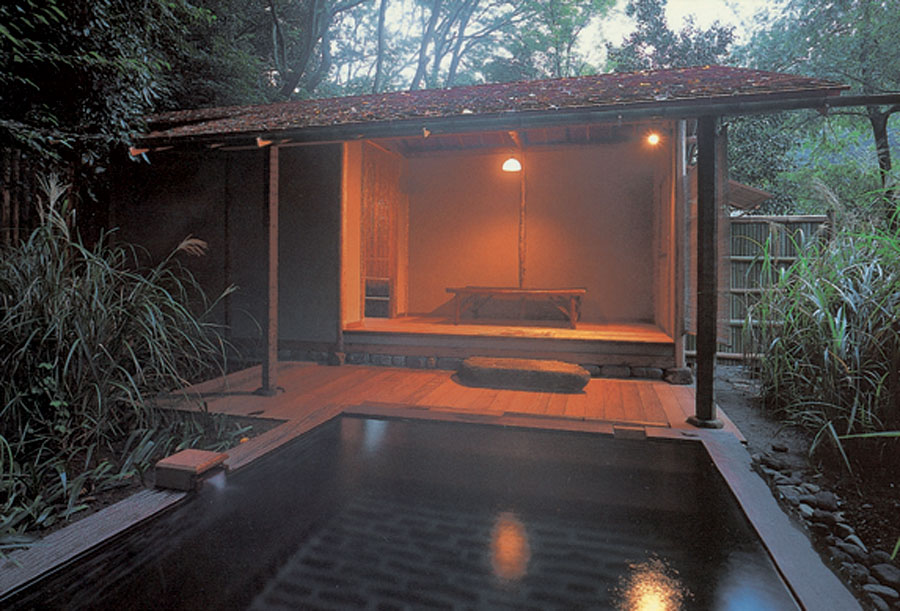
Are there private baths available? Yes, but not in the way you expect. Tenzan does have private baths available but if you use one of the seven private tatami rooms called Hanaregumo. This way, you will have access to the separate men’s and women’s baths called “Okunoyu”. However, since the bathtub is small, it is not available for use by people with tattoos, so it defines the purpose.
What should I bring? Tenugui (face towel) but don’t worry if you don’t have one as you can easily buy one at the reception. You can also rent yukatas if you prefer.
Is the shuttle bus free? No, Tenzan doesn’t have a free shuttle bus. You need to take a normal local bus from Hakone Yumoto.
What language is spoken at Tenzan? Staff are accustomed to international visitors. Basic English communication is usually possible, and signage is increasingly bilingual. A translation app handles anything more complex.
Final Thoughts
Tenzan Onsen was very lovely and welcoming and I really enjoyed it since I was looking for a day visit onsen that accepts tattoos. It’s a proper bathhouse with river valley setting, good mineral water, multiple pools, and a culture of actually relaxing rather than rushing through. The tattoo-friendly policy is genuine and has been consistent, which matters when you’re planning a trip around it. This also means that if you are planning in staying in an affordable ryokan without private onsen in Hakone, this is an excellent option for you to still enjoy hot spring baths with tattoos.
If you’re building a Tokyo day trip or a longer Hakone itinerary, Tenzan fits cleanly into a morning or afternoon slot. Book the Romancecar, check the shuttle schedule, and don’t rush.
Want to stay longer in Hakone? Check out the best Hakone onsen.
