Overview
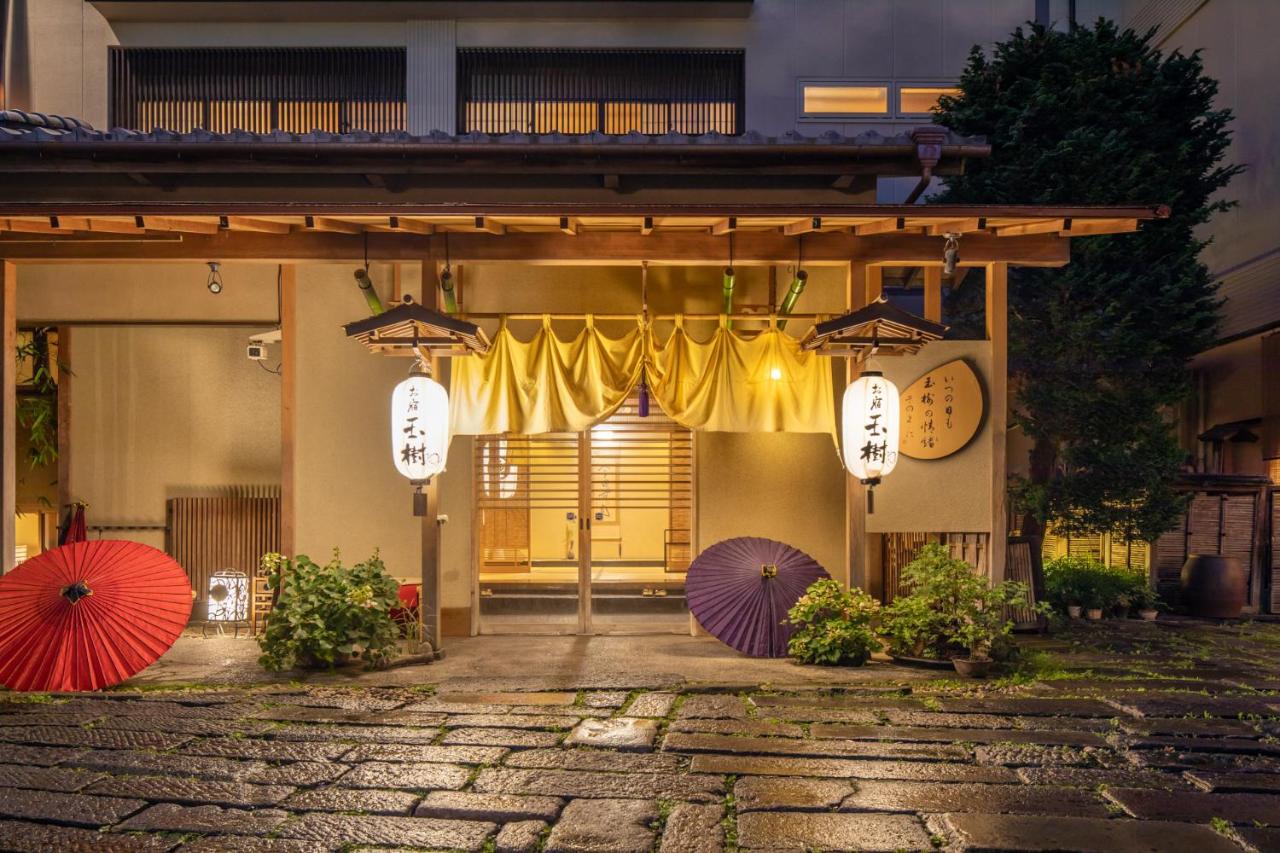
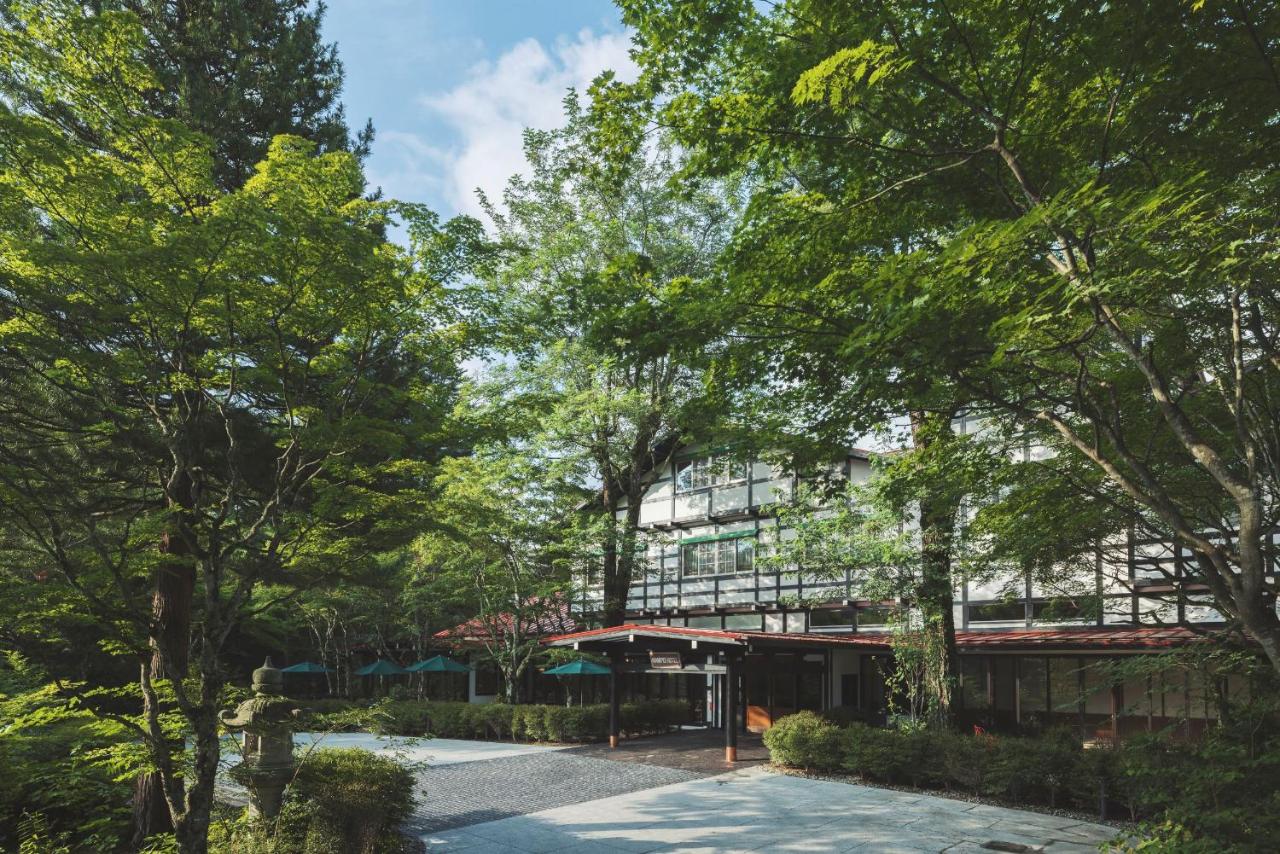
Stay close to the centre of Kusatsu Onsen at Yorokobinoyado Takamatsu, around four minutes on foot from Yubatake. Steam, mineral-rich water, illuminated streets, public bathhouses, cafés, and small shops surround you as soon as you step outside.
The main attraction is the water itself. Takamatsu receives strongly acidic spring water directly from the Yubatake source and cools it naturally through contact with the air. No cold water is added, and the spring is not reheated before it reaches the baths.
You can explore the town in a yukata, return for a late-night soak, and enjoy seasonal Japanese food without travelling far from Kusatsu’s main sights. Two communal bathing areas, two reservable private baths, and selected rooms with their own onsen give you several ways to experience the spring.
Accommodation
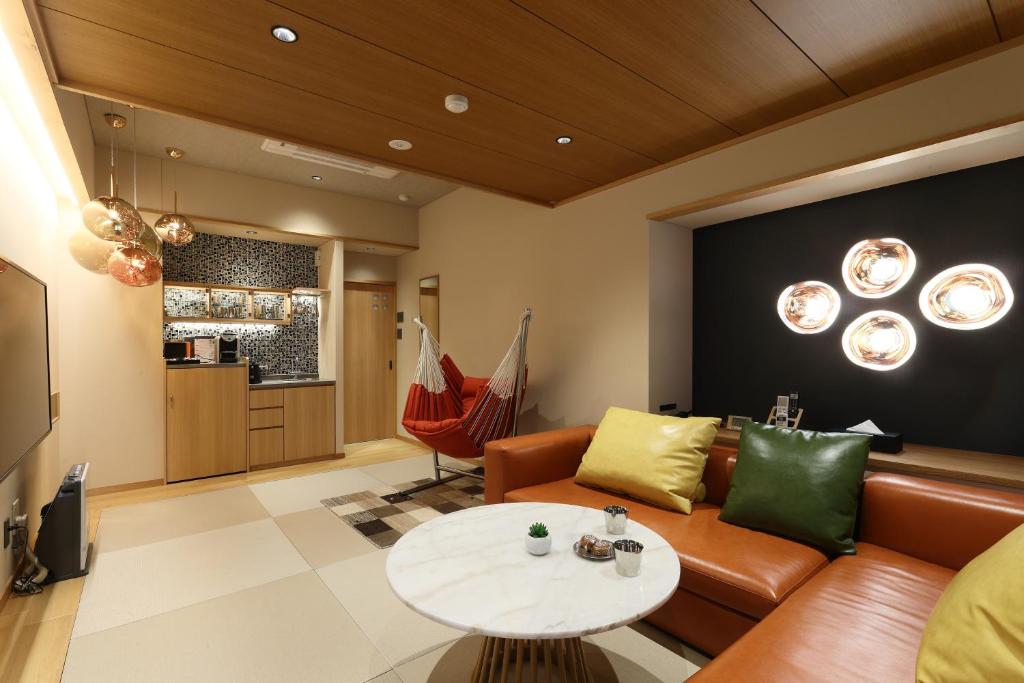
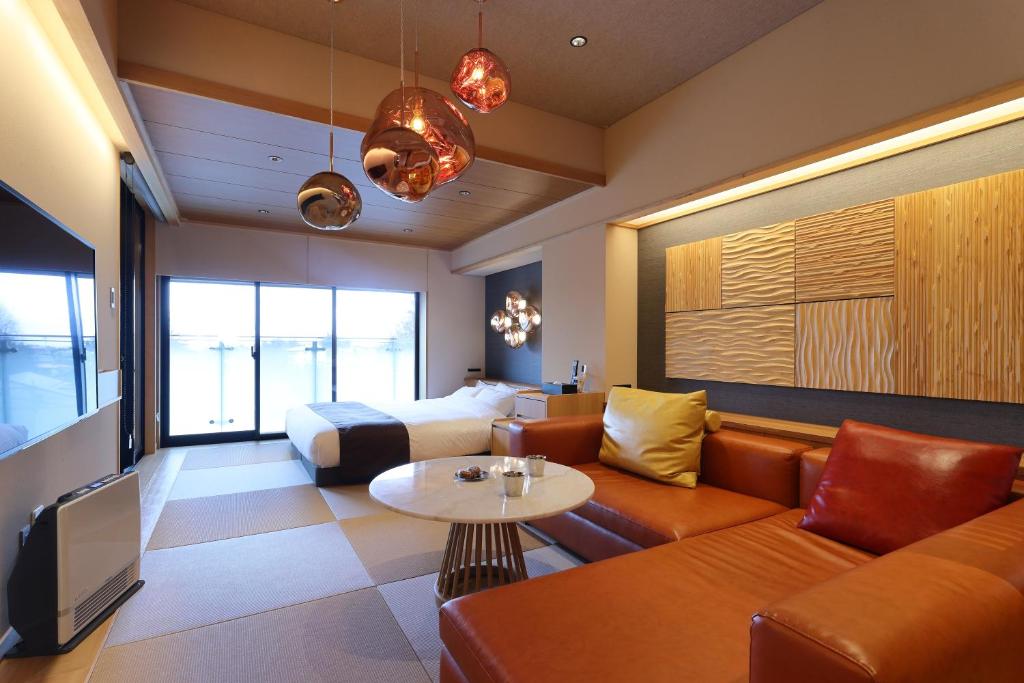
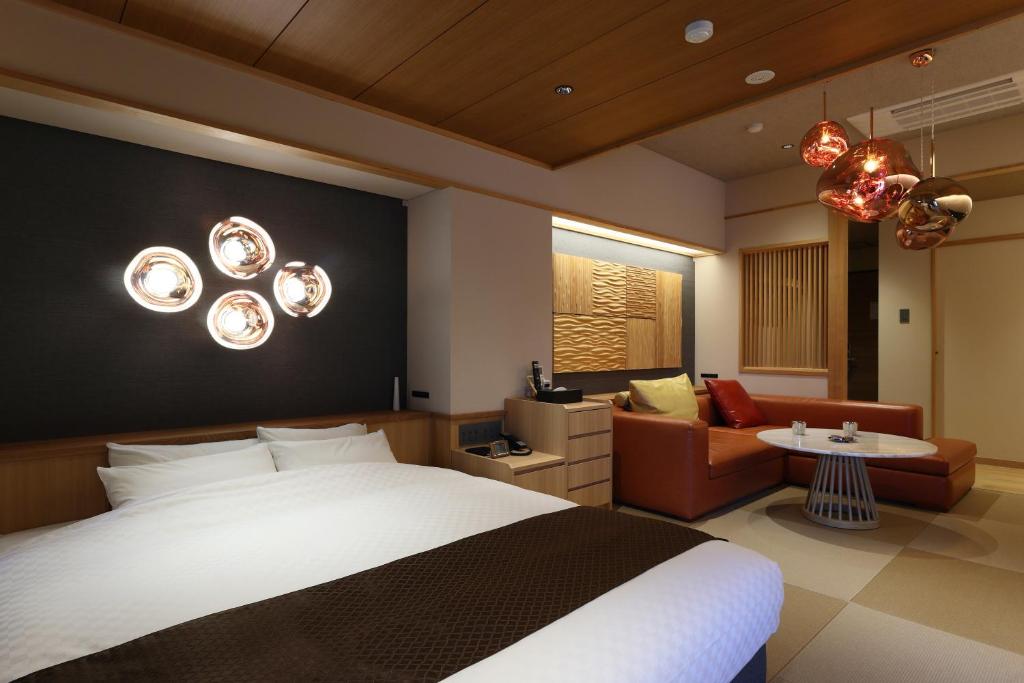
Takamatsu has 103 rooms, including traditional Japanese rooms, Western twins, a Japanese room with a low queen bed, larger group rooms, a Japanese-Western semi-suite, and two newer rooms with private saunas and semi-open-air baths.
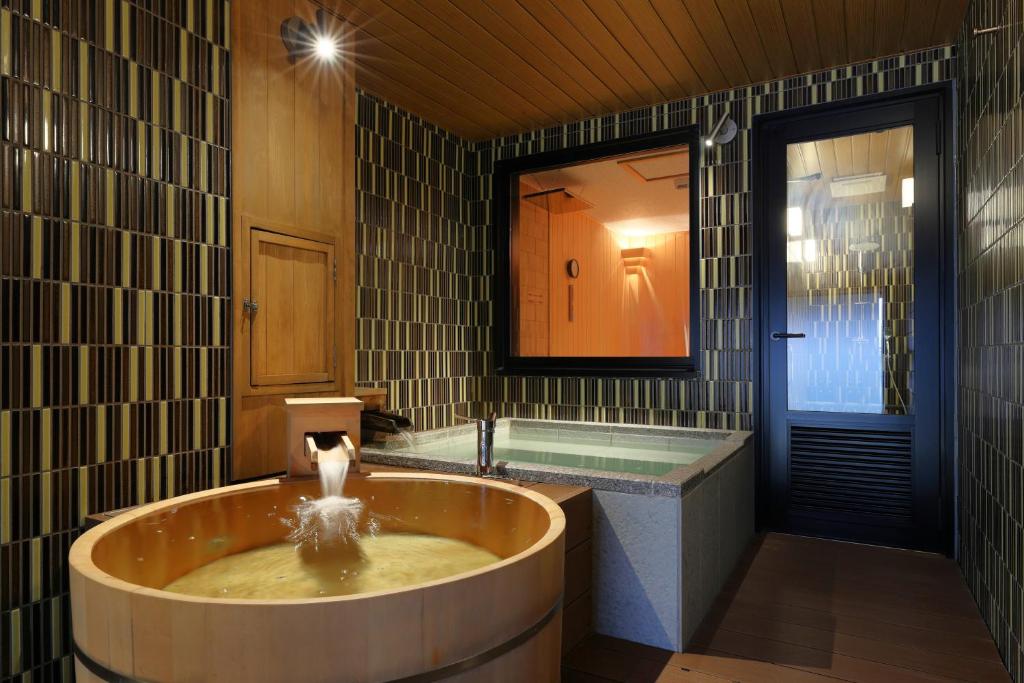
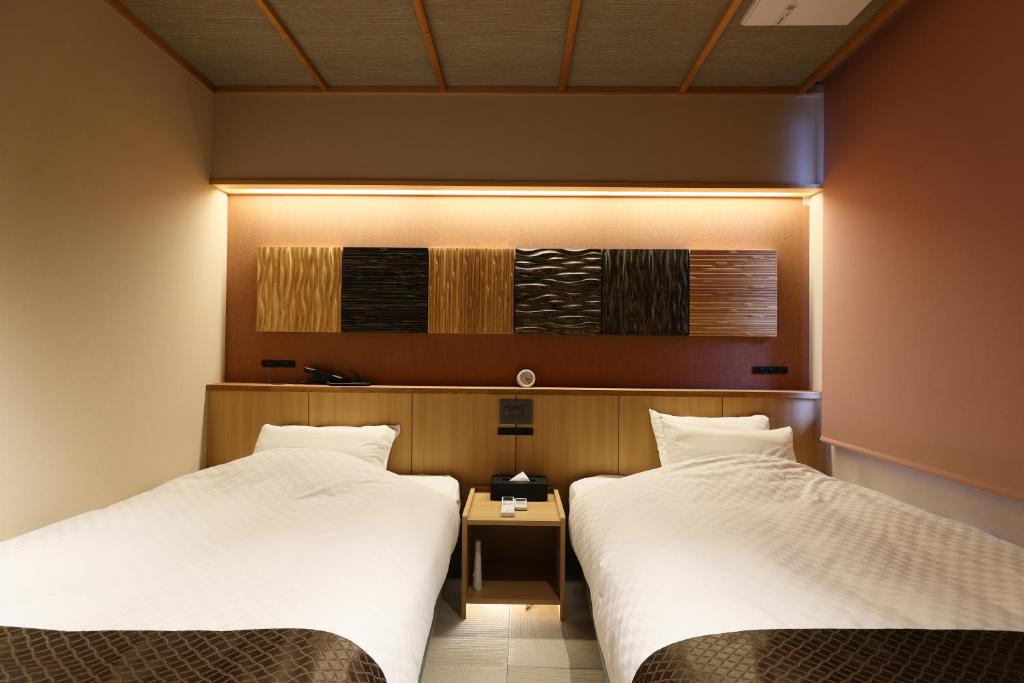
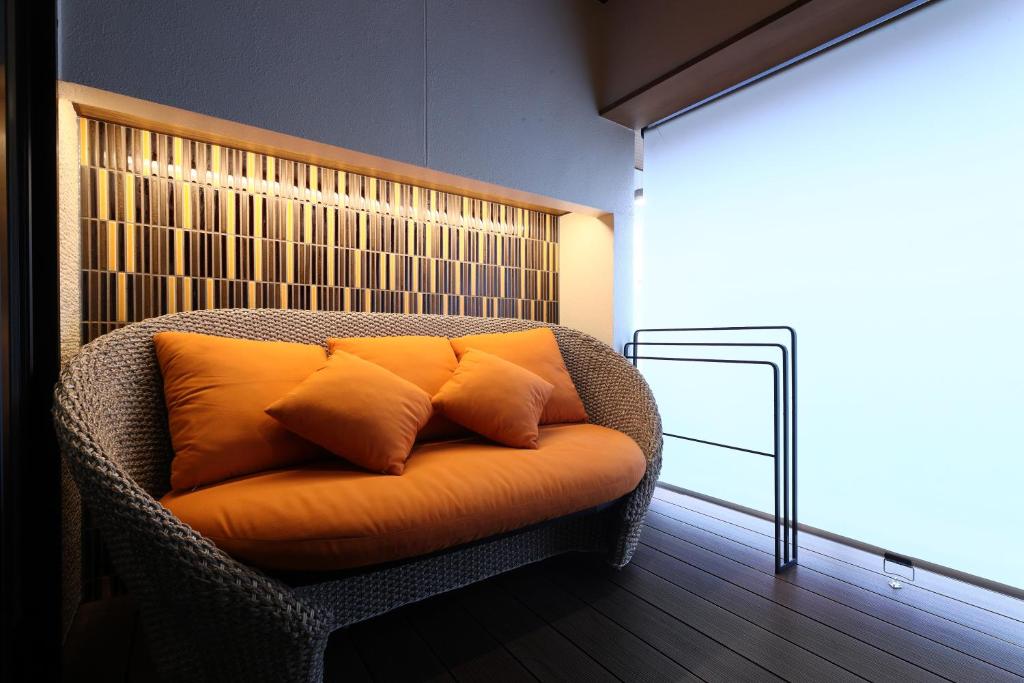
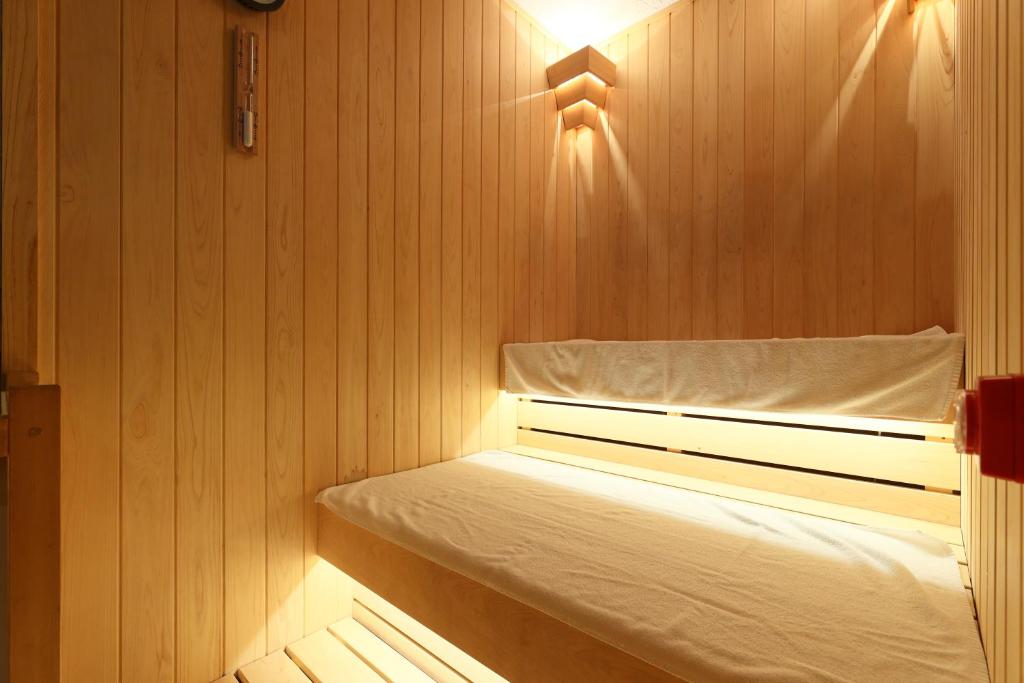
Tenkyu opened in 2023 and provides up to 80 square metres of space. The layout includes a living room, two sleeping areas, a terrace, five semi-double beds, a shower, a private sauna, a cold-water bath, and a semi-open-air onsen supplied with free-flowing Yubatake spring water. A balcony with seating gives you somewhere to cool down between sauna sessions.
Syugyoku also opened in 2023. This 50-square-metre room has a wide king bed, living area, balcony, private sauna, cold-water bath, shower, and semi-open-air Yubatake onsen. Tenkyu and Syugyoku are non-smoking.
The Japanese-Western Semi-Suite combines a 12-tatami room, twin bedroom, living room, massage chair, and private indoor Kusatsu Onsen bath. This category permits smoking, so check the room designation carefully before booking.
The Premium Japanese Room has 14 tatami mats, a massage chair, and a wooden deck. It does not include a private natural hot spring bath and is designated for smoking.
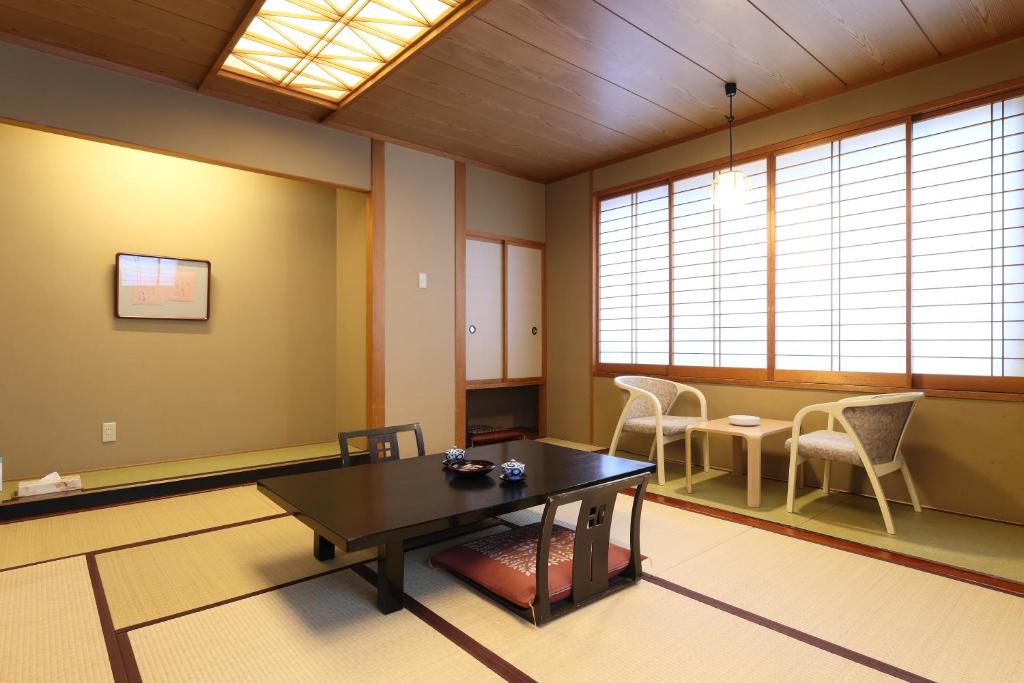
Standard Japanese rooms provide either ten or 12 tatami mats with futon bedding. Some include a private bathroom, while other categories rely on the shared onsen for bathing. Most of these traditional categories permit smoking, although a separate non-smoking ten-tatami room is available.
The non-smoking Modern Japanese Room places a Simmons queen bed directly on the tatami. Compact options include a 15-square-metre Western twin and a 4.5-tatami Japanese room. The smallest Japanese room has no view and no private bath.
Every room has Wi-Fi, climate control, a television, refrigerator, kettle, safe, hairdryer, towels, yukata, and toothbrushes. Bathroom and toilet equipment differs by category, so confirm the exact arrangement when selecting your room.
Dining
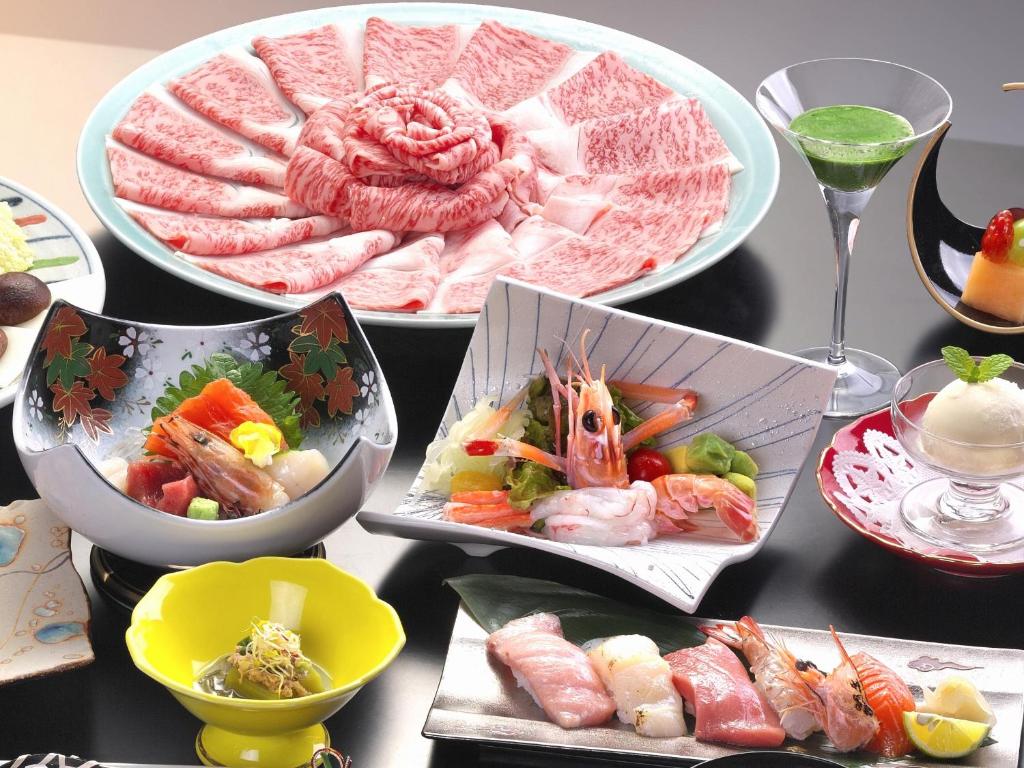
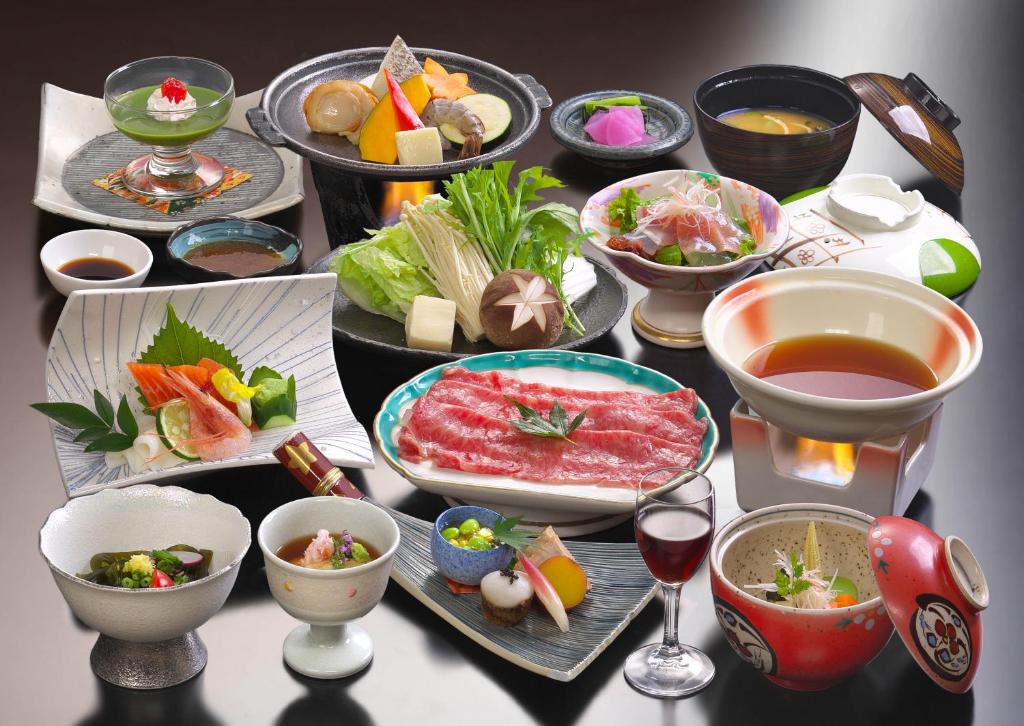
Dinner is based on seasonal Japanese cuisine, with Joshu beef, pork, seafood, vegetables, grilled fish, sashimi, and warming hot pots appearing according to your chosen plan.
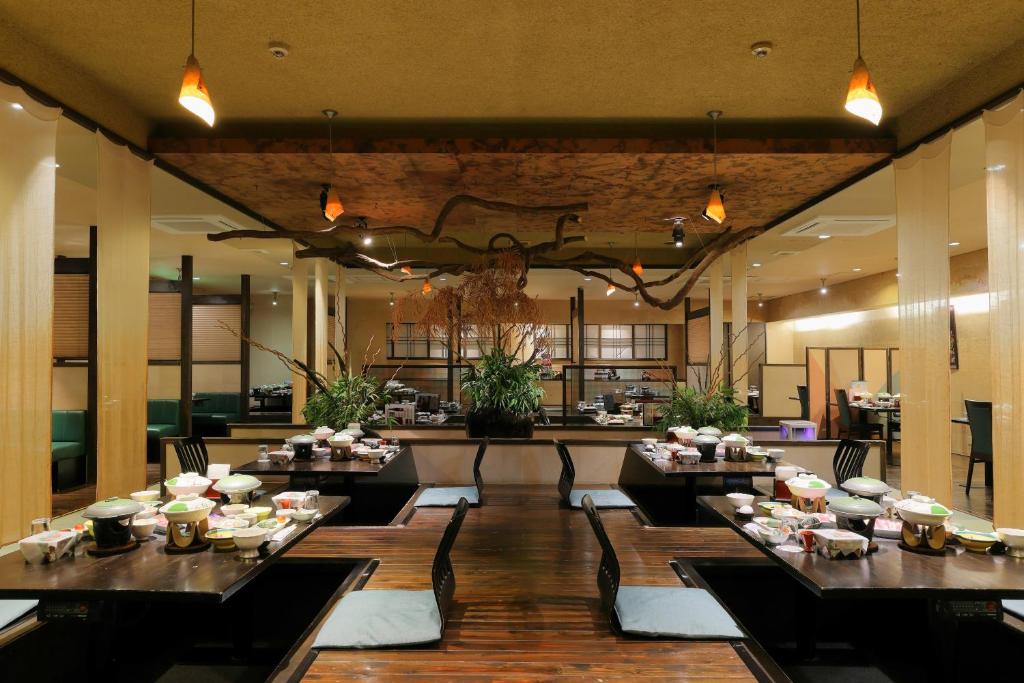
Kirakutei has sunken seating and an open kitchen. Chefs finish seasonal grilled and fried dishes in view, while the centre of the meal may feature Joshu wagyu sukiyaki, Iberico pork shabu-shabu, or a changing regional hot pot.
Kiwamiaji offers private rooms for small groups and counter seating for a quieter meal. Monthly courses may include A5-ranked Joshu wagyu, seafood brought from Hokkaido or Niigata, and produce from the surrounding mountains.
Kiboumine occupies the upper floor and serves seasonal Japanese courses with a semi-buffet section. You can collect rice, ochazuke toppings, and selected accompanying dishes at your own pace. On clear mornings, the windows reveal the mountains around Kusatsu.
In-room dinner is available only through selected accommodation plans. Your confirmed plan determines whether you eat in Kirakutei, Kiwamiaji, Kiboumine, or your room.
Breakfast normally offers around 40 Japanese and Western dishes in Kiboumine or Kirakutei. Depending on occupancy and operating conditions, breakfast may change from a buffet to a prepared set meal.
A low-allergen menu removing 28 specified ingredients can be requested by the stated deadline two days before arrival. The kitchen handles many foods in shared preparation areas, so complete separation from allergens cannot be guaranteed.
Onsen and Wellness
The Yubatake source is classified as an acidic sulfur-containing aluminium sulfate and chloride spring. Its pH is approximately 2.08, giving it the sharp mineral character for which Kusatsu is known.
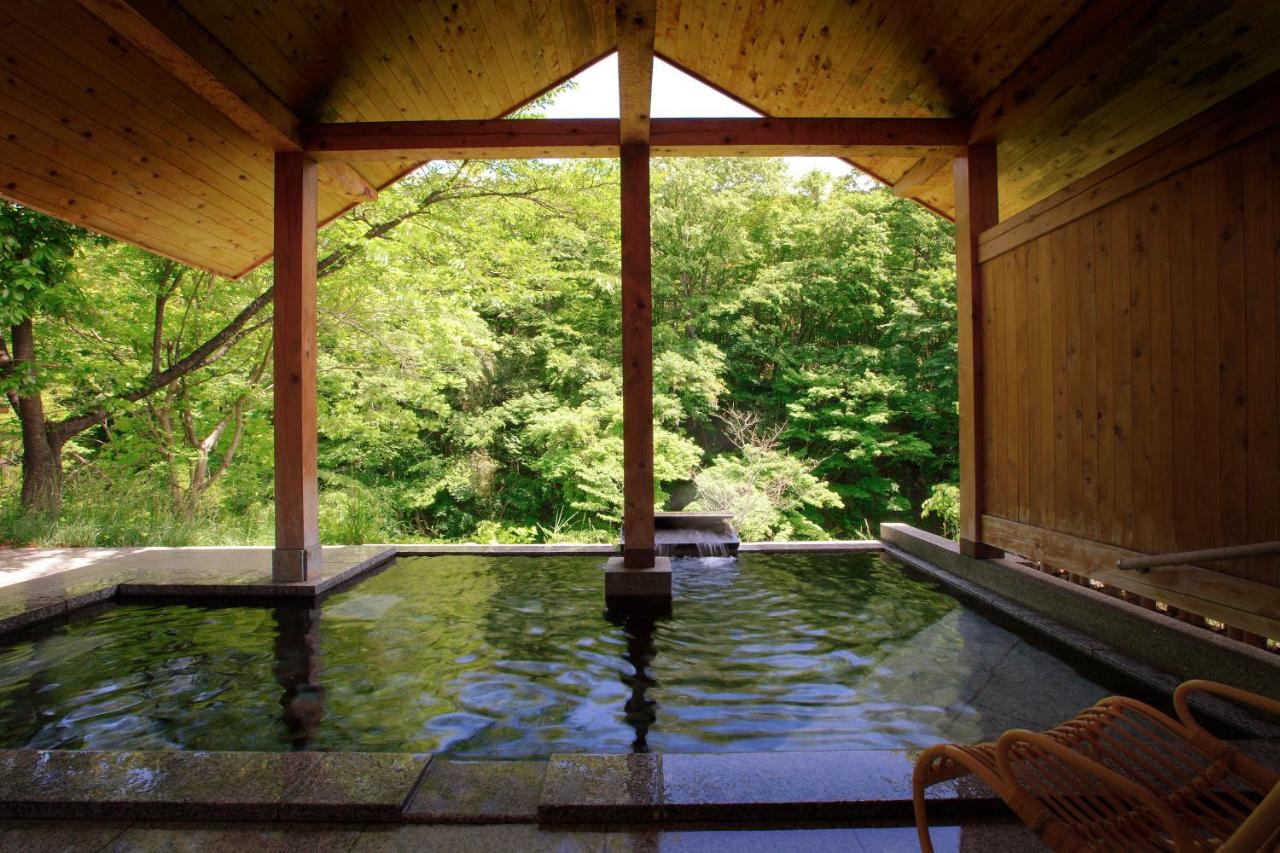
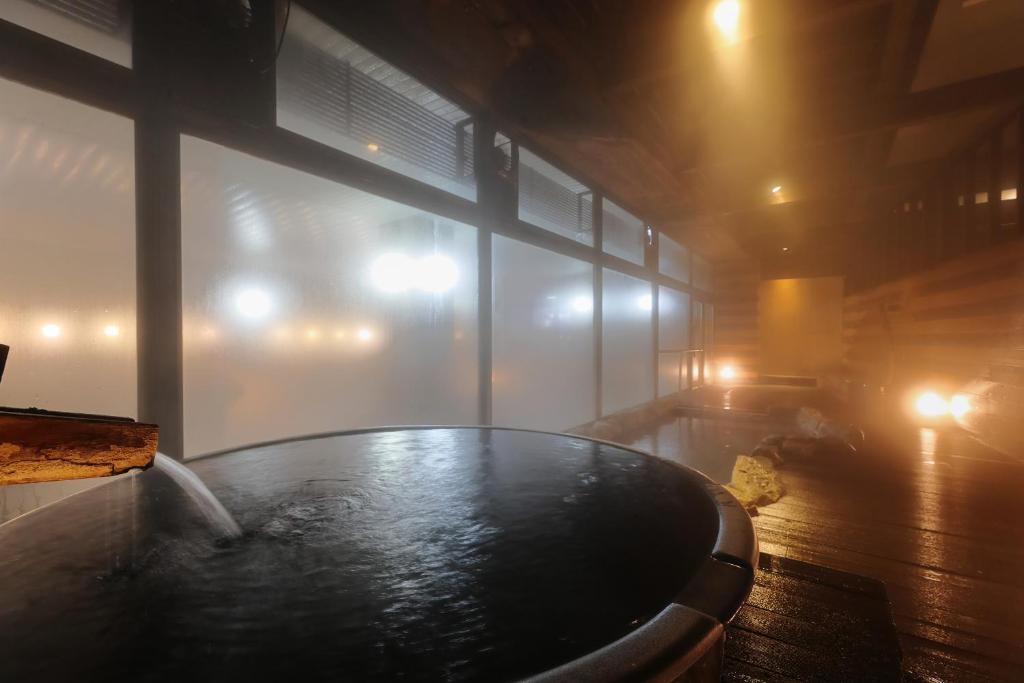
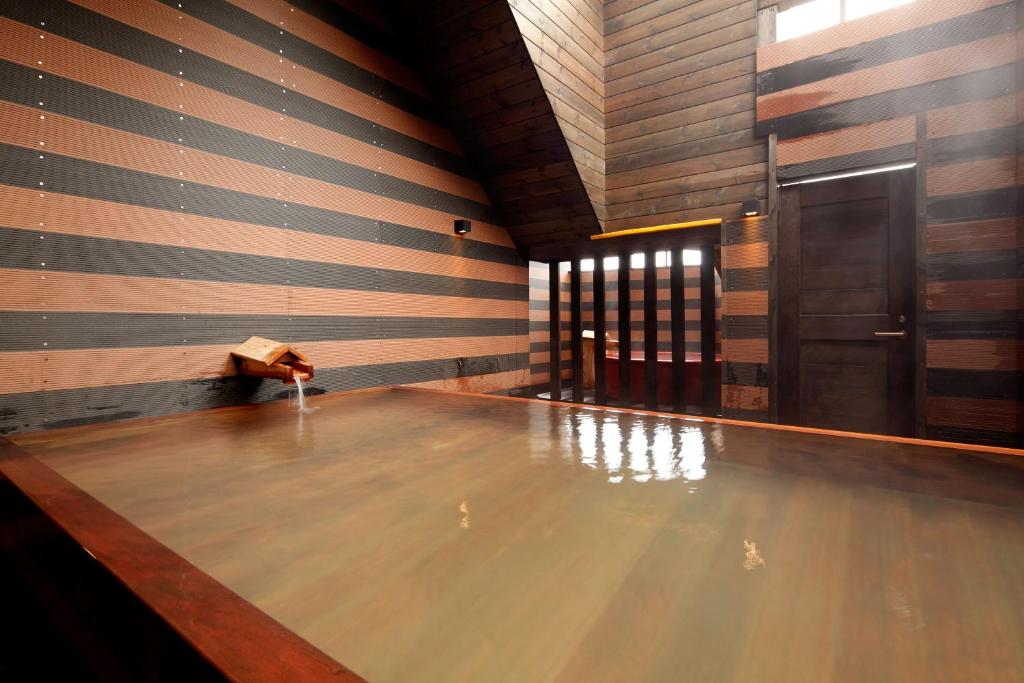
Takamatsu cools the high-temperature water naturally by exposing it to the air. The baths use 100% Yubatake spring water without added water or reheating. Natural yunohana deposits may occasionally make the normally clear water appear milky.
Traditional bathing indications include muscle and joint discomfort, neuralgia, frozen shoulder, bruises, sprains, fatigue, recovery after illness, and selected skin conditions. Strongly acidic water may feel intense on sensitive skin, so begin with a shorter soak when you are unfamiliar with Kusatsu Onsen.
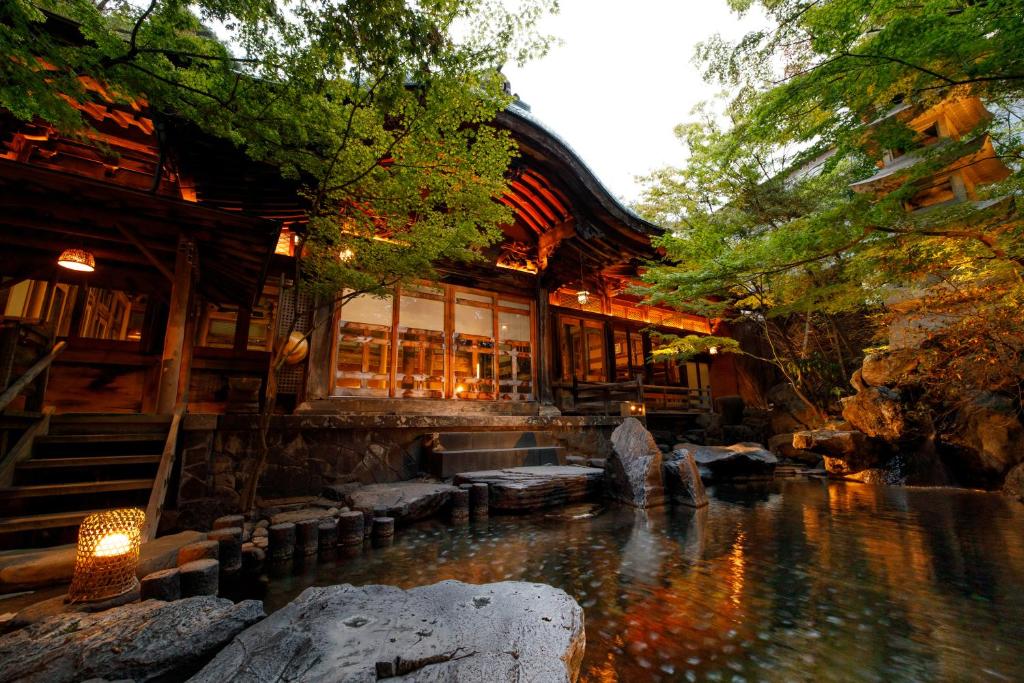
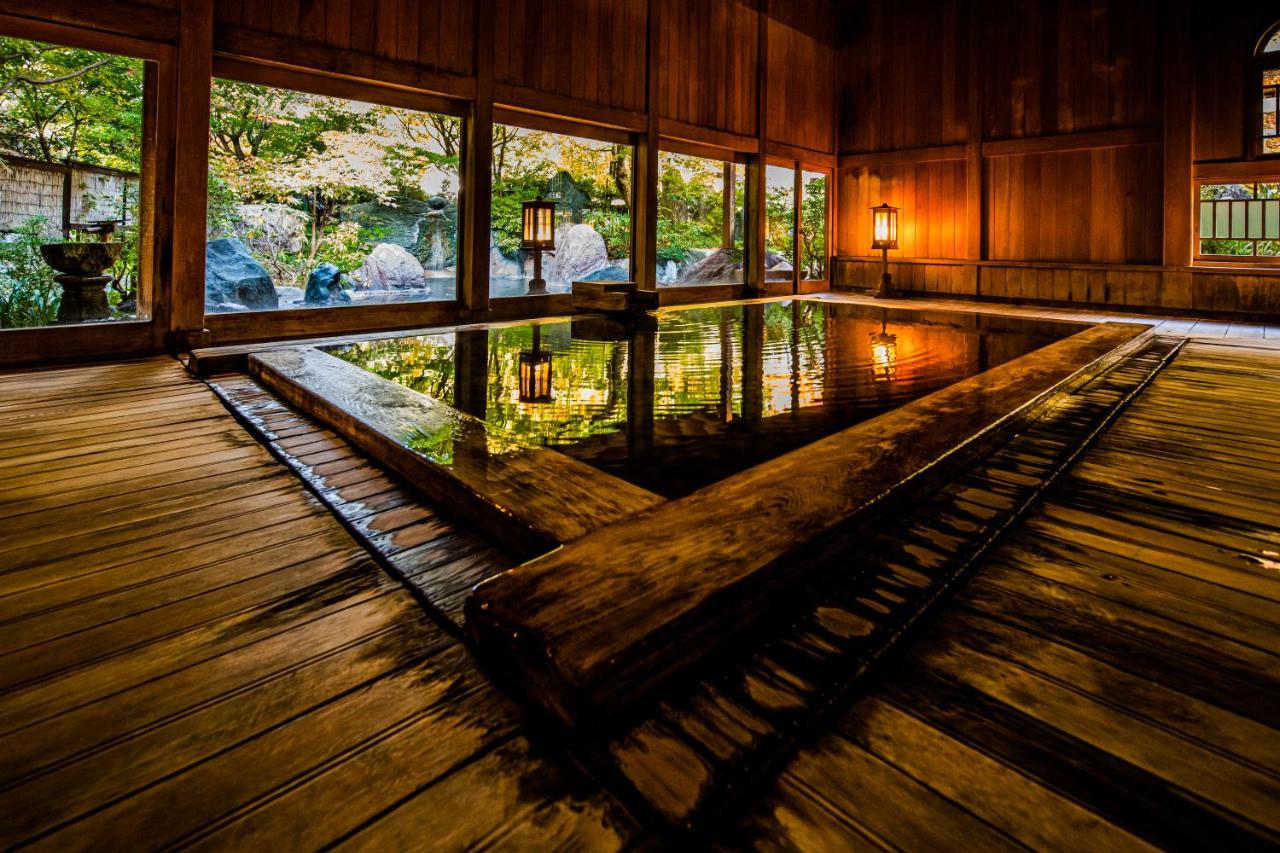
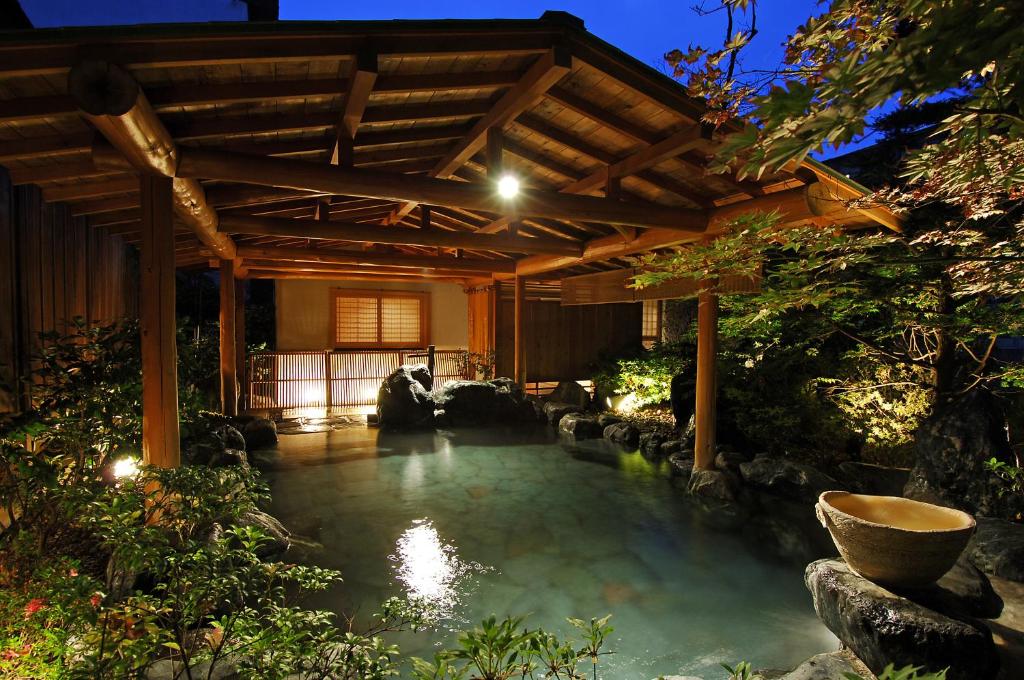
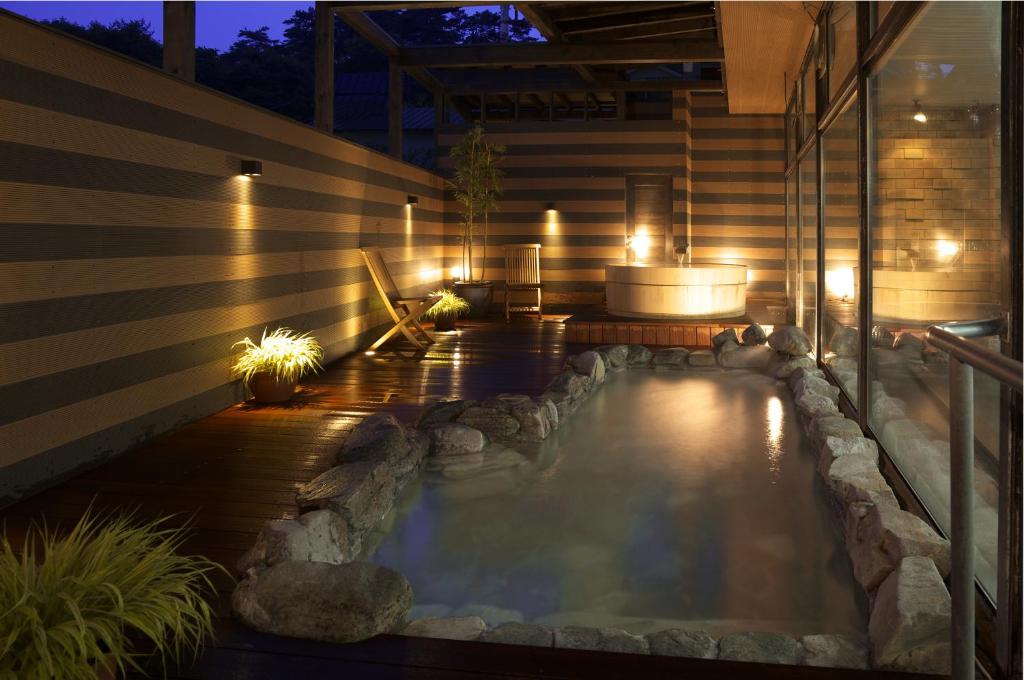
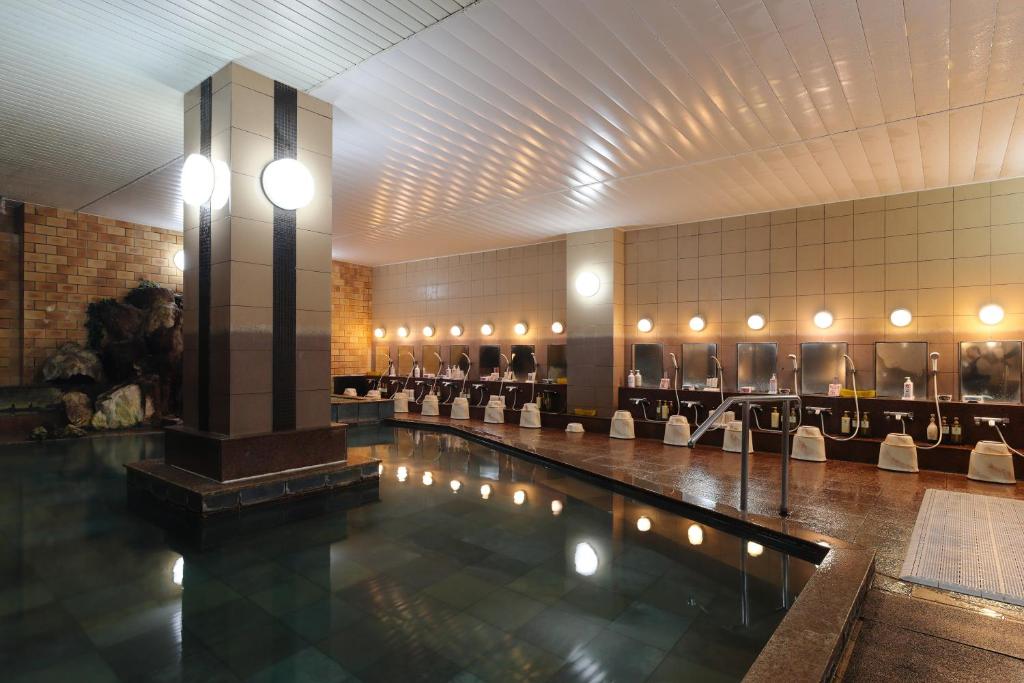
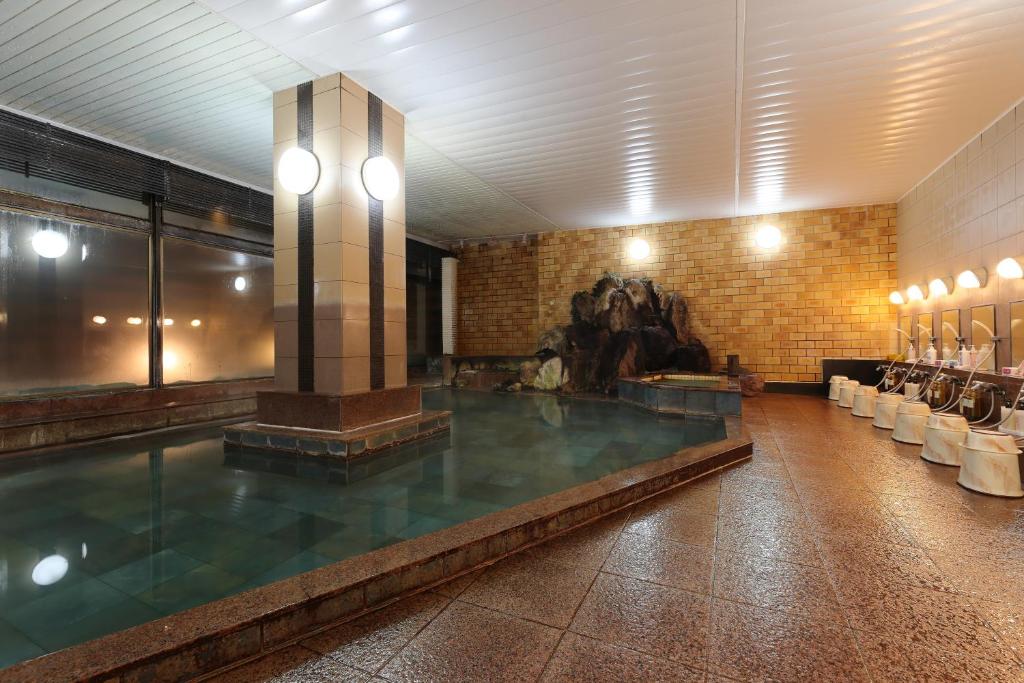
Izumi has a large indoor bath and a wooden outdoor deck. Outside, you can move between a cypress bath, a rock bath, and a ceramic barrel bath.
Megumi has three indoor tubs maintained at hot, medium, and cooler temperatures. Its outdoor deck contains a cypress bath and a ceramic bath, making this side easier to enjoy when you prefer a gentler water temperature.
The communal baths normally open from 14:00 until 9:30 the following morning. They close between 1:00 and 4:00 for cleaning and the change between men’s and women’s areas, allowing you to experience both Izumi and Megumi during an overnight stay.
Two garden-inspired private baths are available for reservable 50-minute sessions. These are indoor baths rather than open-air baths. Reservations are normally accepted only after arrival, although selected plans may follow a different arrangement.
Tenkyu and Syugyoku add private semi-open-air onsen, saunas, and cold-water baths inside the room. The Japanese-Western Semi-Suite has its own indoor Kusatsu Onsen bath but does not have a sauna.
Guests with Tattoos
You can use the communal and private baths when you have fashion or other non-offensive tattoos. You do not need to conceal them with a cover seal.
This welcome applies specifically to tattoos that are not offensive or intimidating. Follow the usual bathing etiquette and avoid clothing, towels, or swimwear inside the tubs.
Facilities
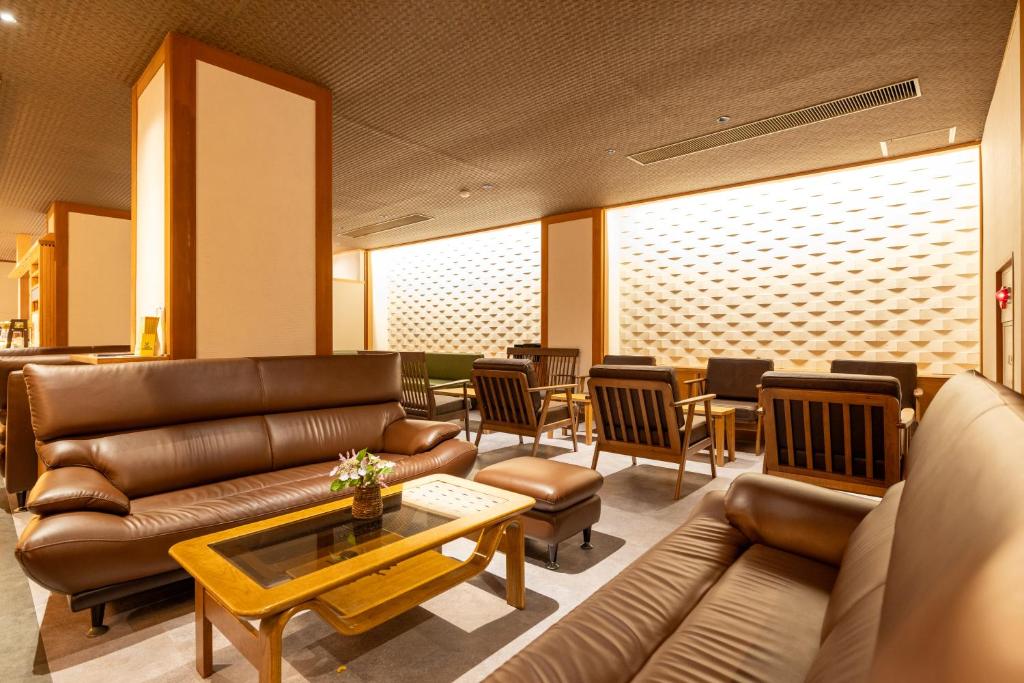
The first-floor lobby was renewed in 2024 and gives you comfortable seating for arrival, departure, or a break between walks around town. Seasonal flowers add colour throughout the shared spaces.
The shop sells handmade onsen manju, Gunma products, drinks, and Kusatsu skincare items. It opens from morning until the evening, making it easy to collect a small souvenir before departure.
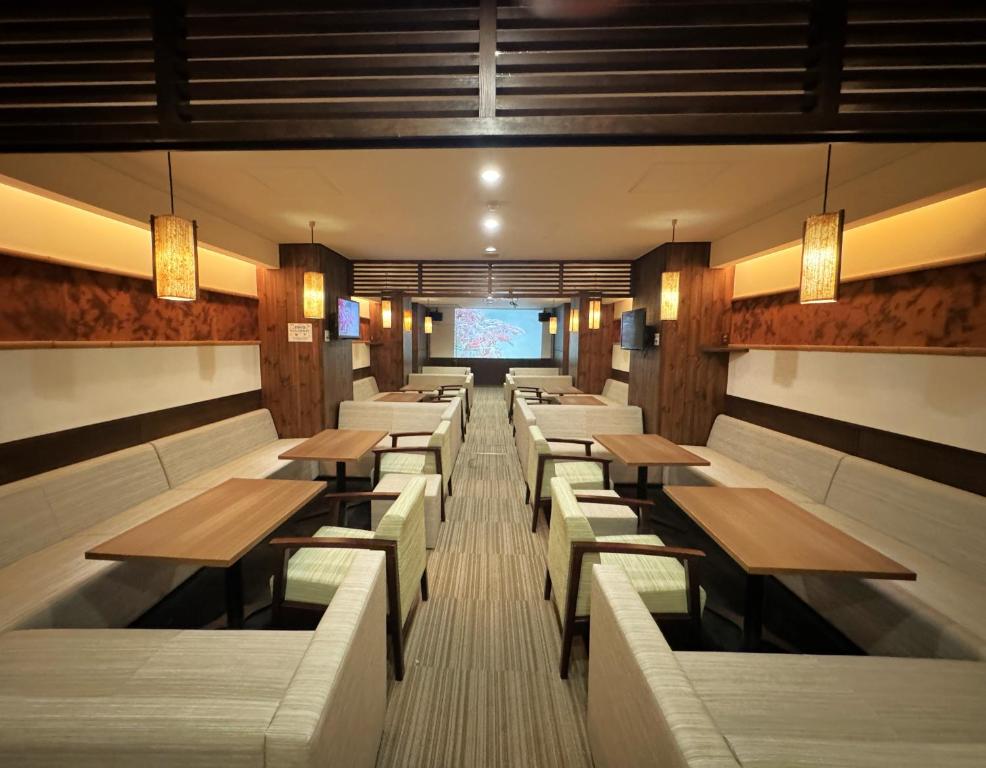
During the daytime, WA Ki Aiai works as a post-bath lounge with cold drinks and massage chairs. In the evening, it can operate as a reservation-based bar and karaoke lounge.
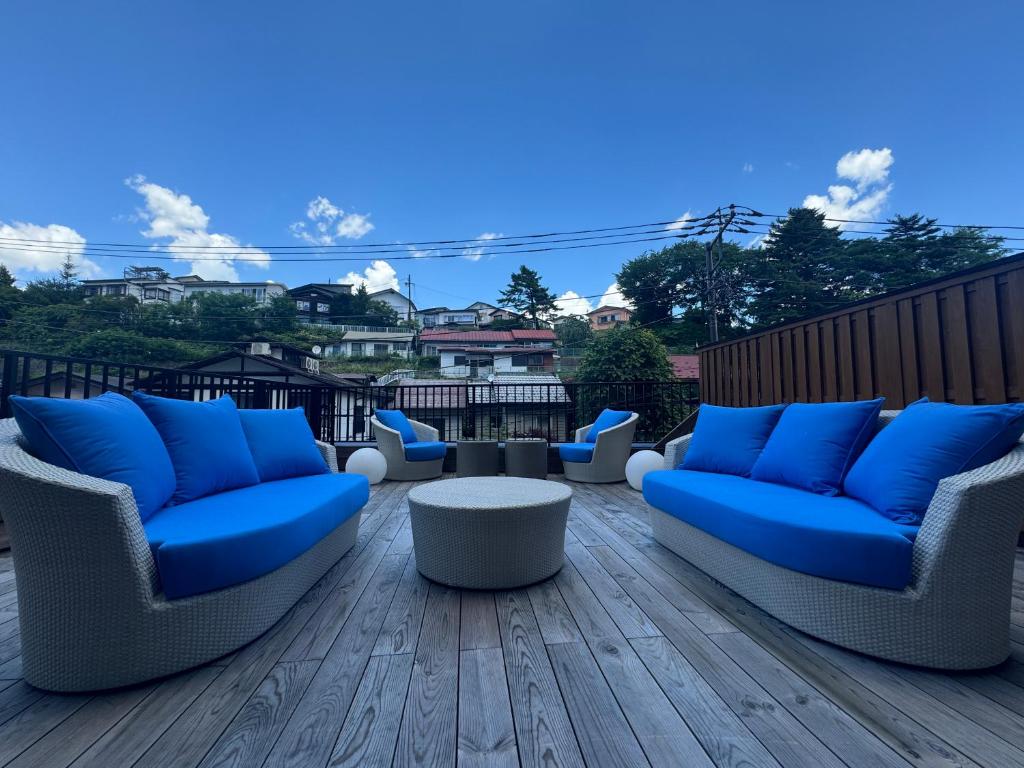
A second-floor terrace, coin laundry, vending machines, computer corner, billiards, banquet halls, and meeting rooms support longer stays and group travel. Wi-Fi is available throughout the building.
Activities
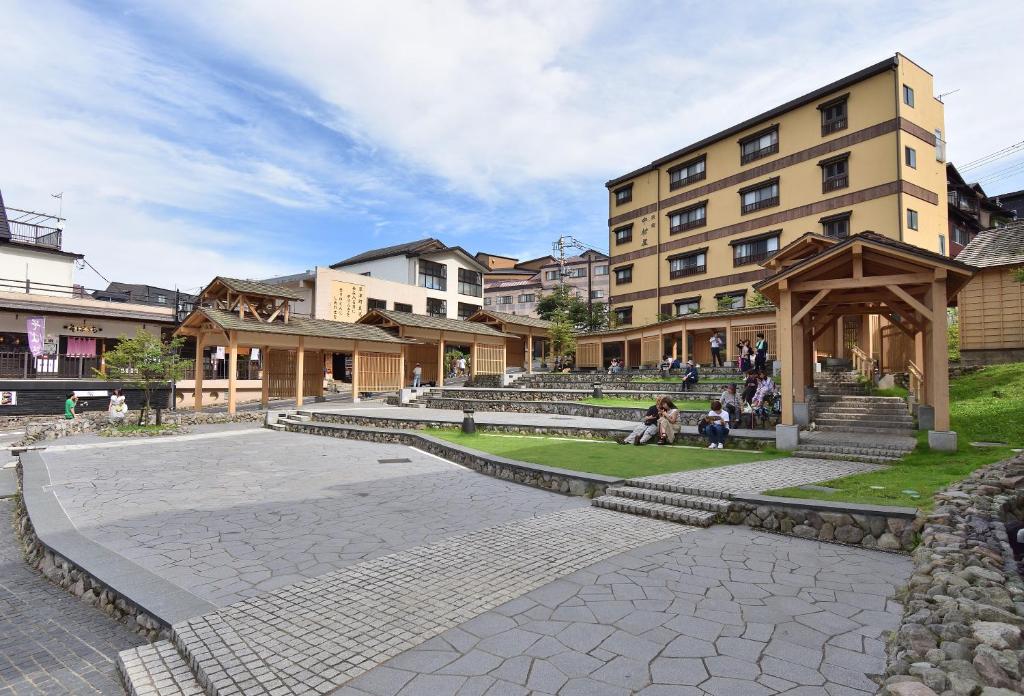
Walk around four minutes to Yubatake, where spring water flows through long wooden channels in the centre of town. Return after dark to see the steam and water illuminated.
Ura-Kusatsu Jizo is around one minute away. You can explore Jizo no Yu, a public footbath, small cafés, and lanes that offer a quieter contrast to the busy Yubatake area.
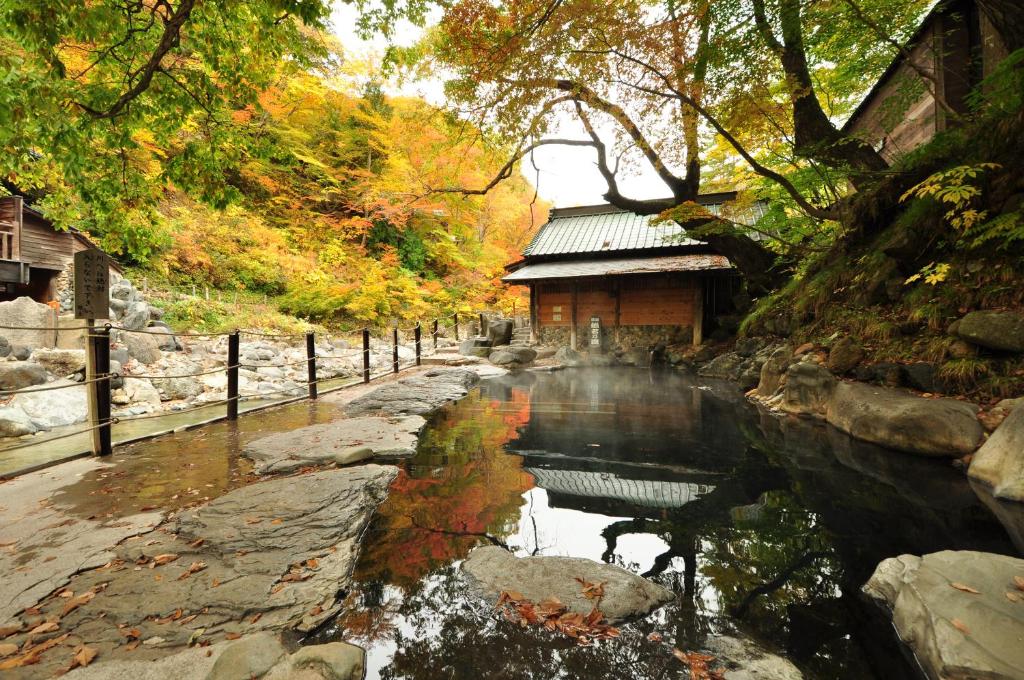
Continue through the town to Nishi-no-Kawahara Park, around 20 minutes away on foot. A walking path follows streams of hot spring water through the rocky valley, while the large outdoor bath gives you an open-air bathing experience on a much bigger scale.
Kusatsu’s three main day-use baths each have a different character. Gozanoyu stands beside Yubatake, Otakinoyu is known for its awaseyu sequence of different temperatures, and Nishi-no-Kawahara offers a spacious outdoor bath.
At Netsunoyu, the Yumomi and Dance Show demonstrates the traditional practice of cooling very hot spring water with long wooden paddles instead of diluting it.
Kusatsu Tropical Wonderland is around five minutes away on foot. Farther uphill, Kusatsu Onsen Ski Resort offers snow sports in winter and outdoor activities during the warmer months.
Additional Features
Check-in begins at 14:00, and check-out is by 10:00. You can leave luggage before check-in and after departure, while vehicle storage after check-out is available until the stated morning limit.
Complimentary Wi-Fi is available throughout the building. Smoking rules differ by room category, so choose a room clearly marked as non-smoking when required.
Complimentary parking is available for approximately 70 cars. Drive to the entrance first so you can receive directions to the correct parking space.
From Naganohara-Kusatsuguchi Station, the bus journey to Kusatsu Onsen Bus Terminal takes around 25 minutes. After arriving at the terminal, contact Takamatsu for collection.