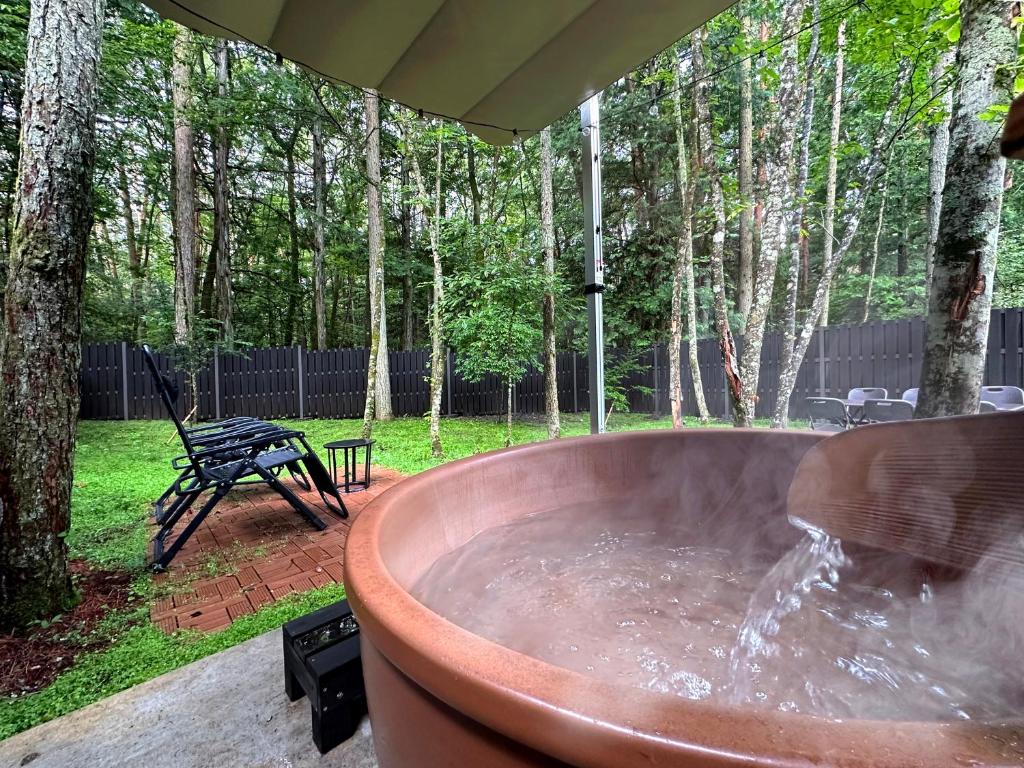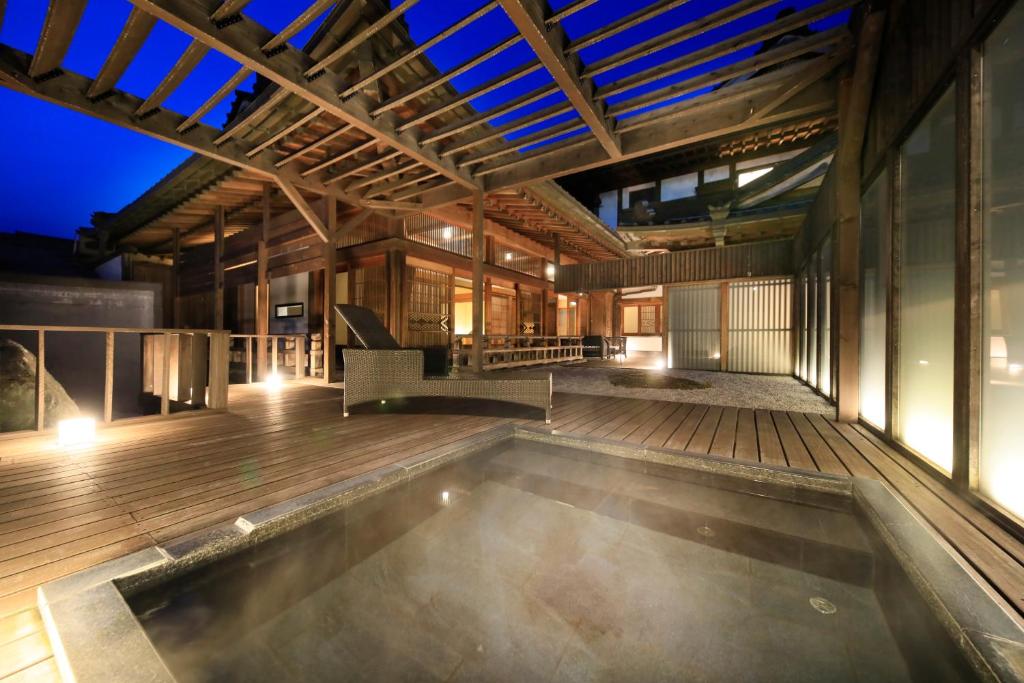
Okuiizaka Aanabara Onsen Yoshikawa Ya Outdoor Onsen

Bathing in Japan: How to enjoy an onsen

Bathing in Japan is a ritual people take very seriously. It’s something we highly recommend every visitor experience, since it’s relaxing and nourishing for both the body and mind. It can feel very intimidating at first, but this guide will tell you exactly what to expect and what to do so you feel confident and comfortable.

Everyone who has been to Japan will tell you that experiencing an onsen is a must. The trouble is that many first-timers don’t really understand what an onsen is or why they are so special. Onsens are so beautiful and surrounded by nature, and they seem so calming and inviting, so why is it that many people tell you that you need to adhere to strict rules before enjoying one? Shouldn’t it be as simple as entering a bathtub full of water?

Yunokuni Tensyo Outdoor Onsen

What is an onsen

An onsen is Japanese for hot spring. It’s written 温泉:

温 = warm/hot
泉 = spring/fountain

In Japan, onsen usually refers to a natural geothermal hot spring bath, often at a ryokan or public bathing facility. Japan is blessed with a myriad of natural hot springs thanks to being located on the Pacific Ring of Fire. There are so many types of natural hot springs too.

Simple spring — mild, low mineral content
Chloride spring — salty; helps warmth stay on the skin
Carbonated spring — bubbly; associated with circulation
Hydrogen carbonate spring — often called a “beauty bath” because it can make the skin feel smooth
Sulfate spring — mineral-rich; often used for recovery-style bathing
Iron spring — reddish/brown water from iron content
Sulfur spring — strong “egg” smell; classic volcanic onsen
Acidic spring — strong water, usually for short bathing
Radioactive spring — contains trace radon/radium; not as common
Iodine spring — contains iodine, often yellowish or brownish

Beyond the type of minerals in the water, you also have different types of onsen by setting, such as indoor baths, outdoor baths called rotenburo, private baths, public baths, foot baths, and so on.

Irodoriyukashiki Hana To Hana Outdoor Onsen

Why Japanese people love onsen

The mineral-rich waters all have their own unique benefits for the skin and muscles. But what’s more, hot springs in Japan are usually created into stunning facilities so you can enjoy nature.

For hundreds of years, Japan has taken these natural sources and turned them into picture-perfect relaxation areas surrounded by nature, with views of forests, mountains, or seas.
They are often linked to ryokans where you can enjoy a relaxing weekend where you are very well taken care of, with multi-course food, tatami floors, relaxing tatami rooms, stunning gardens, yukatas for comfort, and of course, hot baths.

Japanese people live very busy lives centered around work, so escaping to nature to enjoy a relaxing weekend while bathing in an onsen with views of the forest is the ultimate medicine. As a foreign tourist, you can do it too. So here’s how to do it well.

How to Bathe at an Onsen

As a foreign tourist in Japan, you are very welcome to enjoy the Japanese onsen the same way as everyone else. Please know that ryokans with onsen do want and welcome foreign guests. Bathing in an onsen is easy, and you just need to remember and follow these very simple rules.

1. Enter your gender room

enter the clearly separated gender room at the onsen

Onsens are separated by gender for your comfort. Red is usually for ladies and blue is for men. There is usually English as well to clearly show which room belongs to which gender.

2. Undress completely

The are at the onsen where you can undress and keep your belongings safe

Remove your slippers and place them in the rack. There will be a locker room with shelves for all your belongings. Undress completely. Normally, you will be wearing a yukata at this point given to you by the ryokan, but just in case you are visiting a public onsen in the mountains, make sure to undress completely. Yes, including underwear. No bathing suits or textiles are allowed. Please have a hair tie with you for your hair.

3. Head to the shower area

How the shower area in the onsen looks like

Before entering the onsen, wash your body thoroughly at one of the shower stations. You’ll usually find a small stool, a bucket, a hand-held shower, and soap and shampoo provided for you. Sit down, take your time, and clean yourself properly, including removing any makeup. It’s important to rinse off completely so no soap or shampoo goes into the bath water.

Once you are clean, pour some hot water over your body before stepping into the bath. This is called kakeyu. It helps your body adjust to the temperature of the onsen and makes entering the hot water much more comfortable. Many onsens have a small basin near the entrance just for this.

4. Enter the onsen

Bring a small towel with you into the onsen area, but don’t let it touch the hot spring water. Most people either fold it and place it on top of their head or leave it on the side of the bath while they soak. If you have long hair, tie it up before entering, as hair should never touch the water either.

Enter the onsen and enjoy. You can soak for as long as you want, but just remember that some water is very hot and can make you feel a bit dizzy. When getting out of the water, hold onto the railings. While soaking, enjoy nature and the sounds of nature in silence. Take your time.

Many ryokans have indoor and outdoor onsen. Try both. There is so much magic in trying an outdoor onsen when it’s snowing, for example.

What do I need to know about bathing in Japan?

Please note that phones are not allowed in the onsen area. Japan still sees tattoos as taboo, so make sure to check the ryokan and onsen’s policy on tattoos in advance. Luckily, there are plenty of tattoo-friendly ryokans out there.

Where to visit an onsen?

Takahan Onsen With Mountain View

You can visit an onsen almost anywhere in Japan, but some areas are especially famous for their hot springs. Hakone is one of the most popular options because it’s close to Tokyo and has beautiful ryokans with mountain views. Kusatsu Onsen is also very famous for its strong mineral waters, while Beppu is known for having many different types of baths and hot spring experiences.

If you want something scenic, look for onsen towns in the mountains, by the sea, or surrounded by forest. The setting is a big part of the experience. A simple bath becomes something completely different when you are soaking outside while looking at snow, autumn leaves, or misty mountains.

If this is your first time, staying at a ryokan with an onsen is probably the easiest and most comfortable way to experience it. The staff will guide you, everything is prepared for you, and you can enjoy the full experience with dinner, yukata, tatami rooms, and a peaceful bath before bed.

Are tattoos really not accepted?

Kinosaki Yamamotoya Cherry Blossoms Canal

Tattoos can still be an issue at some onsens in Japan. This is because tattoos have traditionally been associated with the yakuza, so some public baths and ryokans still do not allow guests with visible tattoos.

That said, things are changing, especially because Japan receives so many foreign visitors now. Many onsens are becoming more relaxed, and some are completely tattoo-friendly. Others may allow you to enter if you cover your tattoo with a sticker or bandage. If you have a small tattoo, this is usually easy to do.

The best thing is to check in advance. Most ryokans and public onsens will mention their tattoo policy on their website, but if you’re not sure, send them a quick message before booking. Another great option is to book a private onsen, called kashikiri buro, where you can bathe alone or with your partner without worrying about other guests.

I don’t feel comfortable being naked

This is very normal, and many visitors feel the same before their first onsen. Being naked in front of strangers can feel uncomfortable at first, especially if you’re not used to public bathing. But once you are there, you’ll quickly see that nobody is looking at you. Everyone is there to wash, soak, relax, and enjoy the hot spring.

The atmosphere is usually very calm and respectful. People keep to themselves, speak quietly, and focus on relaxing. It is not awkward once you understand that this is completely normal in Japan.

If you still don’t feel comfortable, book a private onsen. Many ryokans offer private baths that you can reserve for yourself, as a couple, or as a family. This is a wonderful way to enjoy the experience without feeling self-conscious.

Are onsen family friendly?

Yes, onsen can be family-friendly, and many Japanese families visit onsen together. Children are usually welcome, especially at ryokans and larger bathing facilities. It can be a lovely experience for families, especially when staying overnight at a ryokan.

That said, please remember that onsen are quiet, relaxing spaces. Children should not splash, swim, run, or be noisy in the bath area. The water can also be very hot, so always check the temperature before letting children enter. They should soak for a much shorter amount of time and take breaks if needed.

For families with young children, a private onsen is often the best option. It gives you more space, more privacy, and less stress about disturbing other guests. Some ryokans also have family baths specifically designed for this purpose.


📚 Hello! I’m Mari, a passionate enthusiast of Japanese onsens and ryokans and one of the co-founders. My love for hot springs has taken me across Japan, exploring different onsens and experiencing their unique qualities. I’ve created this site to share my knowledge and discoveries with fellow onsen lovers and anyone interested in learning more about Japanese hot springs.