Overview
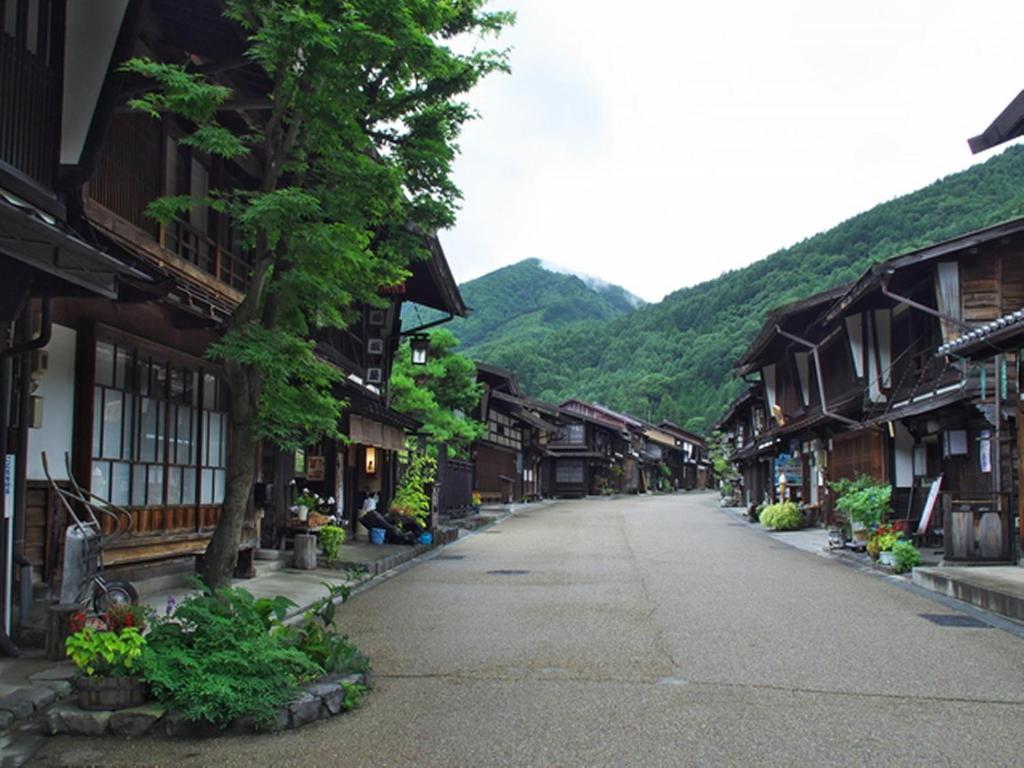
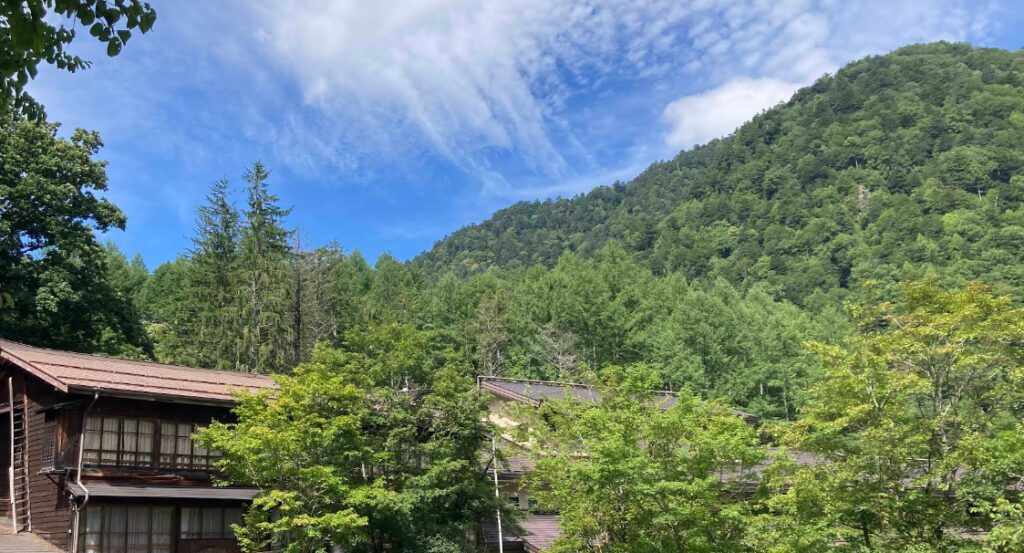
You reach Awanoyu at an elevation of around 1,500 metres in Shirahone Onsen, deep within Chubu-Sangaku National Park. The drive takes you away from Matsumoto’s city streets and into a forested mountain valley, where the sound of flowing spring water and the changing colors of the landscape set the pace for your stay.
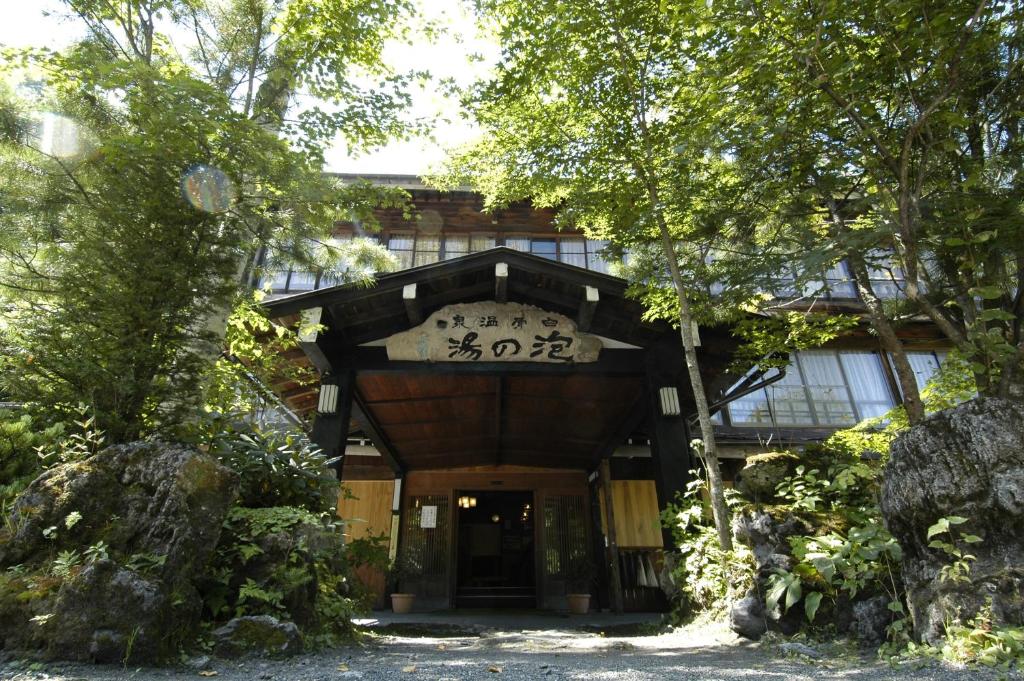
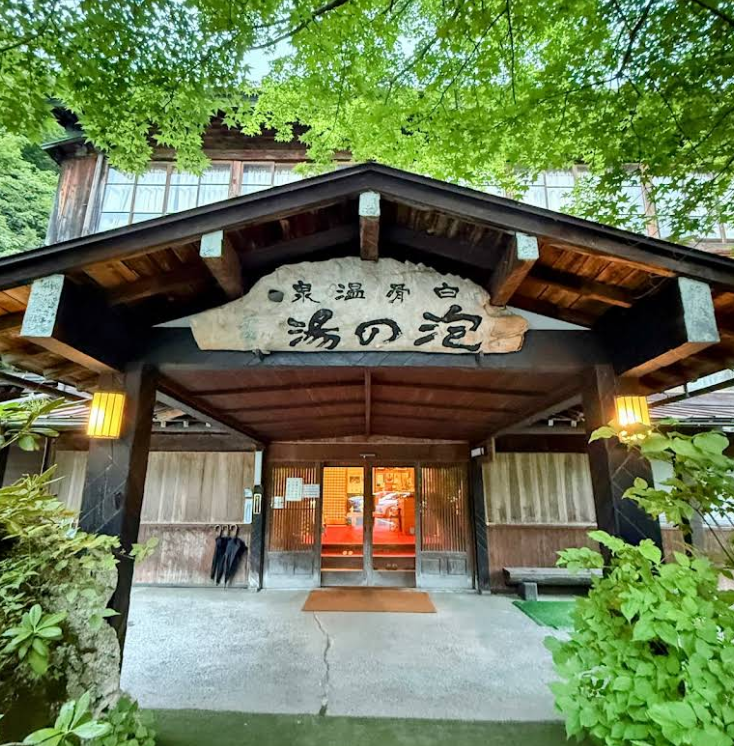
Awanoyu has welcomed travellers since 1912 and carries the atmosphere of a traditional mountain hot spring retreat. Rather than polished resort style, you find historic furnishings, seasonal flower arrangements, tatami rooms, quiet corridors, and baths that draw directly from one of Shirahone Onsen’s most distinctive natural springs.
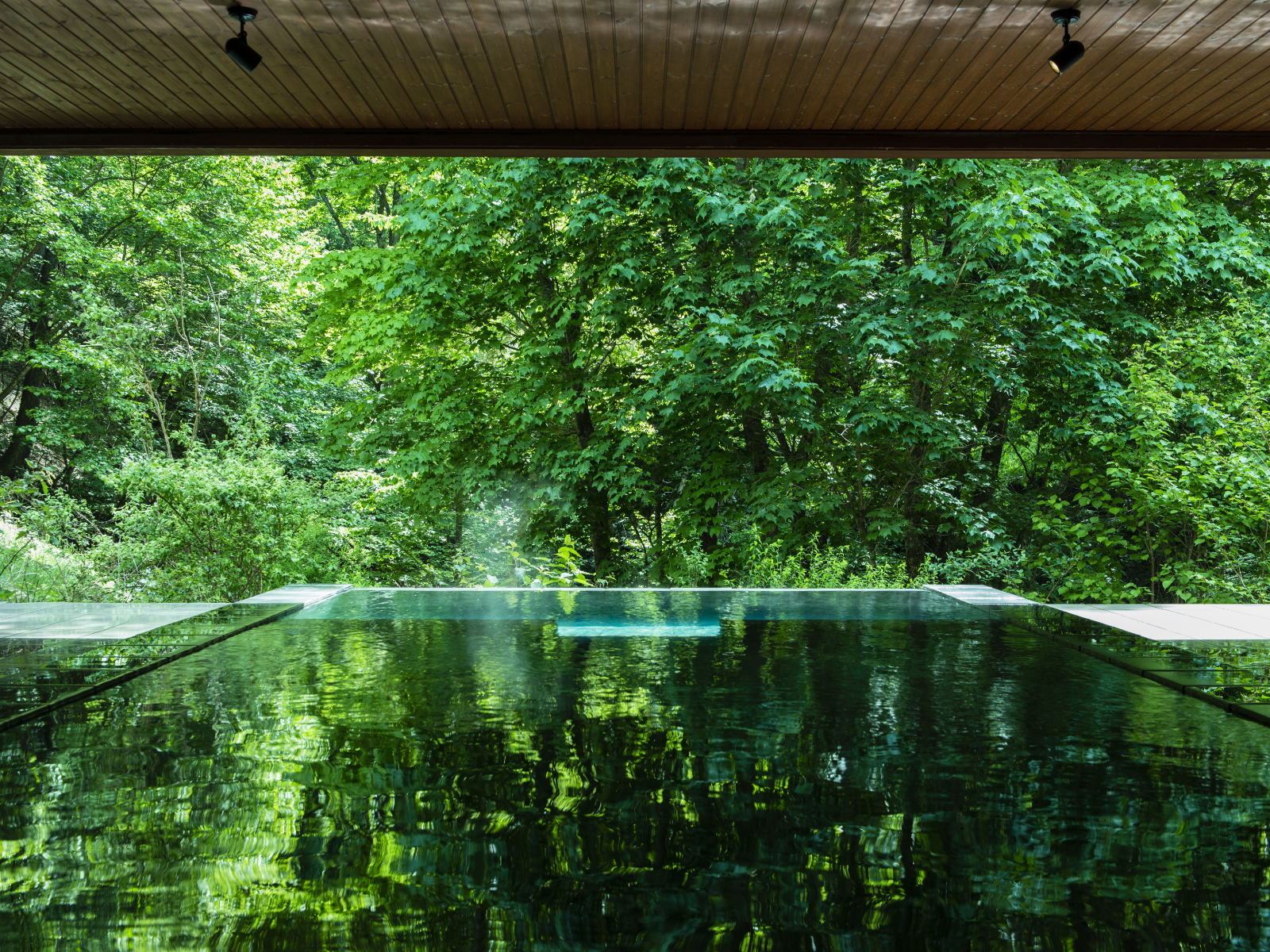
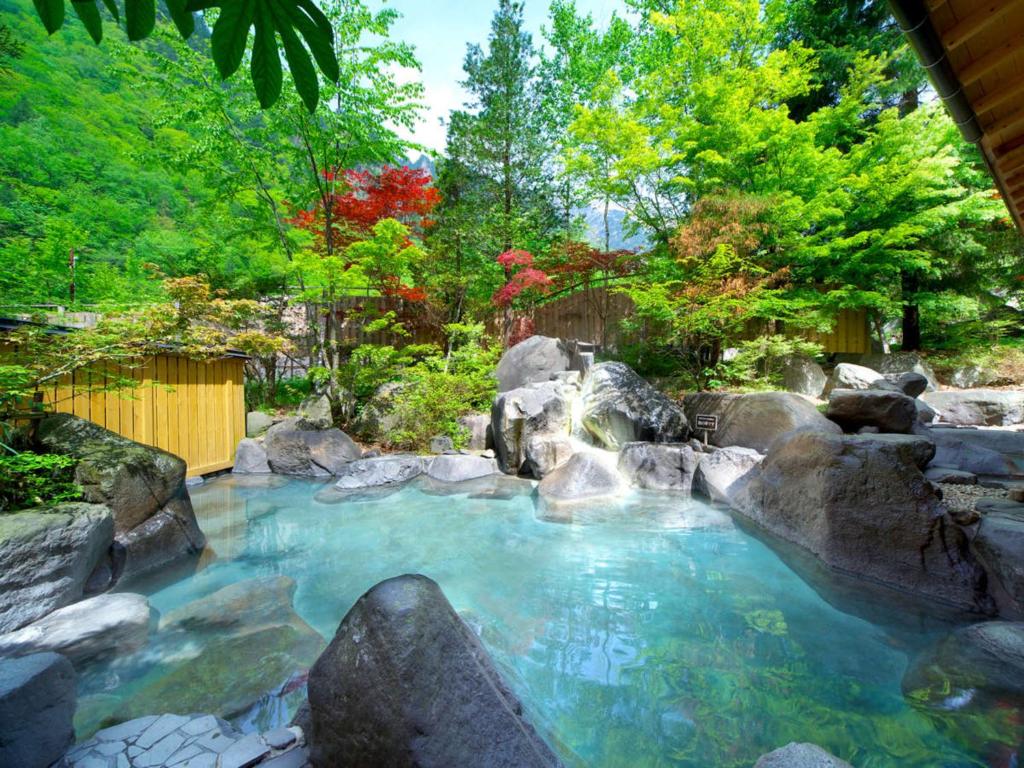
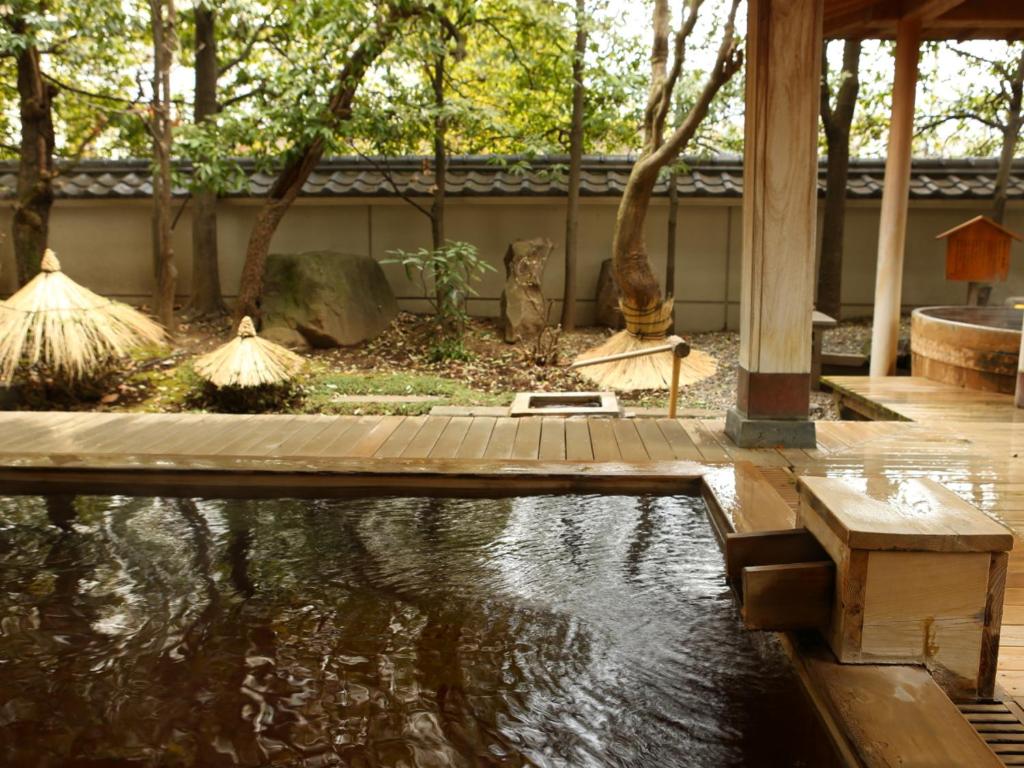
The large milky-white open-air bath forms the heart of the experience. You can soak beneath fresh spring leaves, deep summer greenery, autumn foliage, or falling winter snow. Between baths, you enjoy carefully prepared Japanese meals and rest in a setting that feels far removed from everyday routines.
Accommodation
You can choose between rooms in the newer wing and rooms in the original main building. Each option gives you a different way to experience Awanoyu, from spacious Japanese rooms with private bathing facilities to nostalgic tatami rooms that preserve the character of an old mountain retreat.
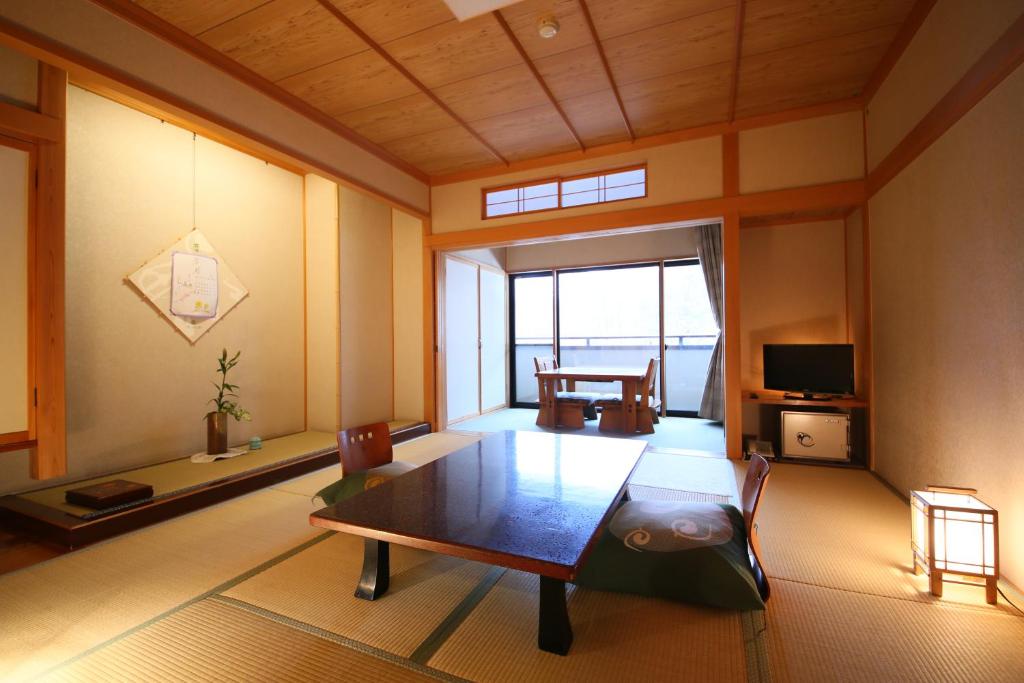
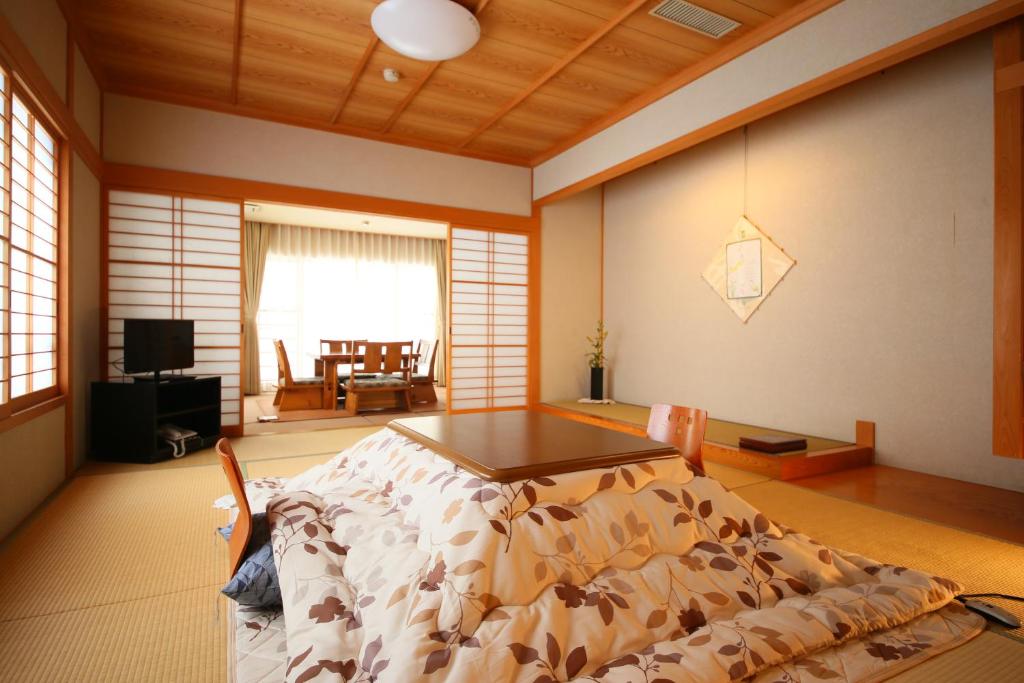
On the third floor of the newer wing, Kohaku combines a 12-tatami Japanese room with a Western-style space and a window-side sitting area. Midori also has a 12-tatami main room, along with an adjoining Japanese room and a wide sitting area. These larger layouts give you more space to relax after bathing. Moegi provides a comfortable 10-tatami room with a window-side sitting area and serves as the standard room style in the newer wing.
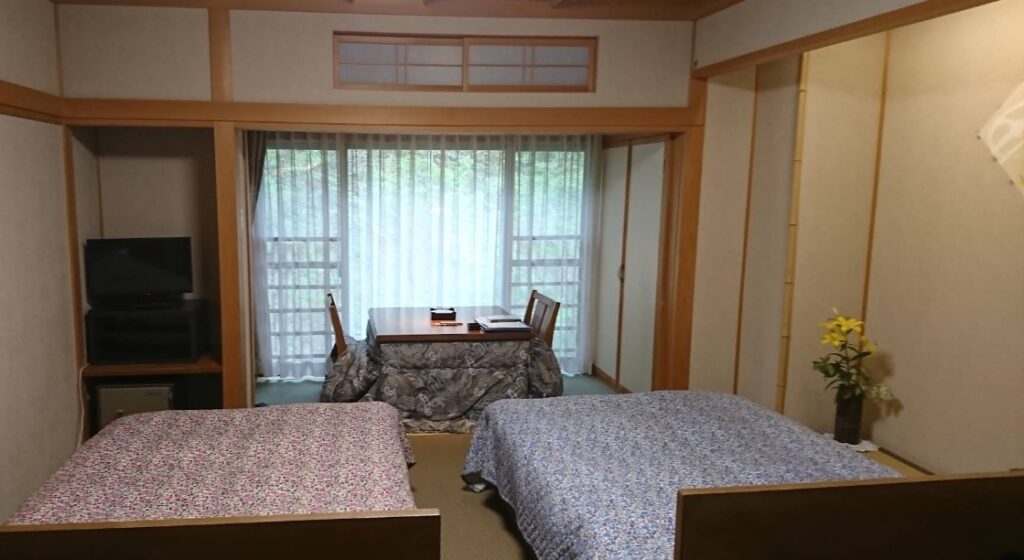
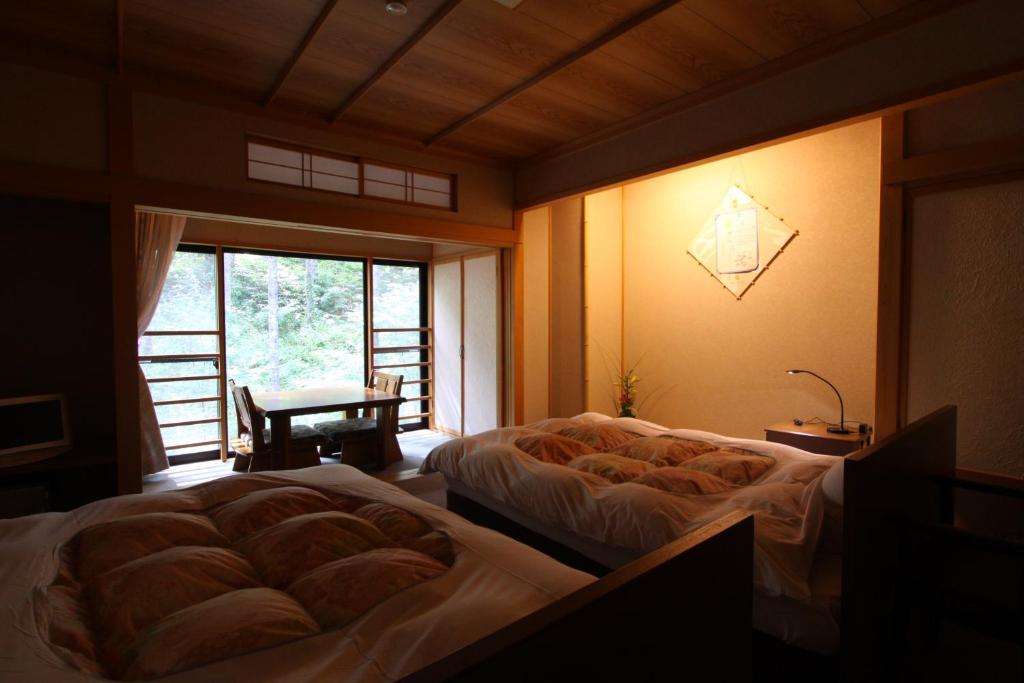
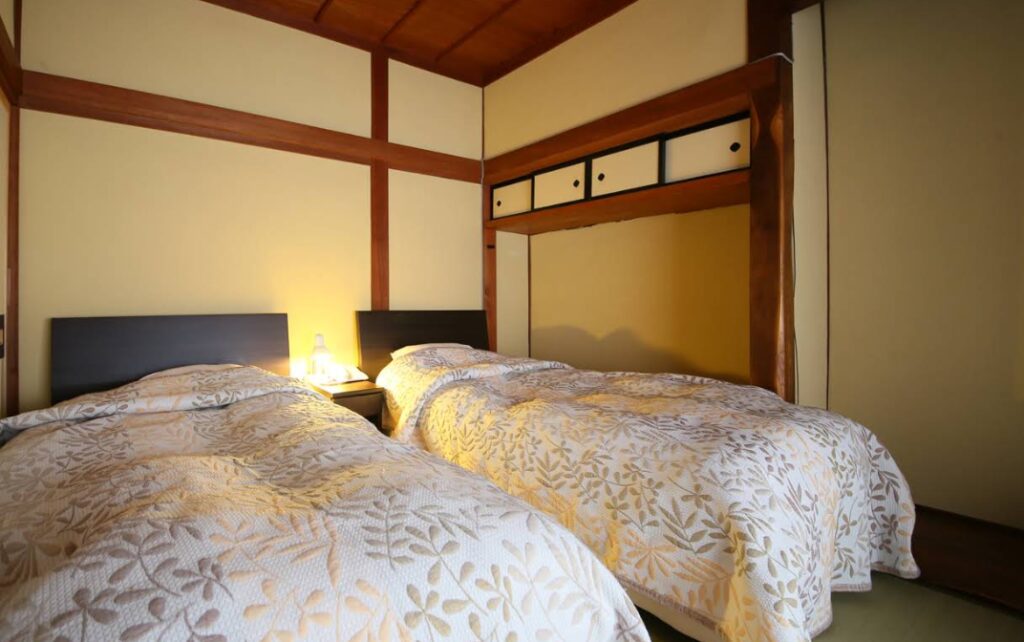
You can also choose the Moegi Bedroom, which replaces futon bedding with beds while keeping the atmosphere of a Japanese room. This room sits close to the elevator, making movement between your room, the dining area, and the hot spring baths easier.
Rooms in the newer wing include a private bathroom and a shower toilet. You also have air conditioning, Wi-Fi, a television, telephone, refrigerator, electric kettle, tea set, hairdryer, towels, a yukata, slippers, and personal bathing items. When you stay on the third floor, you also receive upgraded amenities and access to a complimentary drink corner.
The original main building gives you a more nostalgic experience. Waraku is the largest room in this section, with two connected Japanese rooms and a veranda. Raku has an eight-tatami room and veranda, while Awa provides a compact six-tatami space. Konashi separates its tatami sitting room from a bedroom with beds, making it a comfortable choice when you prefer not to sleep on a futon.
The main-building rooms use shared washing and bathing facilities rather than private bathrooms. Their appeal comes from the traditional layout, wooden details, tatami flooring, and closeness to the atmosphere of an old-style hot spring inn.
Dining
You enjoy dinner in an individual dining room inspired by the appearance of a traditional Japanese town house. The rooms come in different sizes, giving you privacy and a calm setting in which to appreciate each course without feeling hurried.
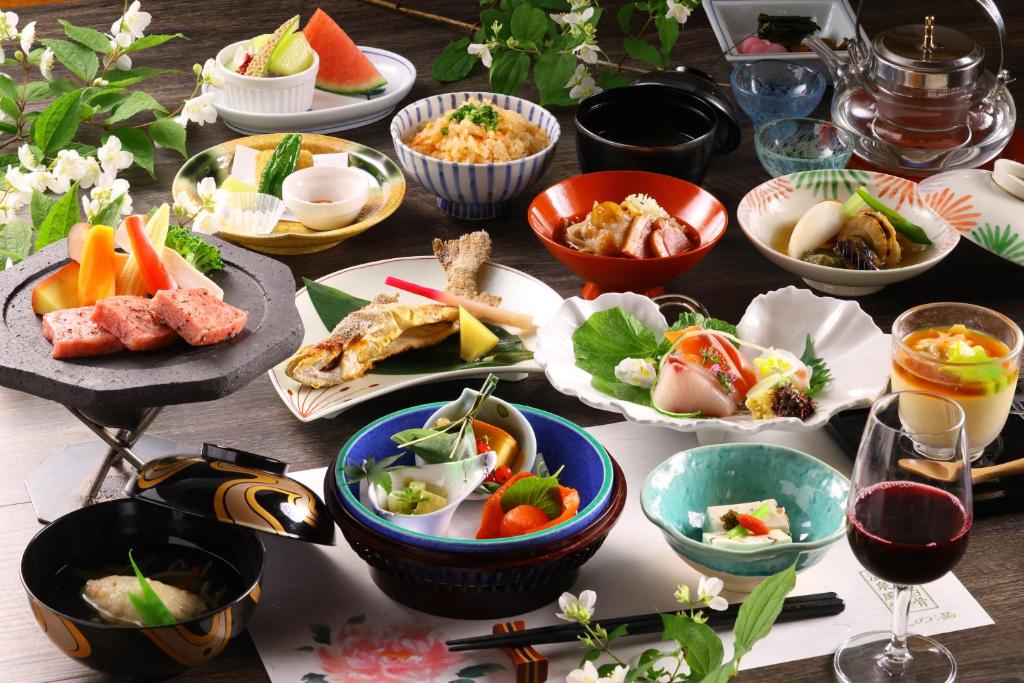
The main Shinano kaiseki dinner includes 14 courses, beginning with an aperitif and ending with seasonal fruit or another light dessert. The cooking combines ingredients from the mountains of Shinshu with carefully selected seafood, creating a meal with gentle Kyoto-style seasoning and a clear connection to the season.
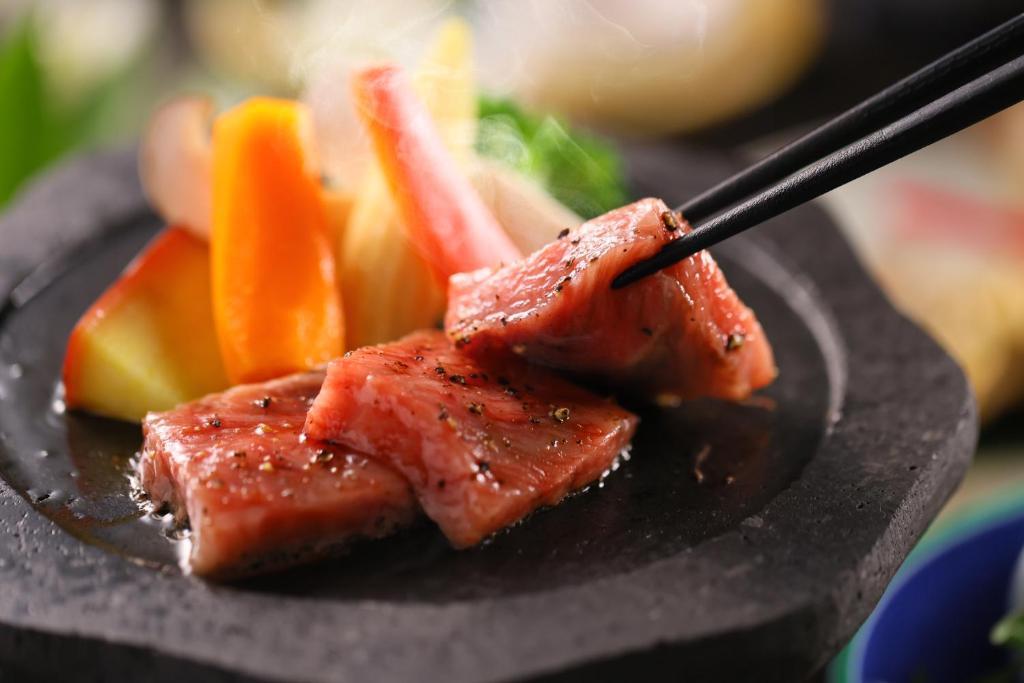
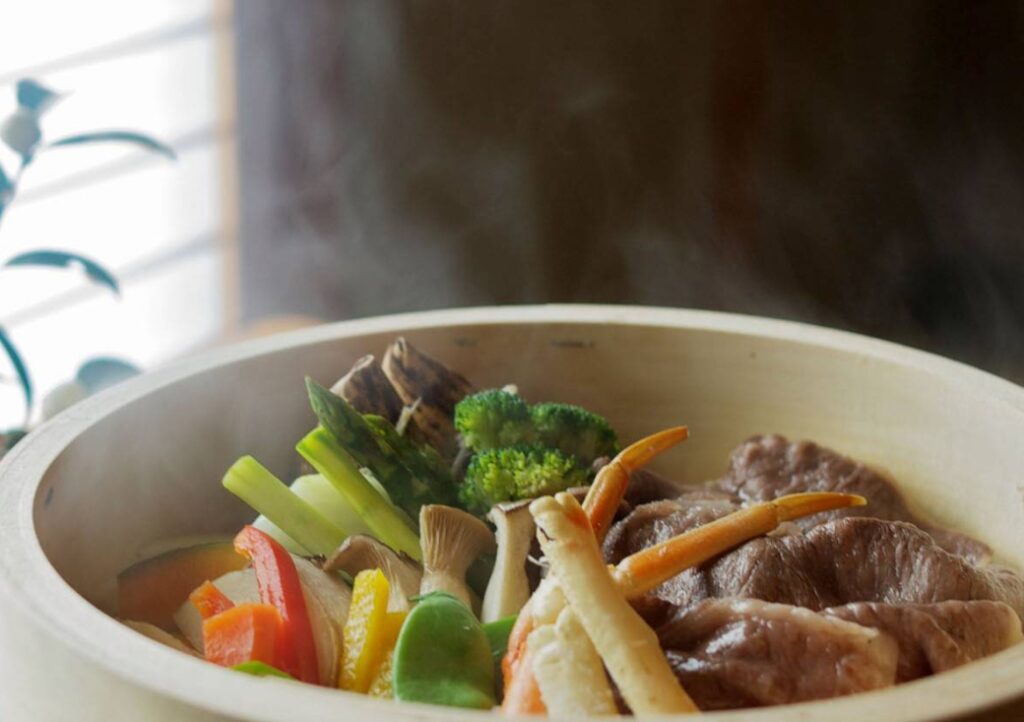
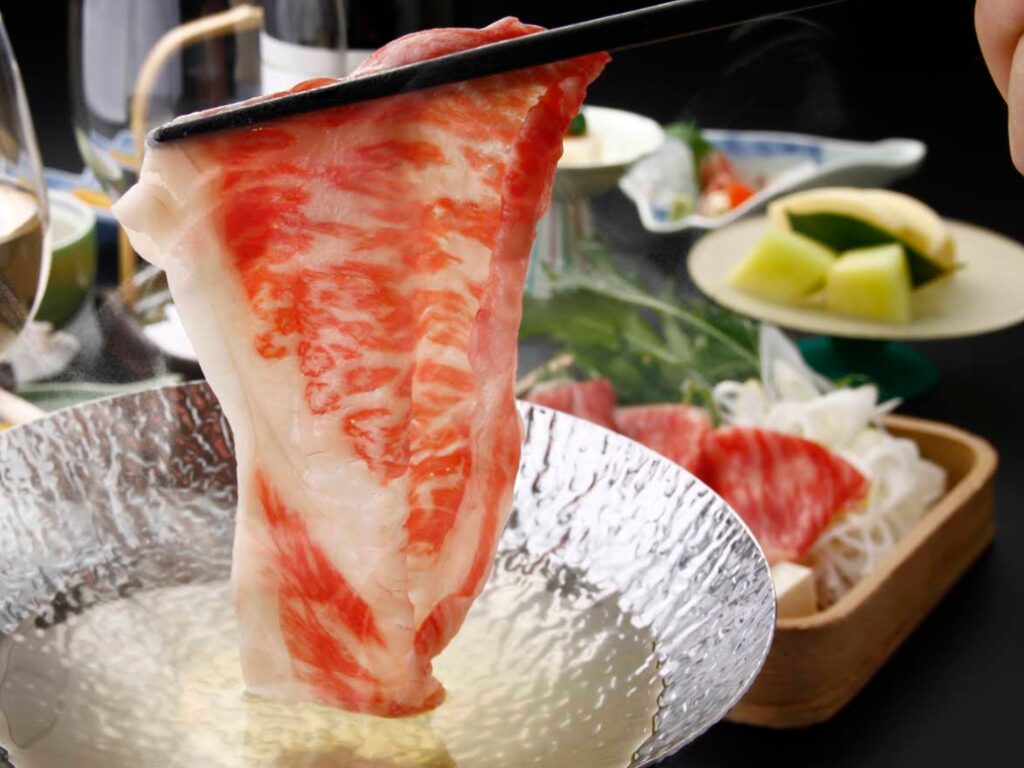
Your dinner may include mountain vegetables, fresh sashimi, soup, grilled dishes, simmered dishes, rice, and delicately presented small plates. A signature dish uses freshwater fish grilled slowly until even the bones become tender. For the main meat course, you can choose between richly marbled Japanese black beef and Mochibuta pork.
Presentation forms an important part of the meal. Seasonal colors, carefully chosen tableware, and thoughtful placement allow you to enjoy each course with your eyes before tasting it.
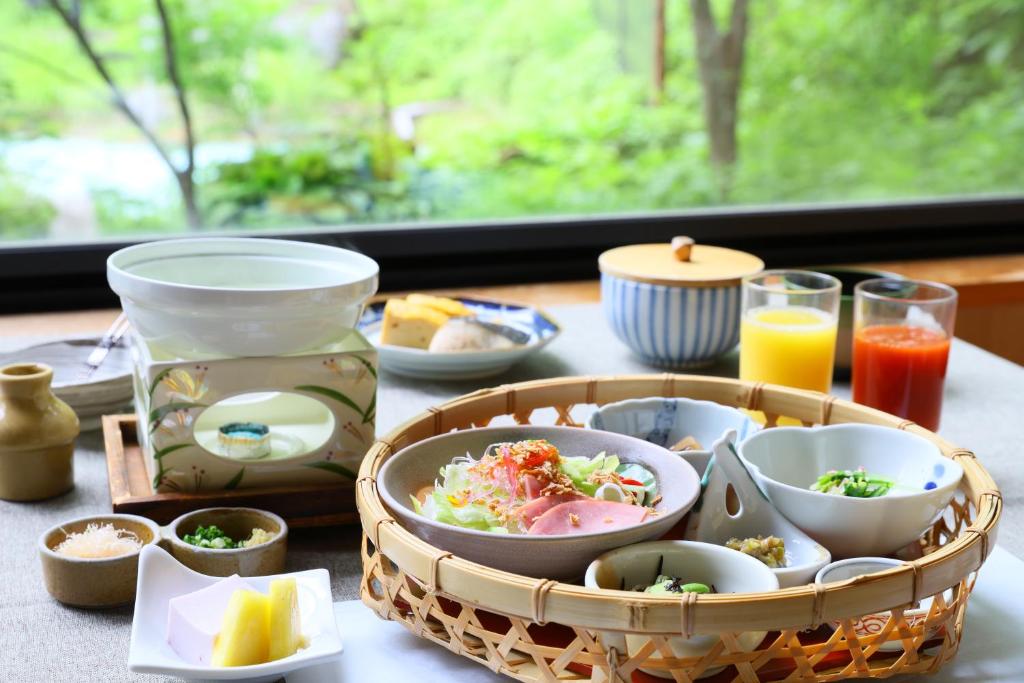
Breakfast brings you one of Awanoyu’s best-known dishes: hot spring rice porridge. The rice cooks slowly for around one hour in water from the Awanoyu spring. Although the spring water has a distinctive acidic flavor when tasted on its own, cooking turns it into a mild and comforting porridge. The warm, gentle texture makes it particularly satisfying after an early morning soak.
Onsen and Wellness
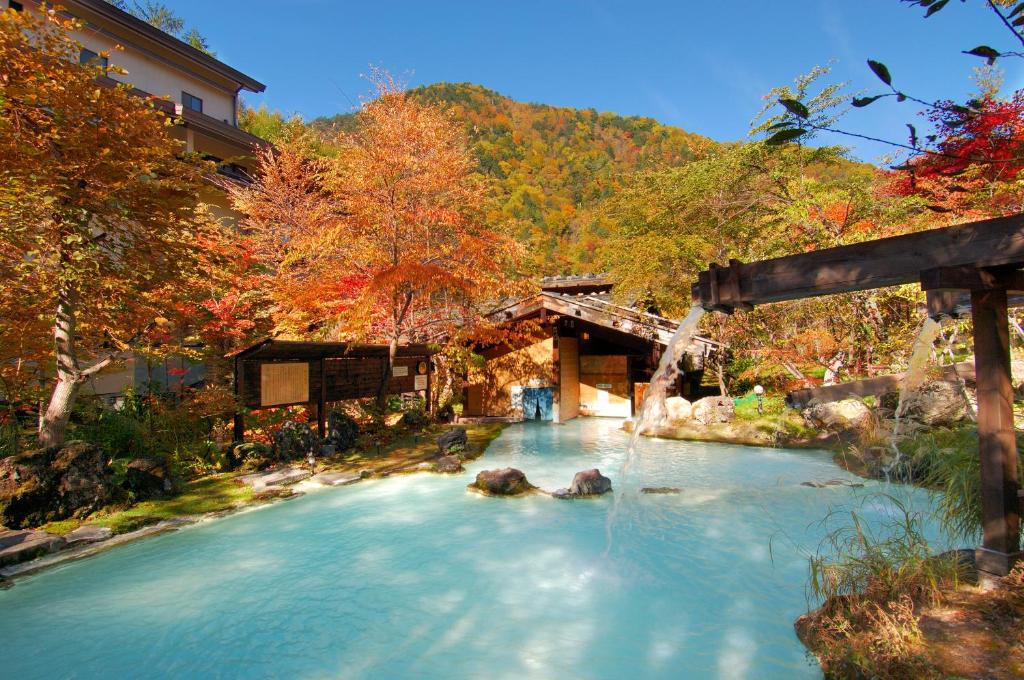
Your bathing experience begins with the Shin-Awanoyu source, a rare sulfur spring containing calcium, magnesium, bicarbonate, and natural carbon dioxide. The water emerges clear at approximately 37°C, but contact with the air gradually changes its appearance. Depending on the temperature, humidity, light, and length of exposure, the water may turn creamy white, pale blue, or a deeper cobalt shade.
The source produces around 1,730 litres of water per minute. Because the naturally lower temperature helps preserve the dissolved carbon dioxide, tiny bubbles gather across your skin as you soak. The spring water feels gentle enough for a longer bath, while the carbonated quality leaves you feeling warm after you step out.
The large mixed open-air bath is the defining feature of Awanoyu. Covering around 70 tsubo, it gives you space to soak beneath the open sky while looking toward the surrounding trees and mountains. The bath remains available overnight apart from scheduled cleaning periods, allowing you to experience it in the early morning, after dinner, or beneath the night sky.
Men and women enter through separate changing areas. When you enter from the women’s side, you can wear the thick bathing towel provided for the mixed bath. A private route leads directly from the changing area into the water, so you can enter while keeping your body beneath the surface. The dense, cloudy water also limits visibility once you are inside the bath.
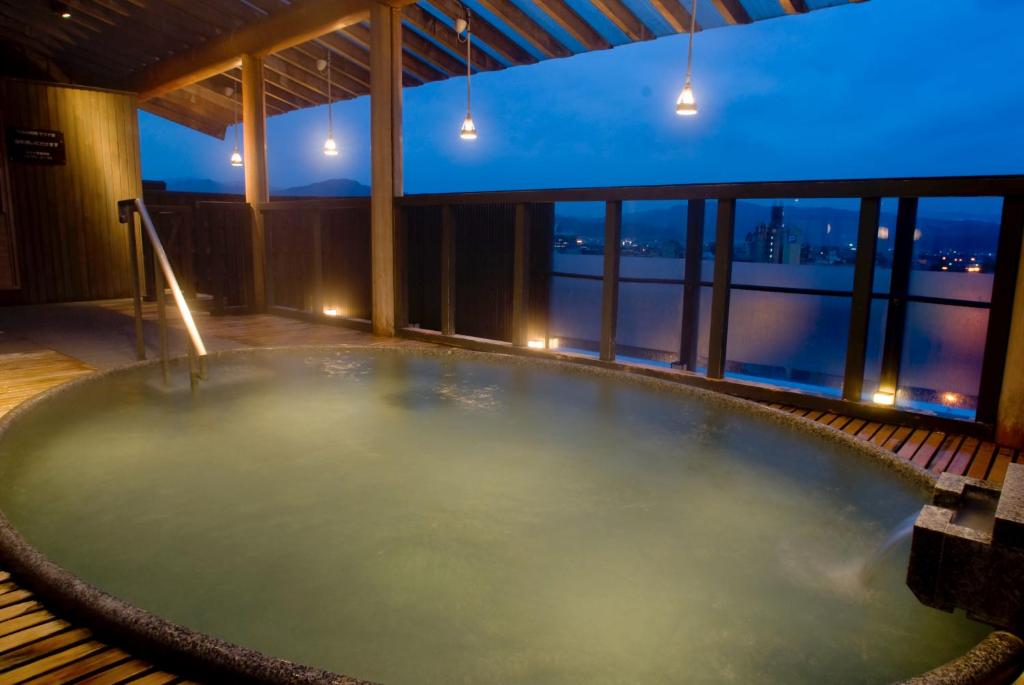
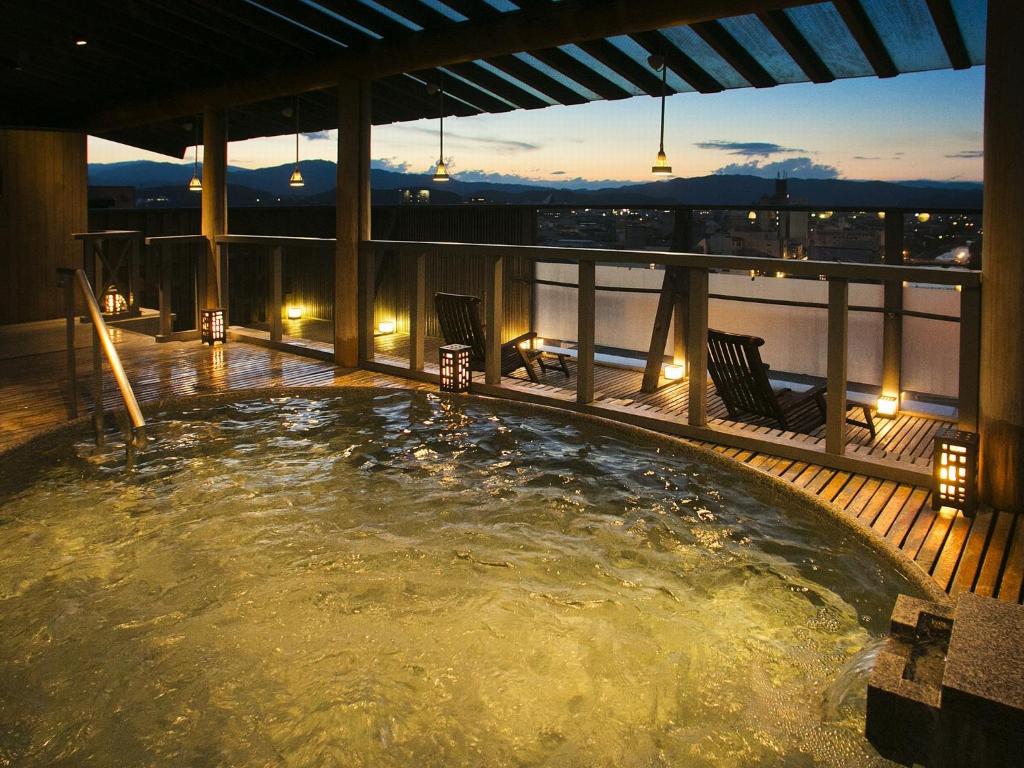
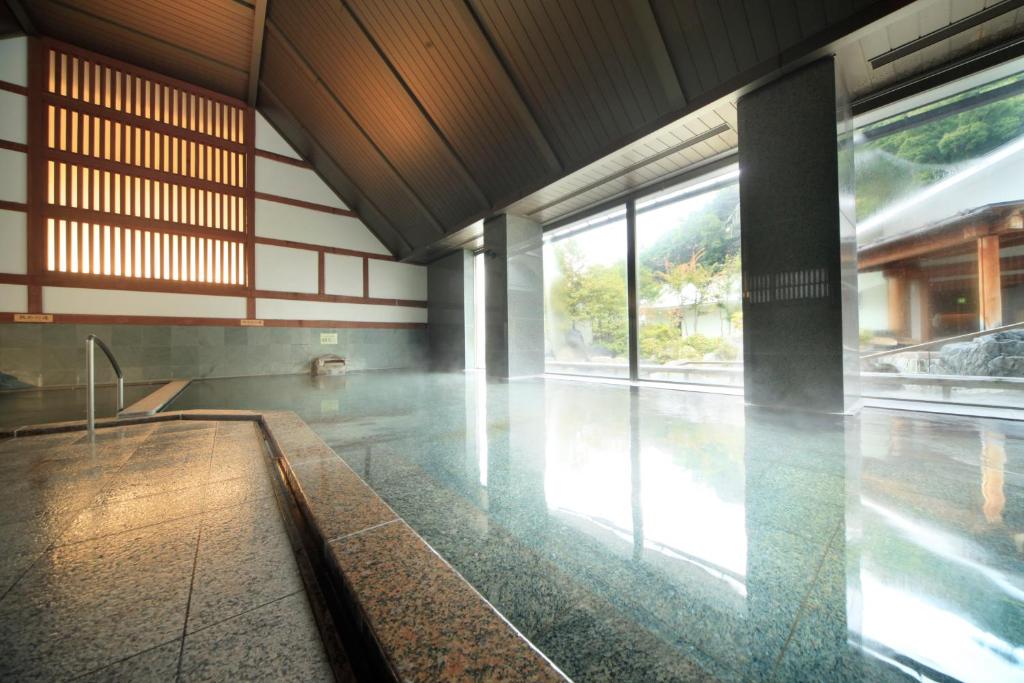
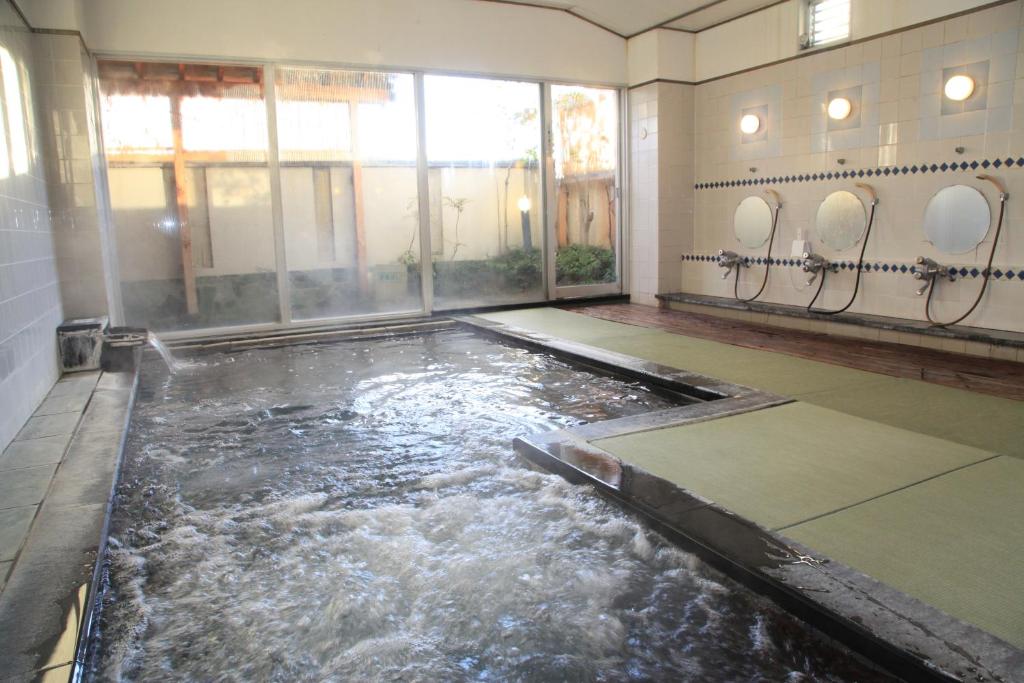
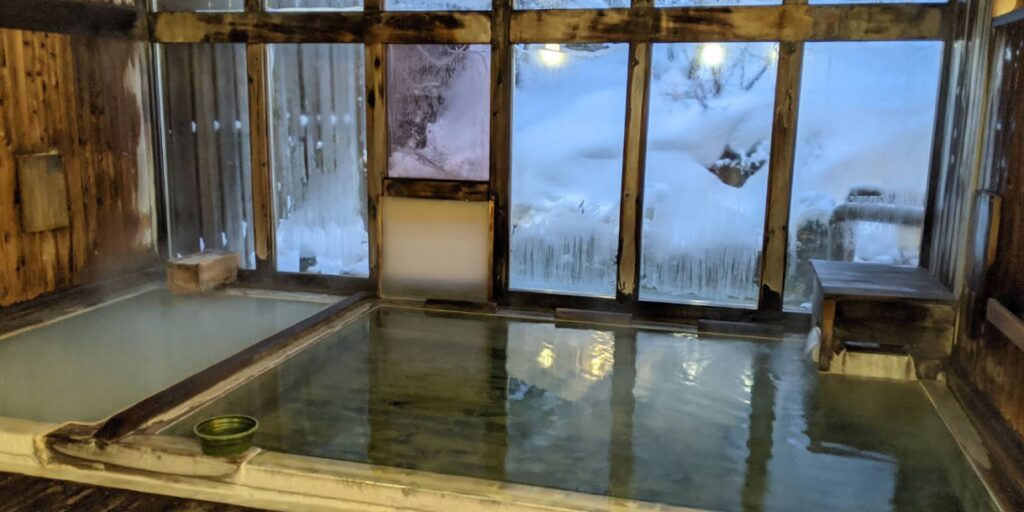
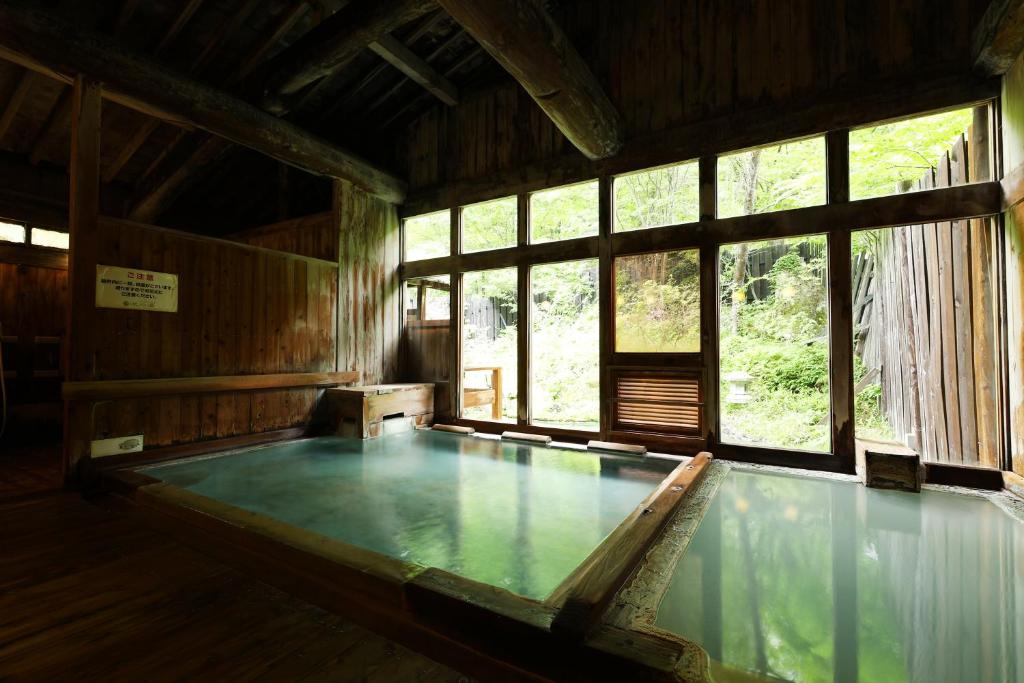
You can also use separate bathing areas for men and women. The traditional wooden indoor baths include a naturally lukewarm pool of around 37°C and a warmer pool of approximately 40°C. The warmer water is heated through a heat-exchange system without diluting it with cold water. On colder days, you can warm yourself in the hotter indoor bath before moving outside.
Each gender-separated area also includes an outdoor bath. Some baths receive heating or partial heating because of the naturally low source temperature, while the spring continues to flow in generous quantities.
Recognised bathing indications include fatigue, sensitivity to cold, muscle and joint discomfort, stiffness, bruises, sprains, chronic digestive conditions, and certain skin conditions. The mineral content can discolor gold, silver, platinum, and other metals, so you should remove jewellery before entering the water.
Guests with Tattoos
Awanoyu’s shared hot spring baths do not accept uncovered tattoos. You can enter when every tattoo is completely hidden beneath a suitable waterproof cover seal and you remain considerate of other bathers.
All of the hot spring areas are communal rather than reservable private baths. When a tattoo cannot be fully covered, you cannot use the mixed open-air bath, the gender-separated indoor baths, or the gender-separated outdoor baths.
Facilities
Throughout the building, you find historic furnishings, seasonal flower displays, and small decorative details that reflect Awanoyu’s long history. A collection of delicate glass ornaments adds a personal touch, while handwritten journals in selected rooms invite you to record your own memories of the stay.
The dining floor contains individual Japanese-style dining rooms, allowing you to enjoy breakfast and dinner in a more private setting. Room sizes differ, so couples and larger travelling groups can dine comfortably without the atmosphere of a large open restaurant.
Near reception, the shop gives you the chance to browse original Awanoyu items and regional products. You can take home the inn’s distinctive hand towel, the walnut sweet served with tea in your room, or another reminder of your time in Shirahone Onsen.
Wi-Fi is available in the rooms, while an elevator provides easier access to the newer accommodation floors. You can also use the mixed open-air bath, separate indoor baths, separate outdoor baths, changing areas, and spaces where you can rest between bathing sessions.
Activities
You can make the hot spring experience the focus of your day, moving between the naturally lukewarm bath, the warmer indoor pool, and the large open-air bath. With bathing available overnight outside the cleaning periods, you can return at different times and see how the water, light, weather, and mountain scenery change.
The surrounding national park invites you to enjoy short walks and seasonal landscapes. Spring brings fresh leaves and mountain flowers, summer surrounds you with deep green forest, autumn fills the valley with red and gold foliage, and winter transforms the open-air bath with thick snow and rising steam.
You can also use Awanoyu as a base for visiting Norikura Kogen and Kamikochi. Norikura gives you access to waterfalls, forest trails, alpine scenery, and mountain viewpoints, while Kamikochi offers riverside walking routes beneath the peaks of the Northern Japanese Alps.
Seasonal buses connect the Awanoyu bus stop with Shin-Shimashima and other destinations in the surrounding mountain area. Transport schedules change through the year, particularly outside the main green season.
Additional Features
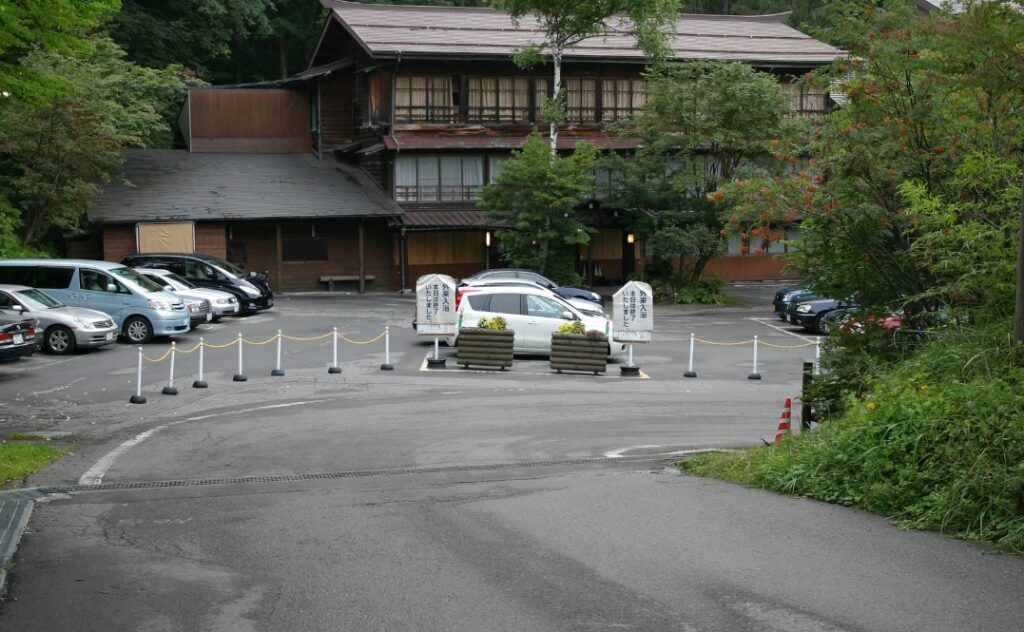
You reach Awanoyu in around one hour by car from the Matsumoto Interchange. The road to Shirahone Onsen remains open throughout the year, but winter conditions can bring ice and heavy snow. You should arrive with winter tyres or tyre chains during the colder months.
You can stay at Awanoyu from junior-high-school age onward. Elementary-school-age children and younger are not accepted, helping maintain the quiet character of the bathing and dining experience.
Awanoyu stands out for its naturally carbonated sulfur water, abundant spring flow, large mixed open-air bath, traditional indoor bathing area, and hot spring rice porridge. You come here to experience the water slowly, watch the mountain seasons change, and spend time in a ryokan shaped by more than a century of hot spring culture.