Overview
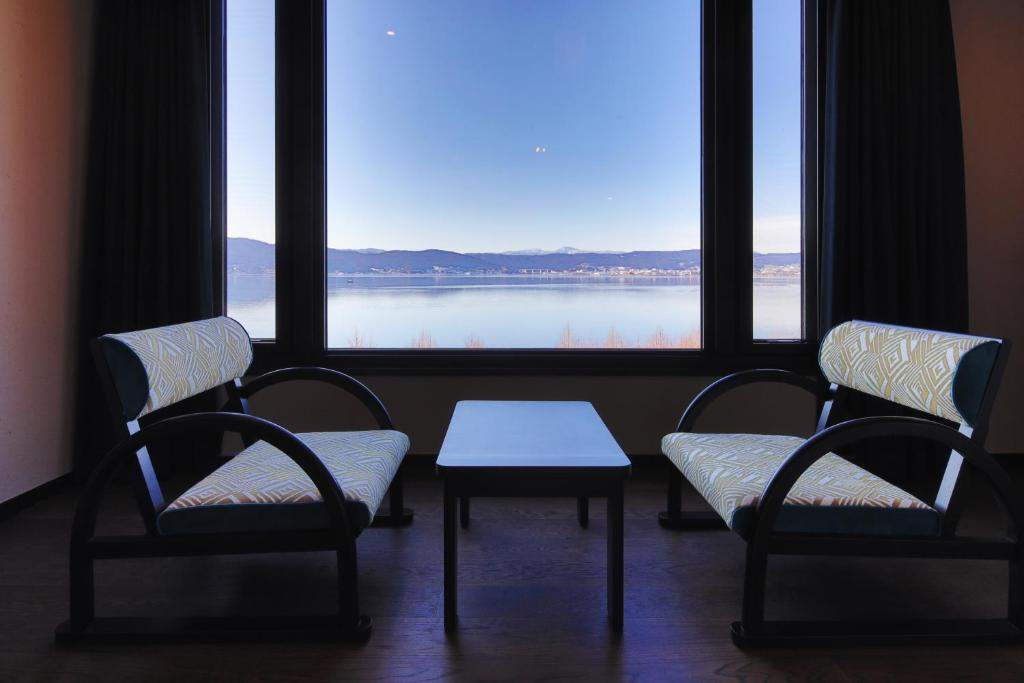
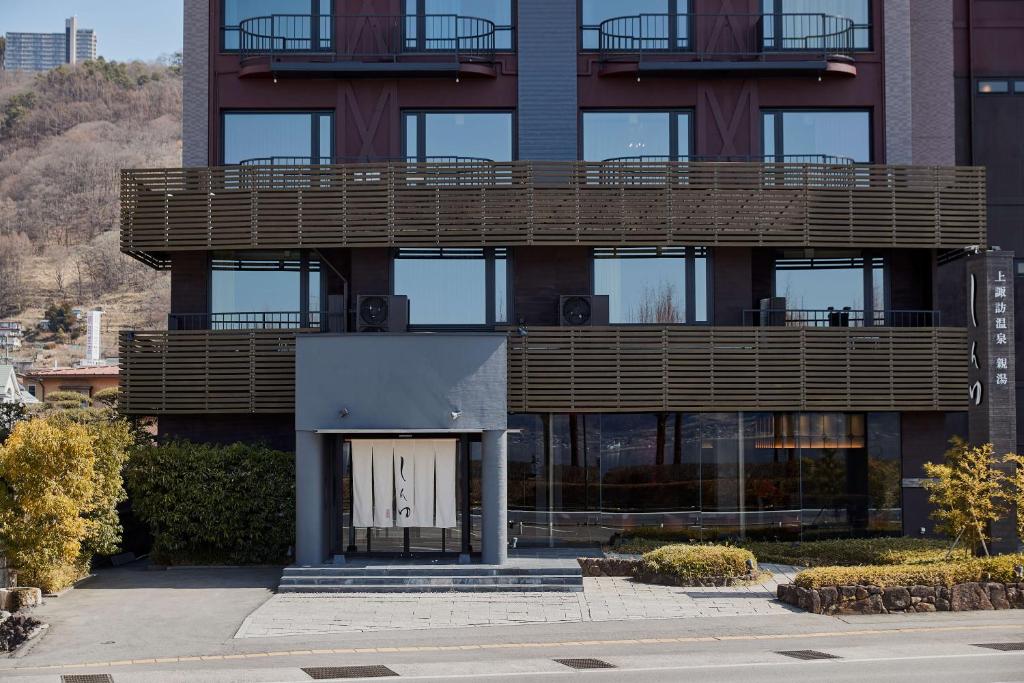
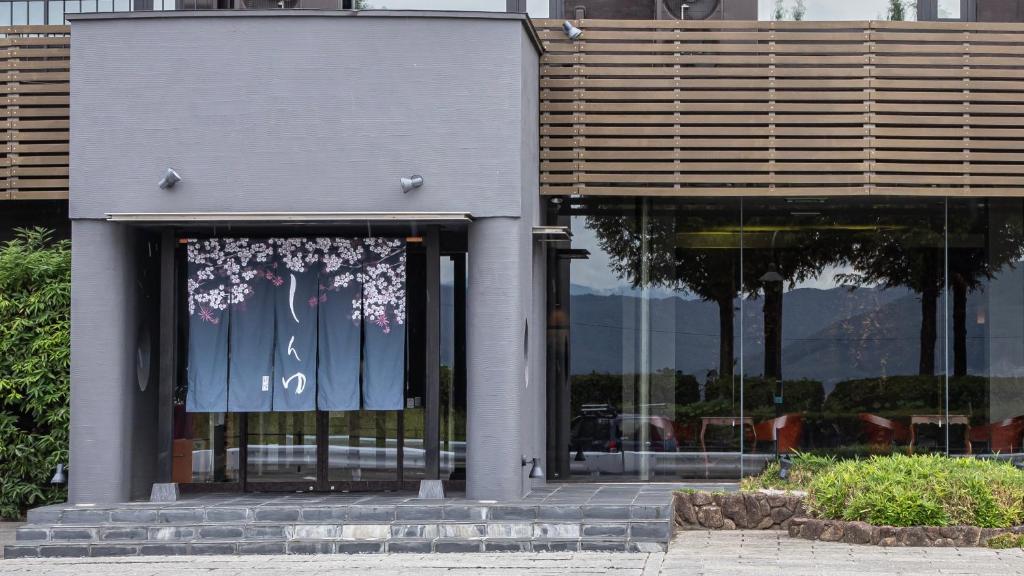
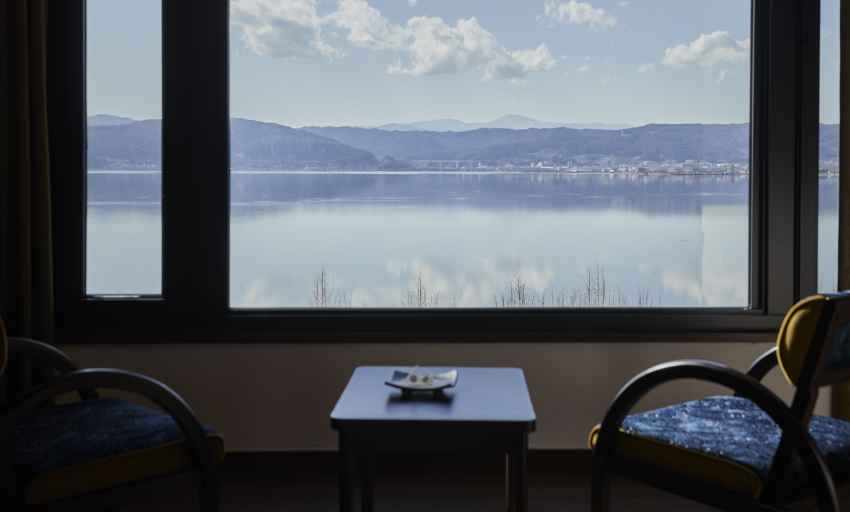
Stay directly beside Lake Suwa at Kamisuwa Onsen Shinyu, where lake scenery, private dining, and natural hot spring bathing come together in the centre of Suwa. Selected rooms and baths look across the water towards the surrounding mountains, while the lakeside promenade begins just outside.
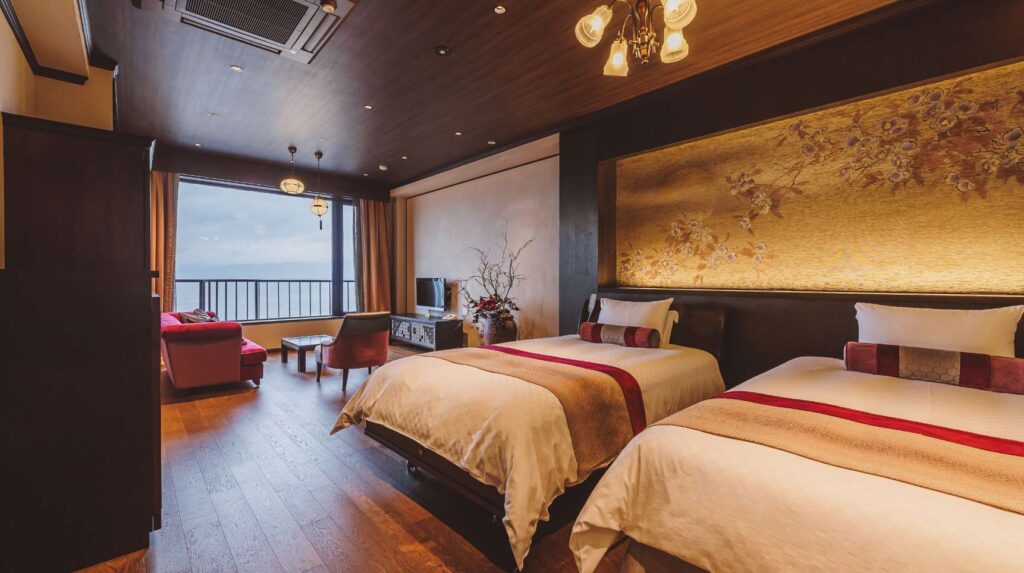
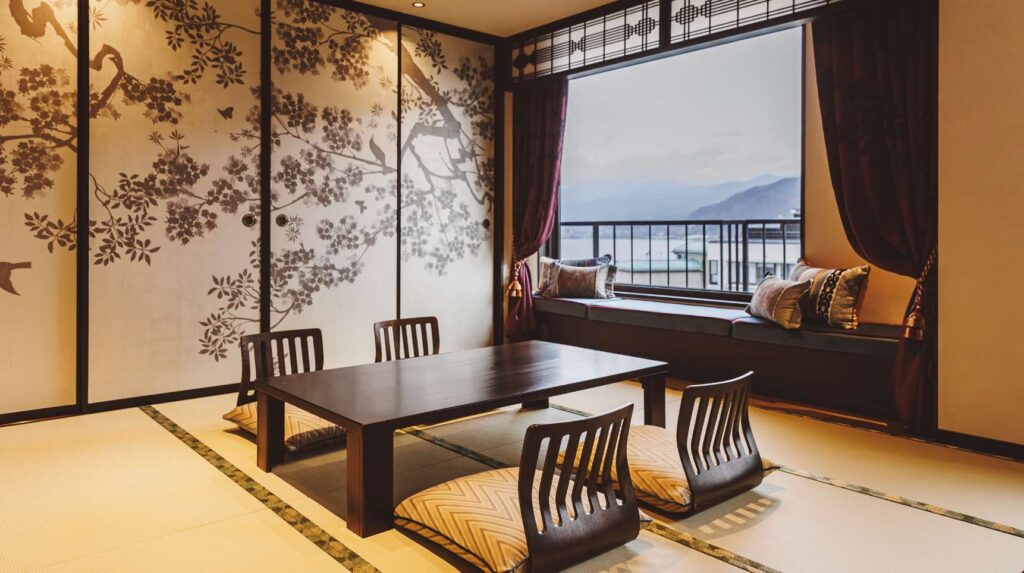
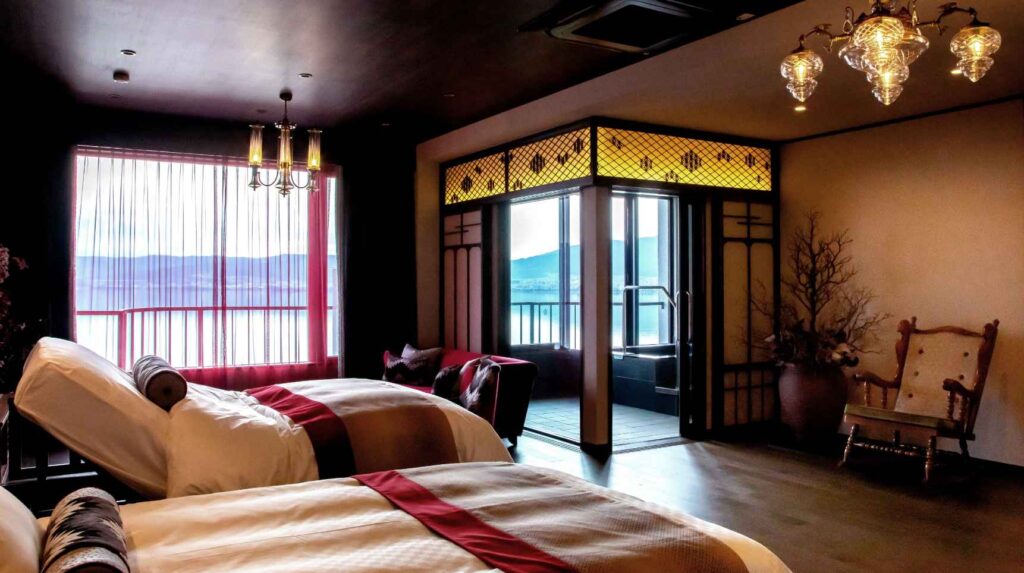
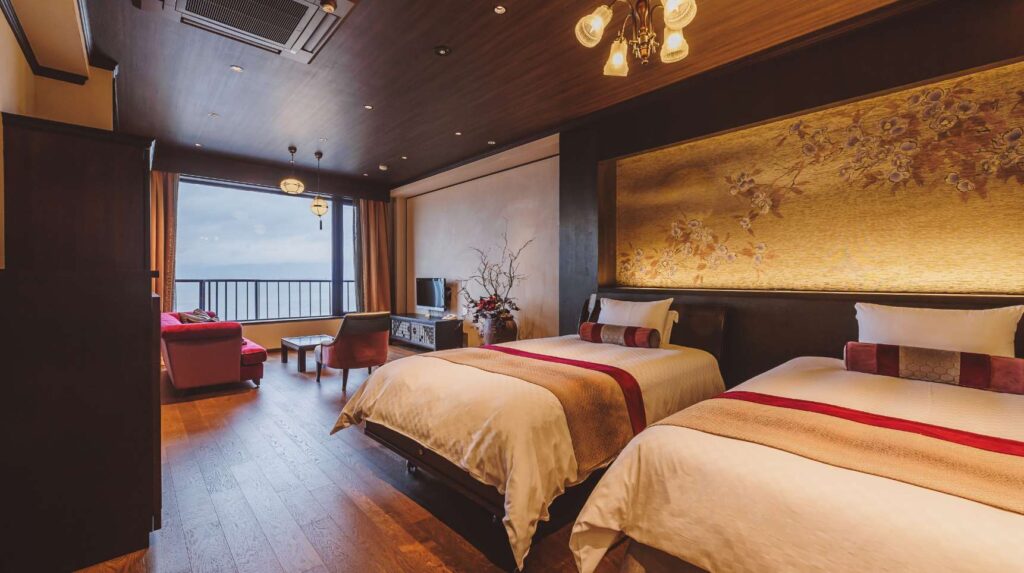
Japanese design meets Art Deco throughout the ryokan. Colourful tiles, iron-framed windows, silk artwork, soft lighting, and decorative details draw inspiration from Suwa’s cultural history and the nearby Katakurakan building.
You can spend your stay watching the lake from your room, bathing in Shinyu’s private spring water, and exploring the four Suwa Taisha shrines on a complimentary guided bus. Takashima Castle, local sake breweries, museums, sightseeing boats, and lakeside walking routes also lie within easy reach.
Accommodation
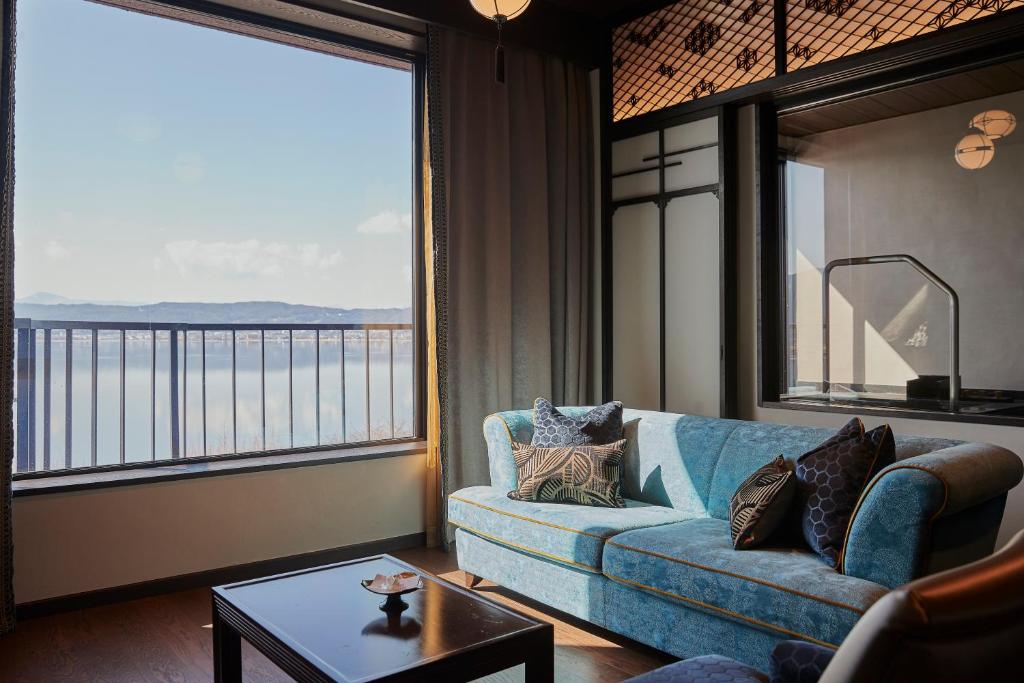
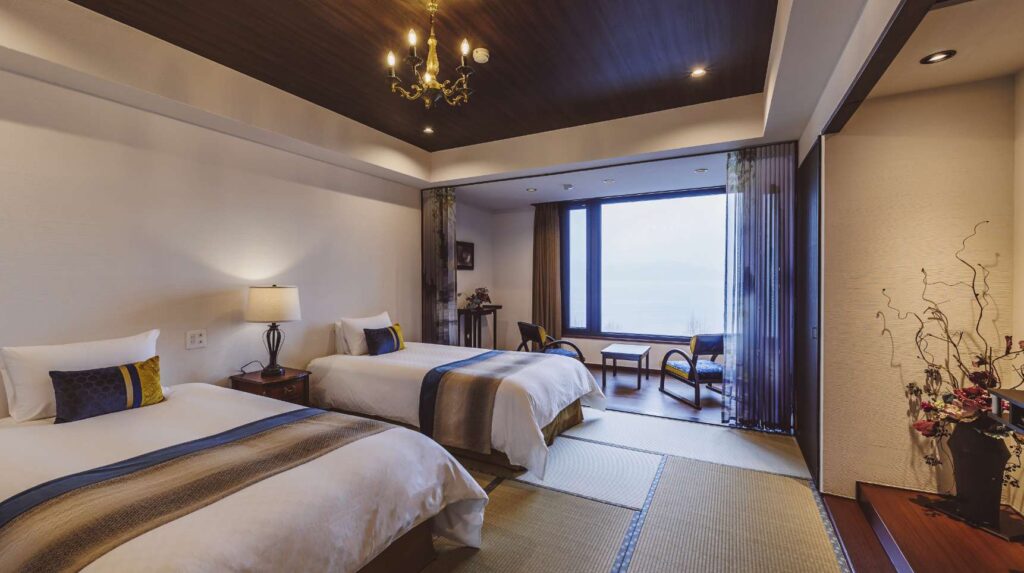
The room collection includes lake-view rooms with beds, Japanese rooms with futons, Japanese-Western layouts, simpler city-side rooms, and suites with private open-air onsen baths. Every room is non-smoking and combines Japanese design with Art Deco-inspired details.
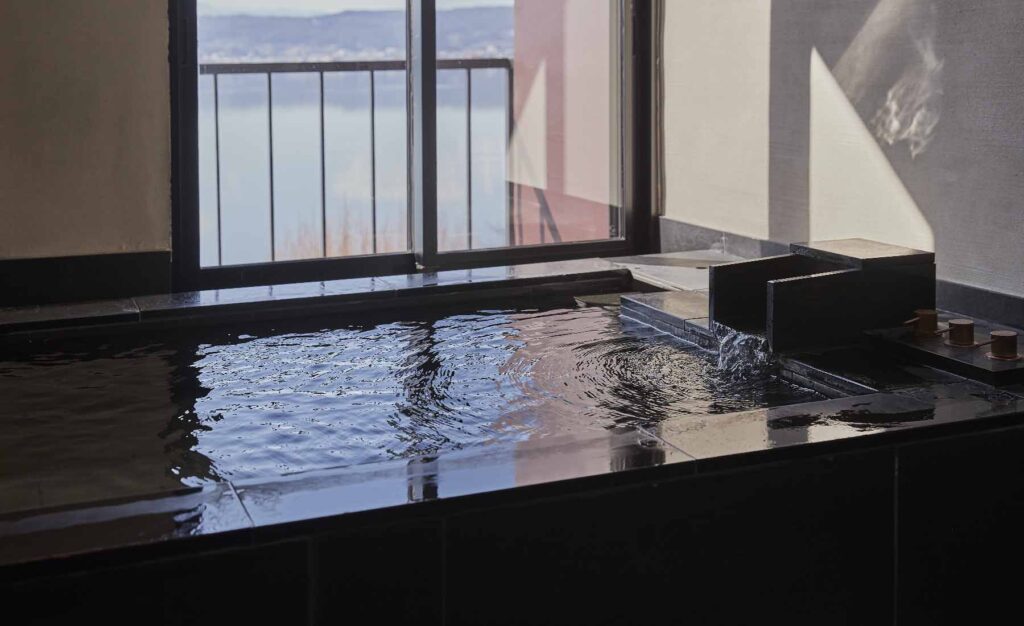
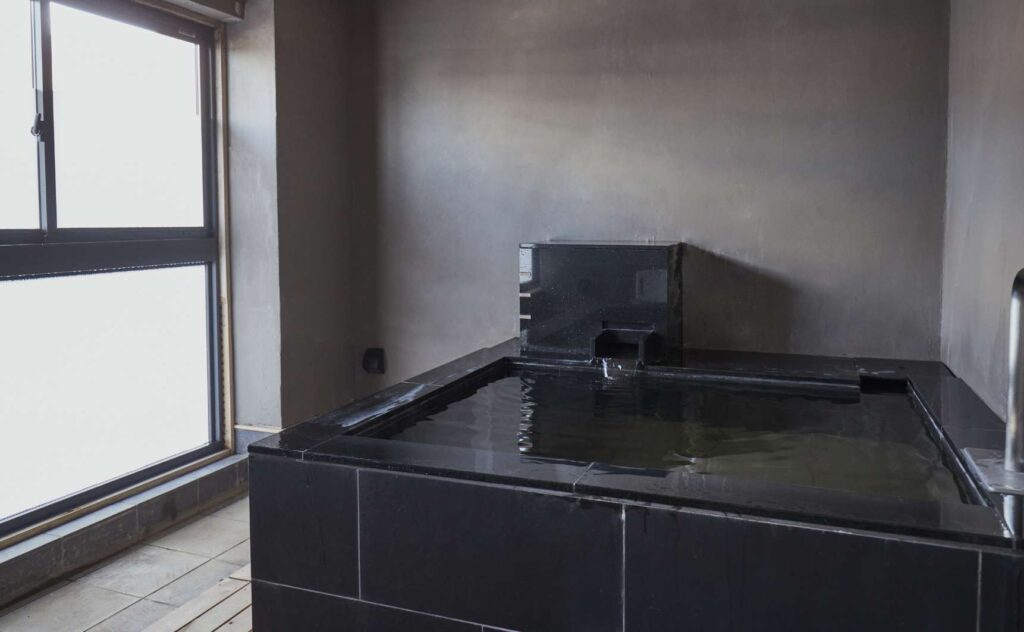
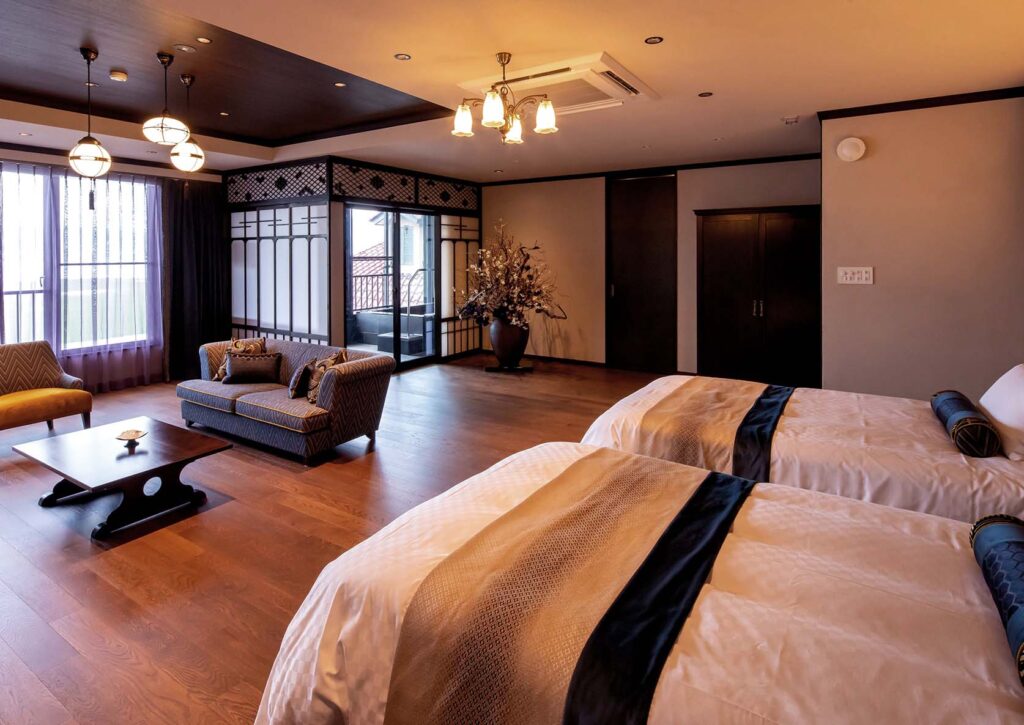
Miko no Shizuku includes eight rooms with private open-air hot spring baths overlooking Lake Suwa. These rooms occupy the fifth, sixth, and seventh floors, allowing you to watch the lake and surrounding mountains while bathing.
The Top-Floor Suite measures 80 square metres and offers the highest viewpoint. The sixth-floor Suite measures 75 square metres, while the fifth-floor Semi-Suite provides 55 square metres. Each layout includes beds and step-free design features. Selected suites can also include an electric bed when requested in advance.
Yamagami is a 45.95-square-metre Japanese-Western room renovated in March 2024. It combines ten tatami mats with an open bedroom. One window looks towards the city, while the second gives you a partial view of Lake Suwa.
The fifth-floor Hikarigami room places beds in a ten-tatami Japanese setting facing the lake. From this higher position, you can look across Lake Suwa towards the Japanese Alps when visibility is clear.
The lower-floor Hikarigami room gives you a traditional 12-tatami layout with futon bedding. Trees form part of the foreground, with glimpses of Lake Suwa beyond them.
Kakei is an eight-tatami Japanese room facing the city, while Anei provides ten tatami mats without an outside view. These rooms place more focus on their interiors and give you a practical choice when lake scenery is not essential.
Tsudoi no Ma is a large 32-tatami room without a view. Its open layout suits you when you want to share one traditional space with family or friends.
Your room includes complimentary Wi-Fi, climate control, a television, refrigerator, kettle, tea, towels, yukata, toiletries, slippers, and comfortable sleepwear. You can also choose between a firm or soft pillow.
Dining
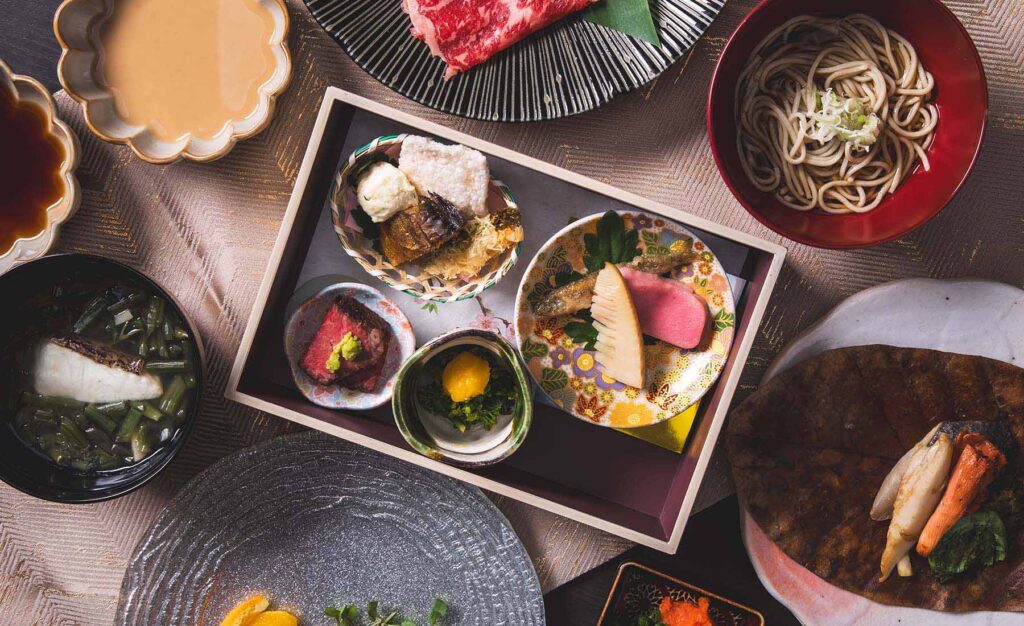
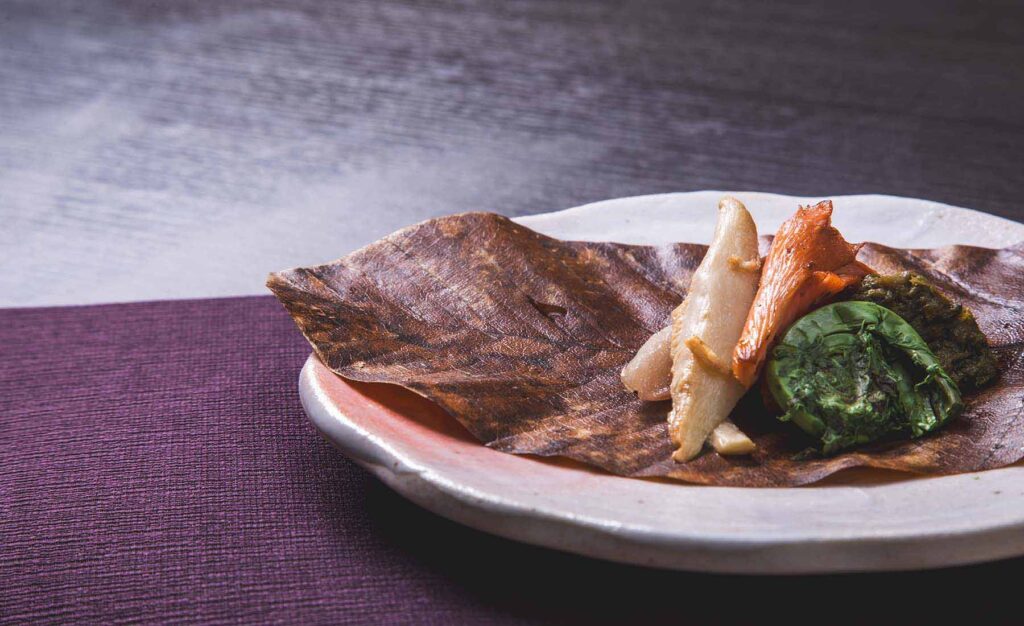
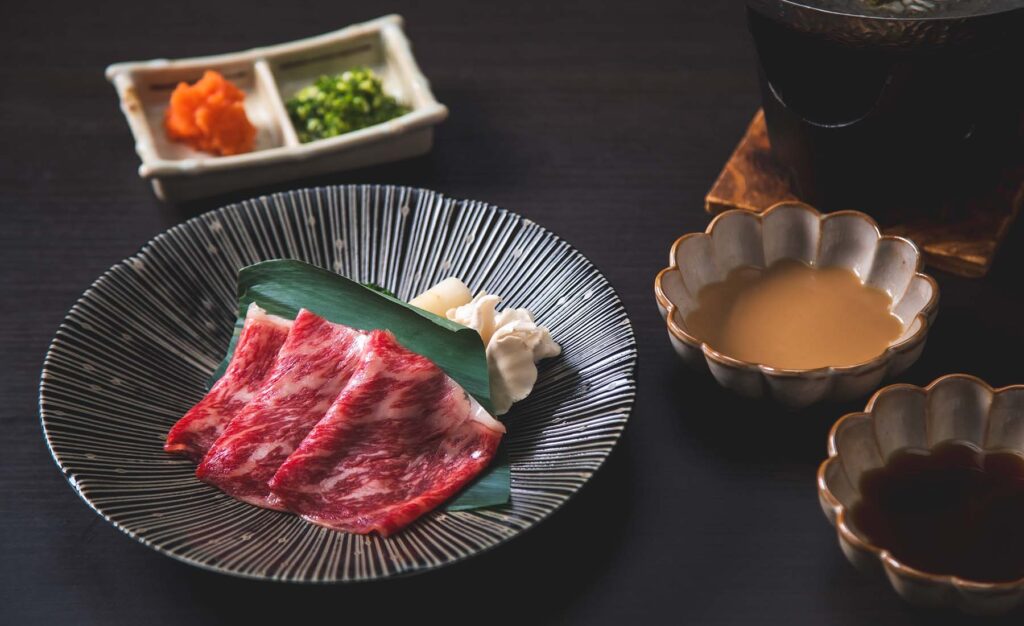
Dinner introduces you to Miko Cuisine, Shinyu’s creative Japanese kaiseki style based on the foods and cooking traditions of Shinshu. Fermented ingredients, seasonal vegetables, mushrooms, local produce, fish, and meat appear in dishes designed to feel balanced without losing depth of flavour.
The menu follows Japan’s 24 traditional solar terms rather than only the four main seasons. This allows the ingredients, presentation, and cooking methods to change more frequently as the landscape moves from early spring to midsummer, late autumn, and the coldest part of winter.
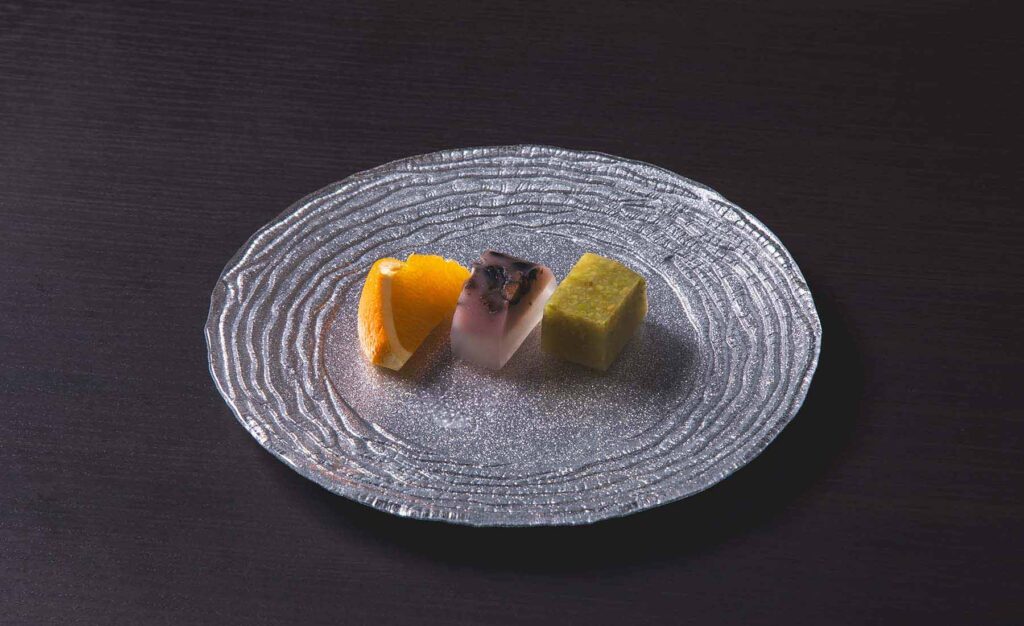
A typical dinner progresses through small seasonal dishes, sashimi, soup, grilled or simmered food, a main course, rice, pickles, and dessert. The exact menu changes according to ingredient quality and availability.
When you stay for a second night, dinner may change to Sankyo Yuzen. This Japanese and Western fusion course can feature Shinshu salmon raised in the waters of the Chikuma River, selected domestic beef, and seasonal ingredients from Nagano.
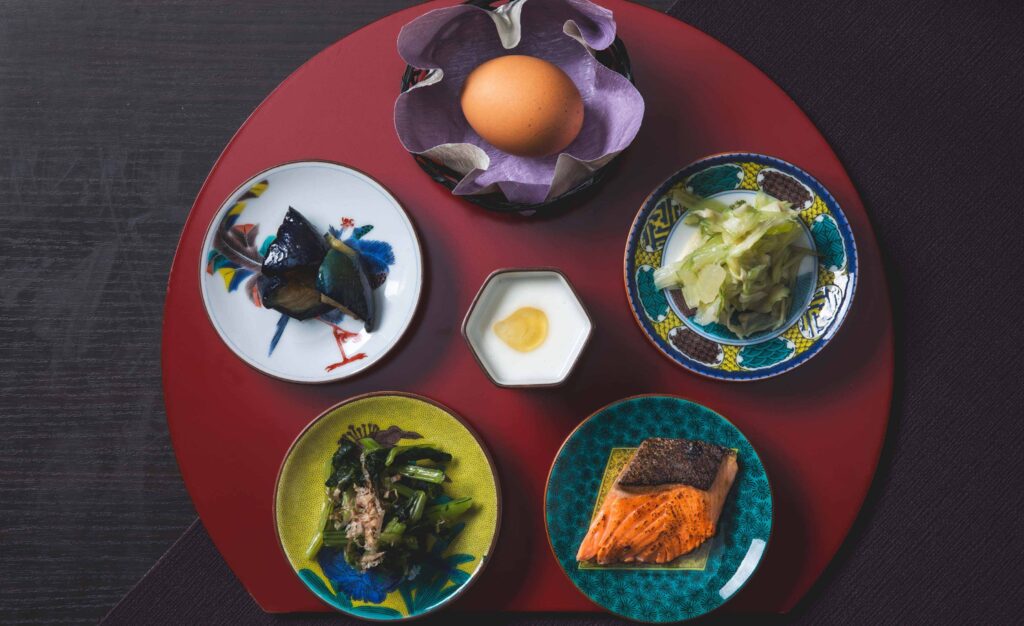
Breakfast follows a Japanese set-meal format served on small Kutani porcelain dishes. Fermented foods, miso, vegetables, rice, and carefully prepared side dishes create a nourishing start to your morning.
You can also visit the breakfast pickle buffet. The selection includes additive-free pickles made with traditional Shinshu vegetables, such as Otaki turnips from the Mount Ontake foothills and Togakushi radishes.
Dinner and breakfast take place in a private room at Restaurant Miko. You can dine at a table with chairs or in a tatami setting, depending on your assigned room. Wider dining rooms can accommodate a wheelchair.
Dietary adjustments are limited to eggs, milk, shrimp, crab, peanuts, and buckwheat. Requests must be completed at least one week before arrival. Wheat cannot be removed because soy sauce, miso, and other important seasonings contain it. Vegetarian, vegan, and halal menus are not available, and complete separation from allergens cannot be guaranteed.
Onsen and Wellness
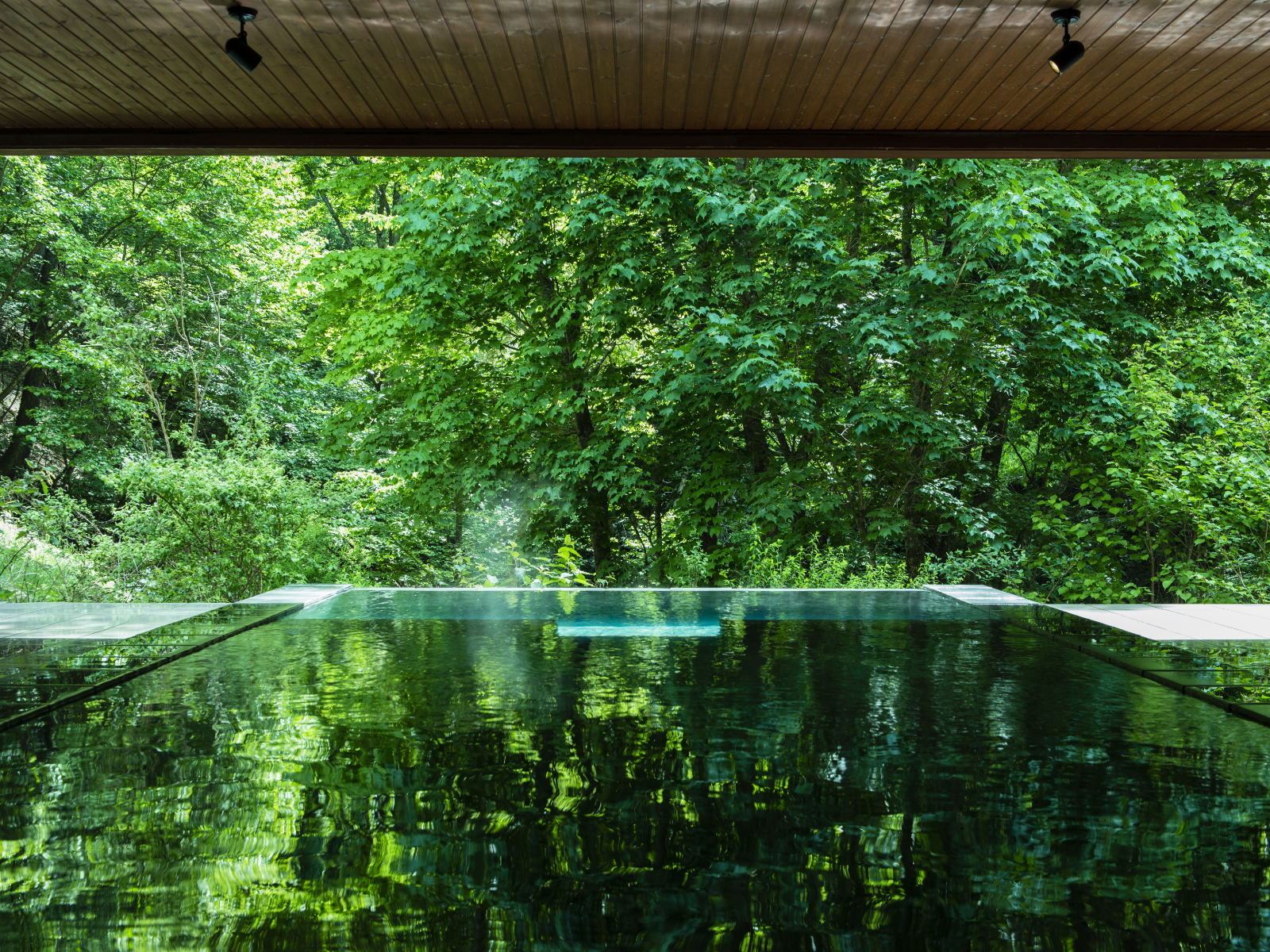
Shinyu draws its water from the private Bisui Spring. The source produces around 50 tonnes of water each day at approximately 60°C. Its pale jade colour and smooth texture create a distinctive bathing experience found only at this property.
The water is classified as a simple hot spring with a mildly alkaline character. Its low mineral concentration gives it a gentle feel against the skin. Traditional bathing indications include muscle and joint discomfort, neuralgia, sensitivity to cold, fatigue, and recovery after illness.
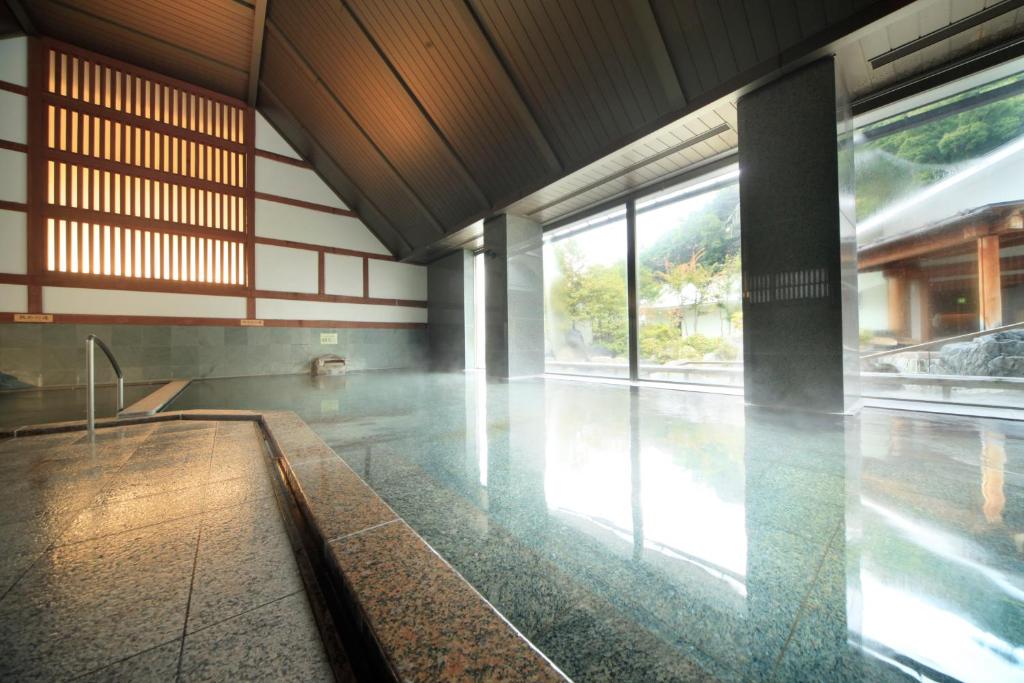
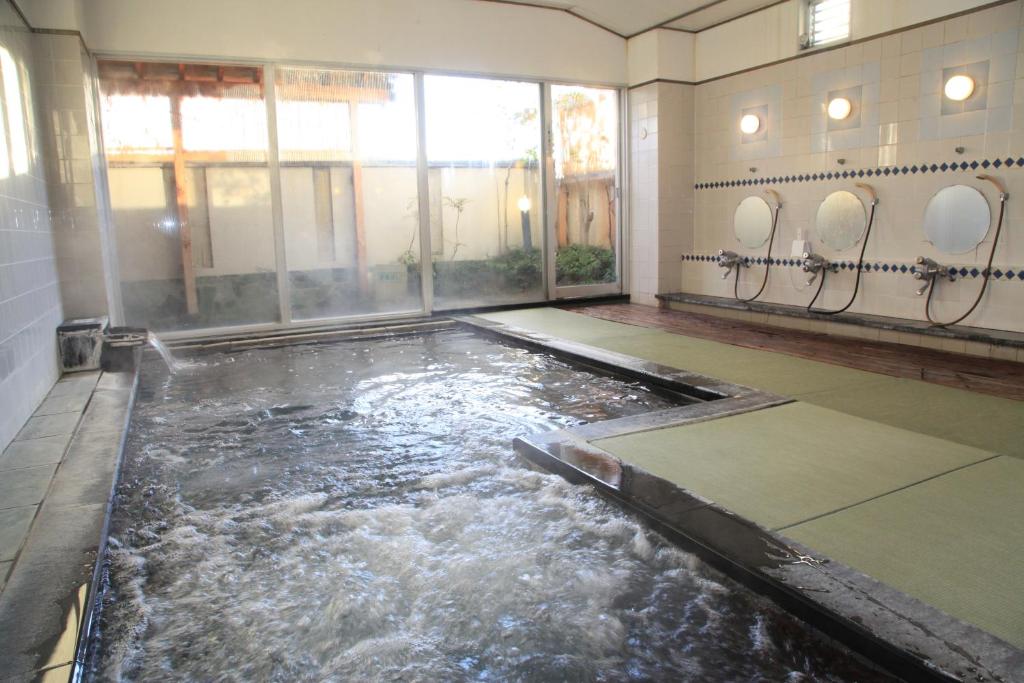
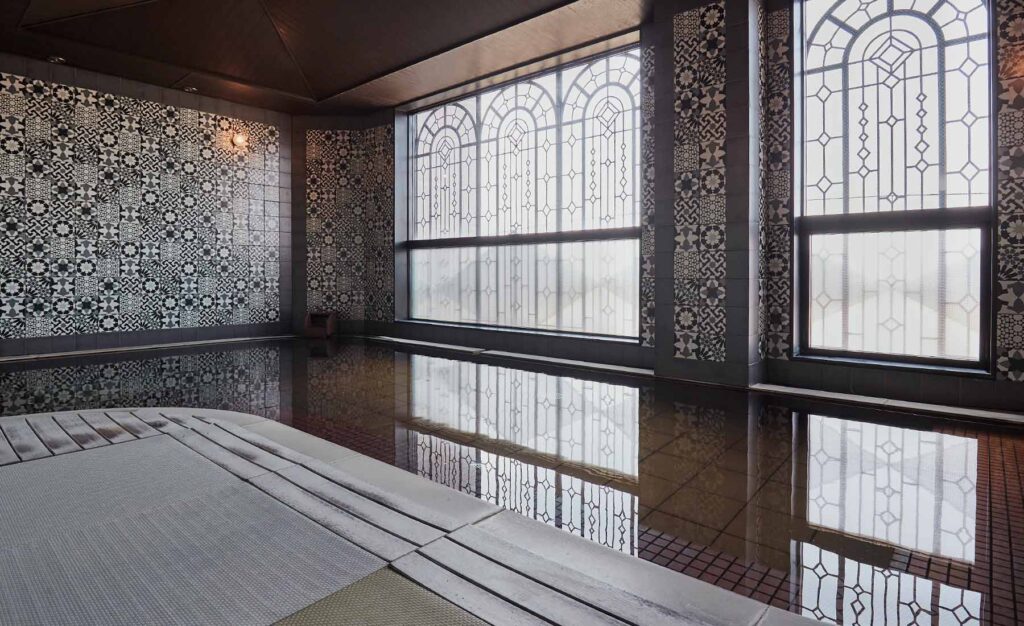
The shared bathing areas were renewed in 2022. Fully tiled interiors, iron-framed windows, and Art Deco details take inspiration from Suwa’s historic Katakurakan building. The main tubs look towards Lake Suwa, allowing the scenery and changing light to become part of your soak.
Tatami covers the bathing-room floors. The soft surface feels warm beneath your feet, reduces slipping, and provides cushioning. Handrails help you enter the water more comfortably. The route to the men’s bath includes stairs.
The women’s bathing area also contains a Peranakan air bath decorated with antique tiles. These colourful floral tiles were originally produced in Japan and exported to Southeast Asia during the Taisho and Showa periods before returning to Japan. ReFa shower heads and hairdryers are also provided in the women’s area.
A sauna forms part of the communal bathing facilities. After bathing, you can cool down with chilled quince juice.
The shared baths use circulation, filtration, and controlled chlorine treatment. The water is replaced and the tubs receive scheduled cleaning and disinfection. The current bathing periods normally run from 15:00 until 1:00 and from 4:00 until 9:30.
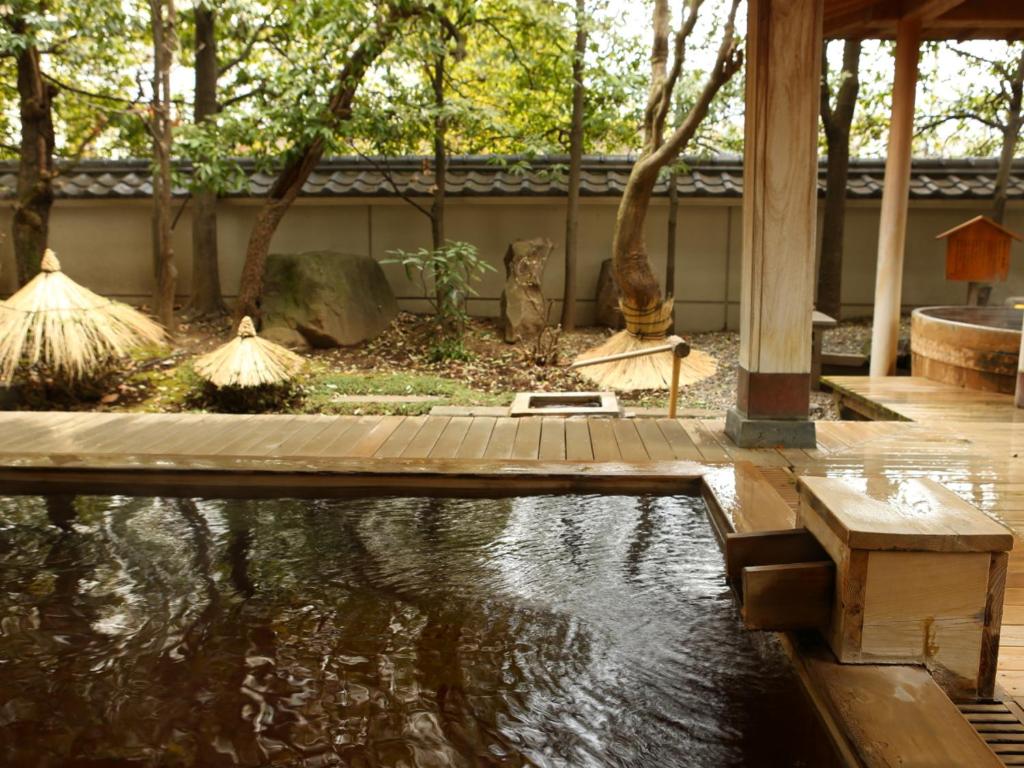
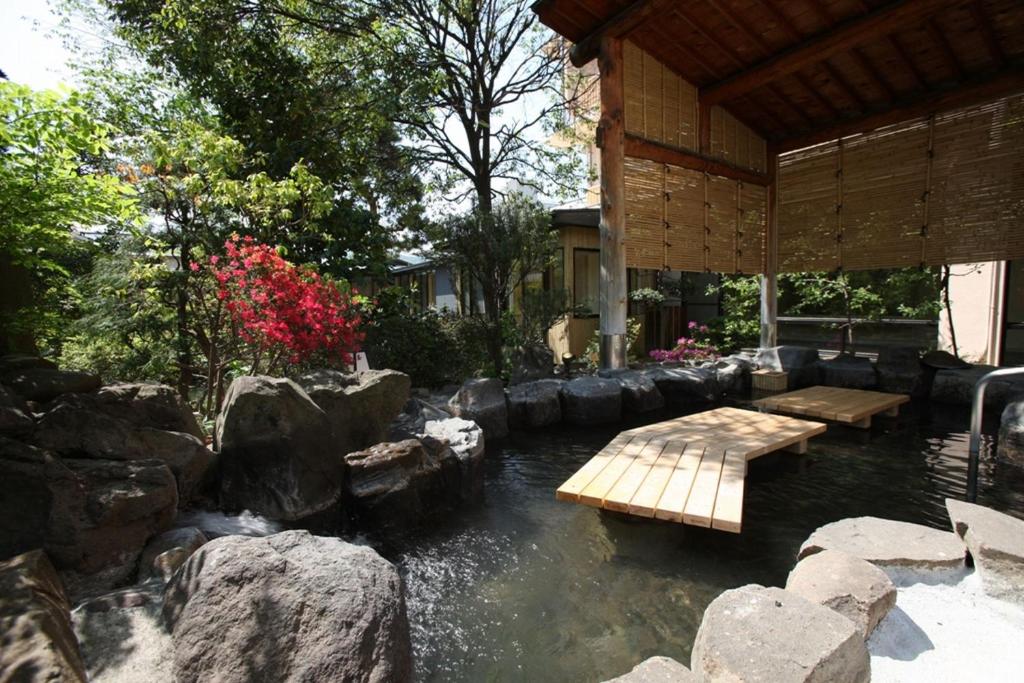
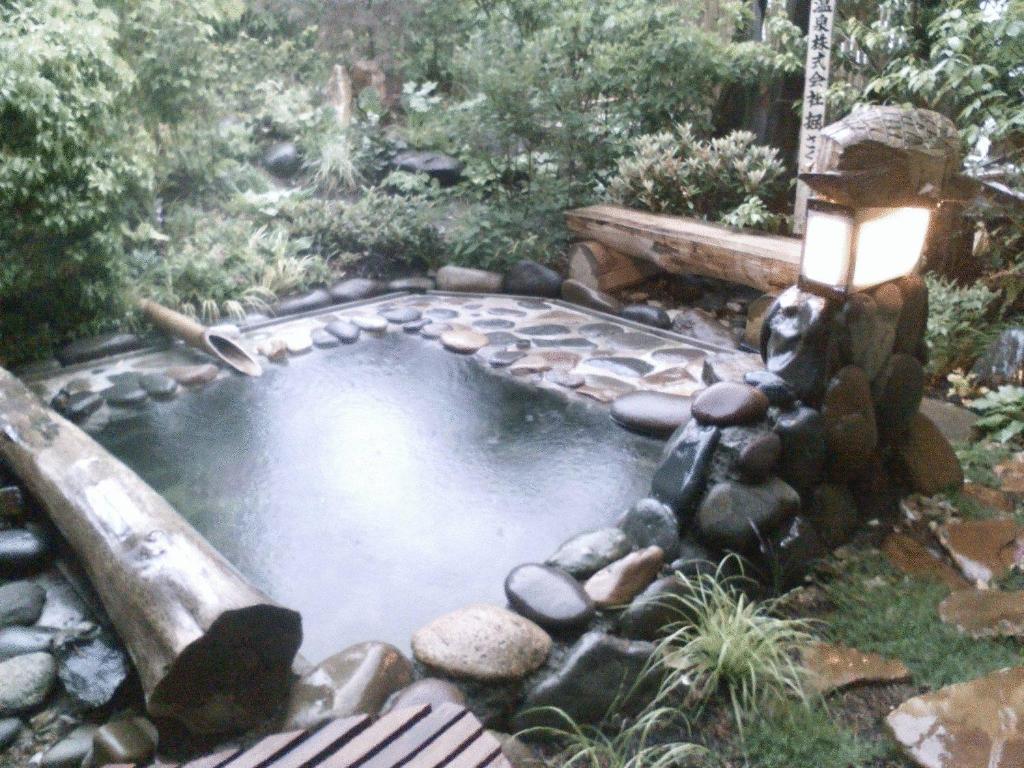
Three private semi-open-air baths allow you to enjoy the Bisui Spring without entering the communal bathing areas. Each has its own washing space and uses source-fed hot spring water. The baths focus on the water and private atmosphere rather than lake views, and each session lasts approximately 40 minutes.
One private bath includes an elevating floor and a dedicated bathing wheelchair. The floor lowers gradually into the water, allowing you to enter without transferring from the chair. This bath requires advance arrangements.
For private bathing with a lake view, choose a Miko no Shizuku room. Your open-air bath overlooks Lake Suwa and remains available throughout your stay.
Guests with Tattoos
If you have tattoos, you cannot use the shared public baths, sauna, or communal changing areas.
You can use one of the three private semi-open-air baths instead. Request an available session at the front desk after arrival. You can also choose a Miko no Shizuku room, where your own open-air onsen bath overlooks Lake Suwa.
Facilities
Gekka no Sakura Lounge centres around a cherry-blossom installation illuminated in seven changing colours. During the day, you can sit with coffee or flavoured tea while enjoying the artwork and soft lighting.
In the evening, the space becomes Gekka no Sakura Lounge & Bar. Japanese whisky lines the counter, giving you a comfortable setting for a drink after dinner or bathing.
Restaurant Miko provides a private room for breakfast and dinner. Silk artwork made from thin layers of cocoons decorates the corridors, reflecting Suwa’s connection with Japan’s silk industry.
A shop carries local products, drinks, and useful travel items. Vending machines are also available inside the building.
Complimentary Wi-Fi covers the property. You can arrange a foot massage, rent a bicycle, or use the EV charging facilities during your stay. All rooms are non-smoking, with smoking limited to the designated second-floor area.
Activities
Join Shinyu-go, the complimentary bus that visits all four Suwa Taisha shrines. The journey includes Kamisha Maemiya, Kamisha Honmiya, Shimosha Harumiya, and Shimosha Akimiya, giving you time to explore each shrine and learn about Suwa’s spiritual history.
The guided circuit takes around three hours and 20 minutes and normally departs twice each day, at 9:20 and 13:20. Reserve your place at least three days in advance. The bus may stop operating during major festivals, fireworks events, New Year travel periods, and other dates affected by traffic restrictions.
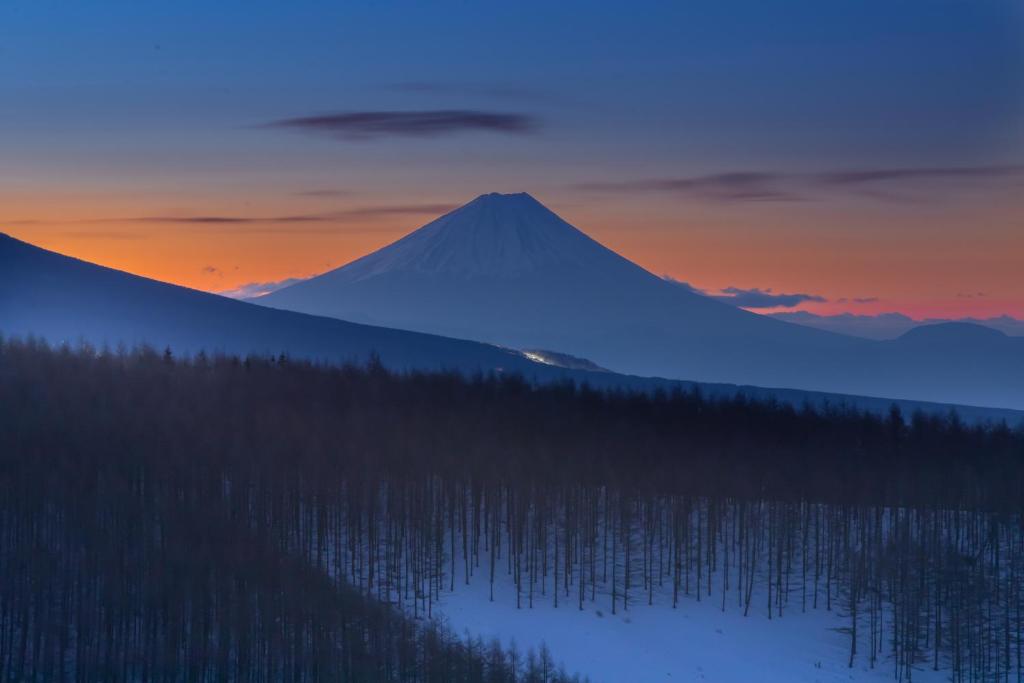
A short walk takes you to Lake Suwa’s sightseeing boats. The cruise gives you open views towards Kirigamine, Yatsugatake, the Japanese Alps, and Mount Fuji when the sky is clear.
The lakeside footbath is also close by. You can soak your feet while facing the water, and a ramp supports wheelchair access. The adjoining barefoot walking course uses textured surfaces to stimulate your feet.
The Lake Suwa Geyser Center, Kitazawa Museum of Art, and lakeside parks are within walking distance. The museum displays glasswork by Émile Gallé, the Daum brothers, and other artists.
Suwa’s five sake breweries stand close together near Kamisuwa Station. You can visit Maihime, Reijin, Honkin, Yokobue, and Masumi while learning how local water, cool weather, and brewing traditions shape the sake.
Takashima Castle offers gardens, seasonal flowers, and views from its reconstructed tower. Tateishi Park sits above the city and gives you a broad view across Lake Suwa, particularly around sunset.
For a longer drive, follow the Venus Line towards Kirigamine, Kurumayama, Lake Shirakaba, and the Tateshina highlands. Summer fireworks take place over Lake Suwa on selected dates, and suitable lake-facing rooms may give you a direct view.
Additional Features
Check-in begins at 15:00, and check-out is by 10:00. You can leave your luggage at the front desk before check-in and after check-out.
A complimentary shuttle operates between Kamisuwa Station’s Suwako Exit and the ryokan from 9:00 to 17:00. Contact the ryokan after reaching the station for collection.
Complimentary parking is available when you arrive by car. EV charging points are also provided. Complimentary Wi-Fi is available throughout the building. All rooms are non-smoking, and a designated smoking area is located on the second floor.