Overview
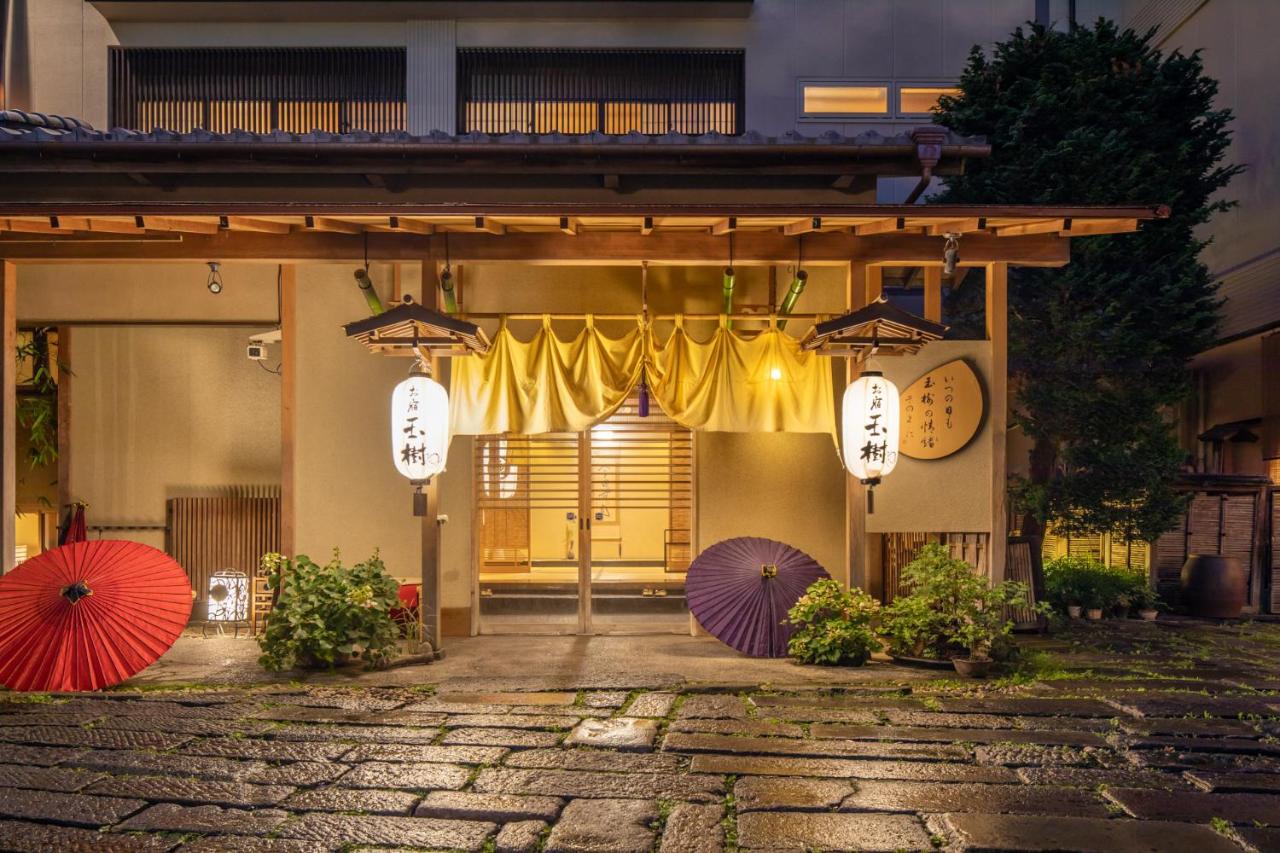
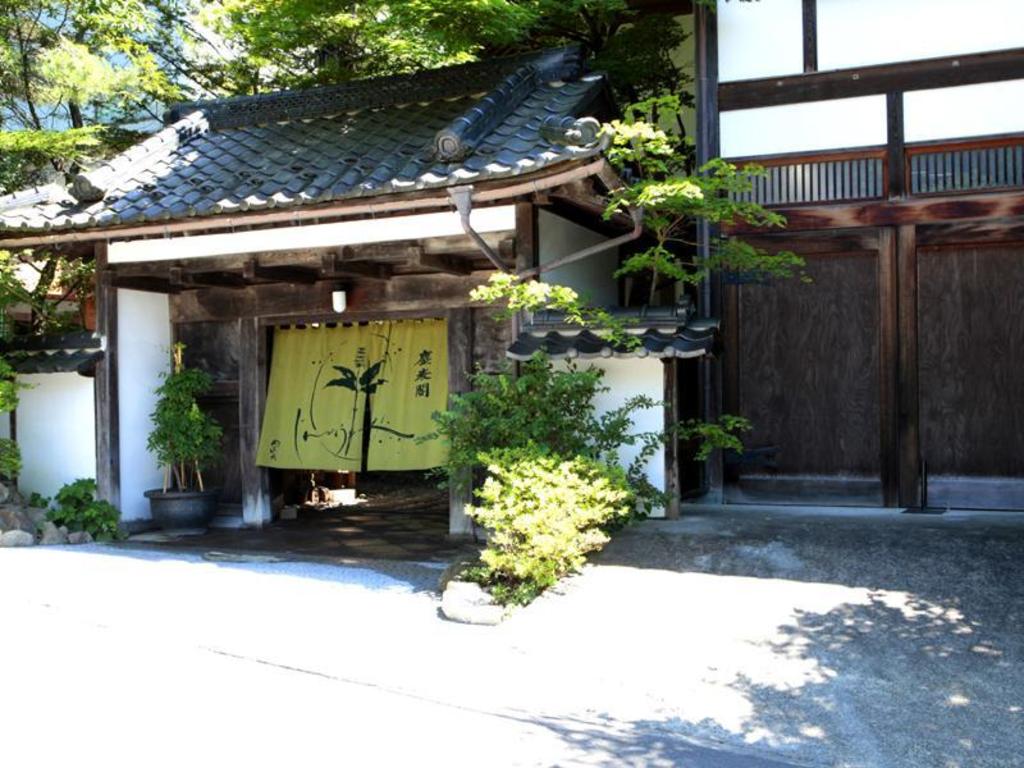
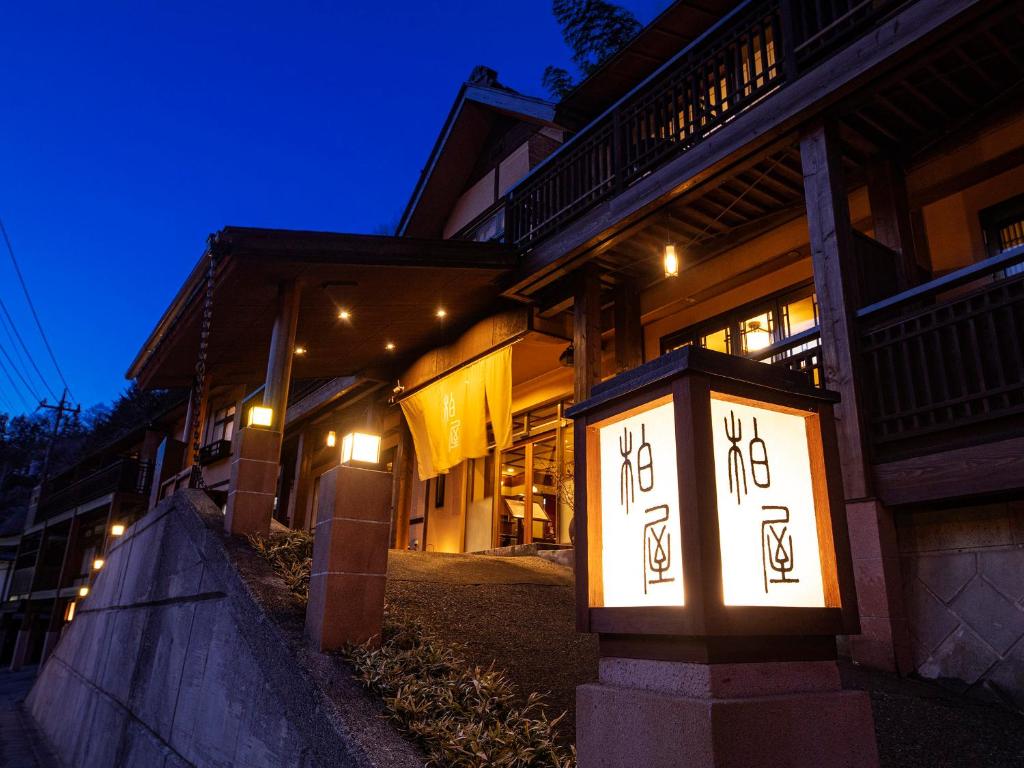
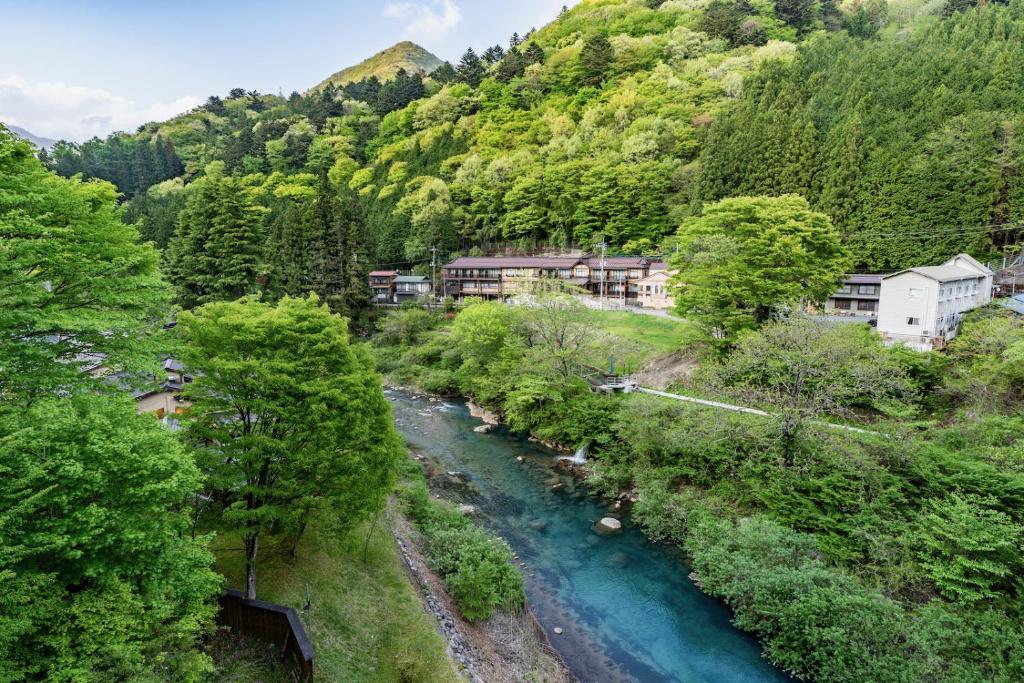
At Shima Onsen Kashiwaya Ryokan, you stay beside the clear Shima River in a small mountain hot spring town in Gunma. With only 14 rooms, the ryokan gives you an intimate place to slow down, enjoy the forested valley, and experience Japanese bathing culture at your own pace.
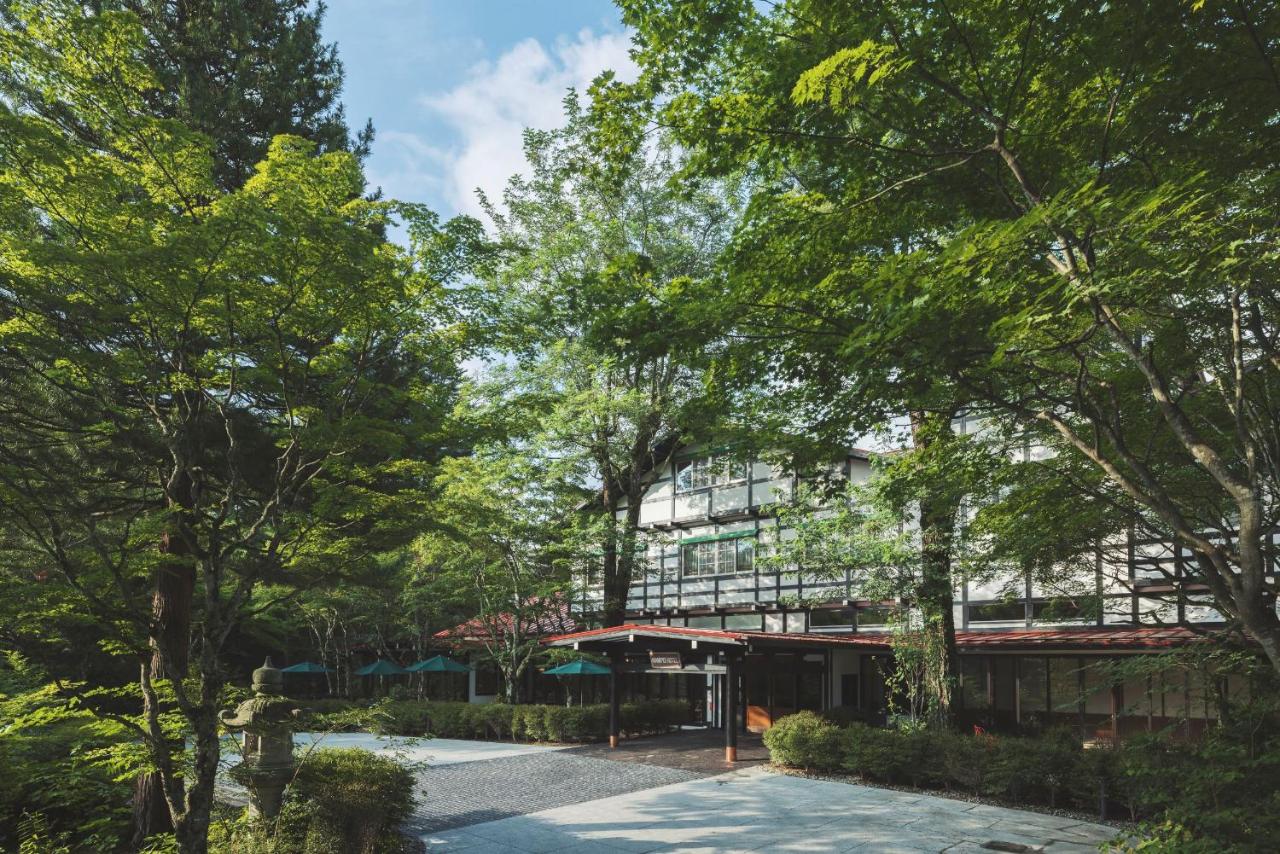
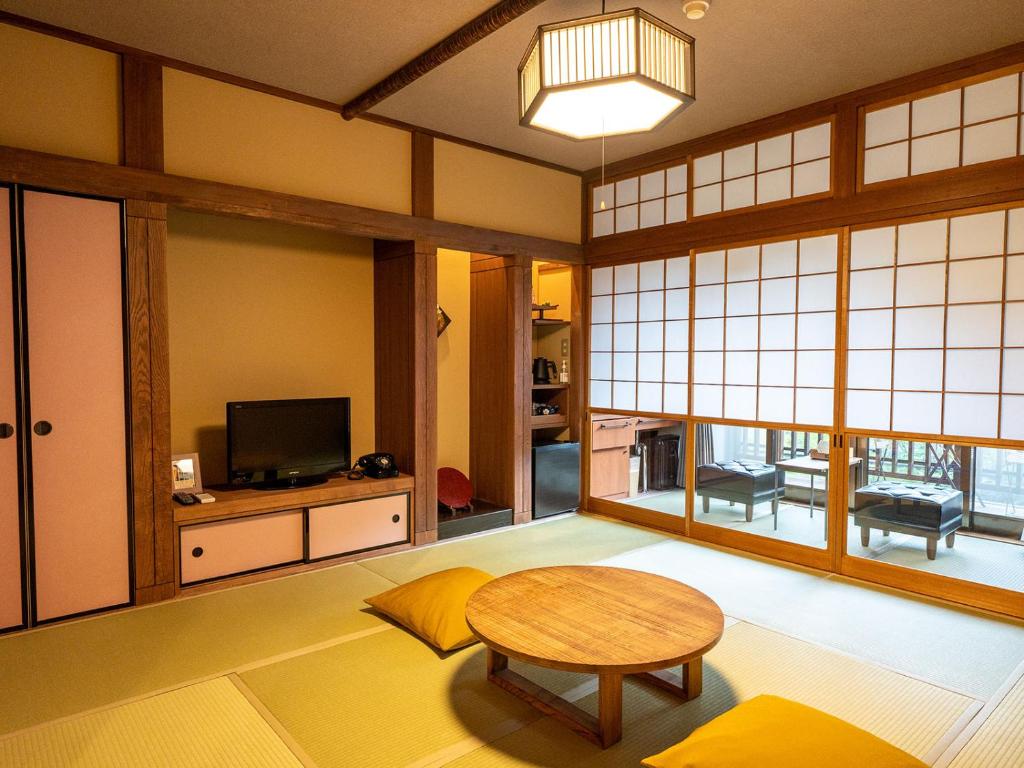
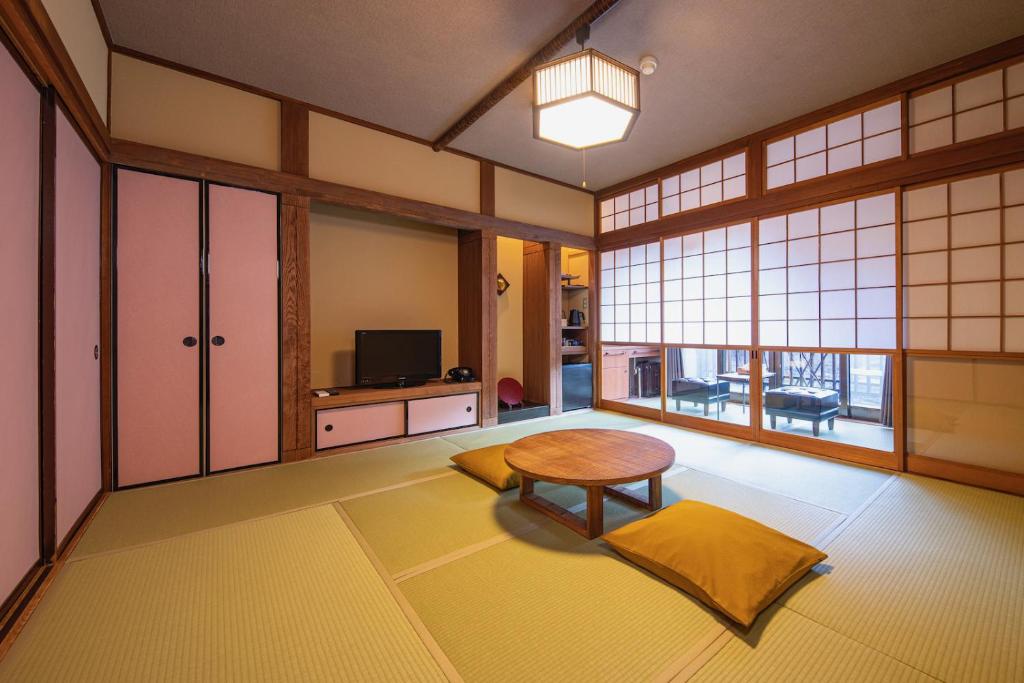
The building combines tatami rooms, wooden details, black rotary telephones, and a nostalgic Showa-period atmosphere. A major renewal in 2021 refreshed the rooms and shared spaces while keeping the ryokan’s warm, personal character.
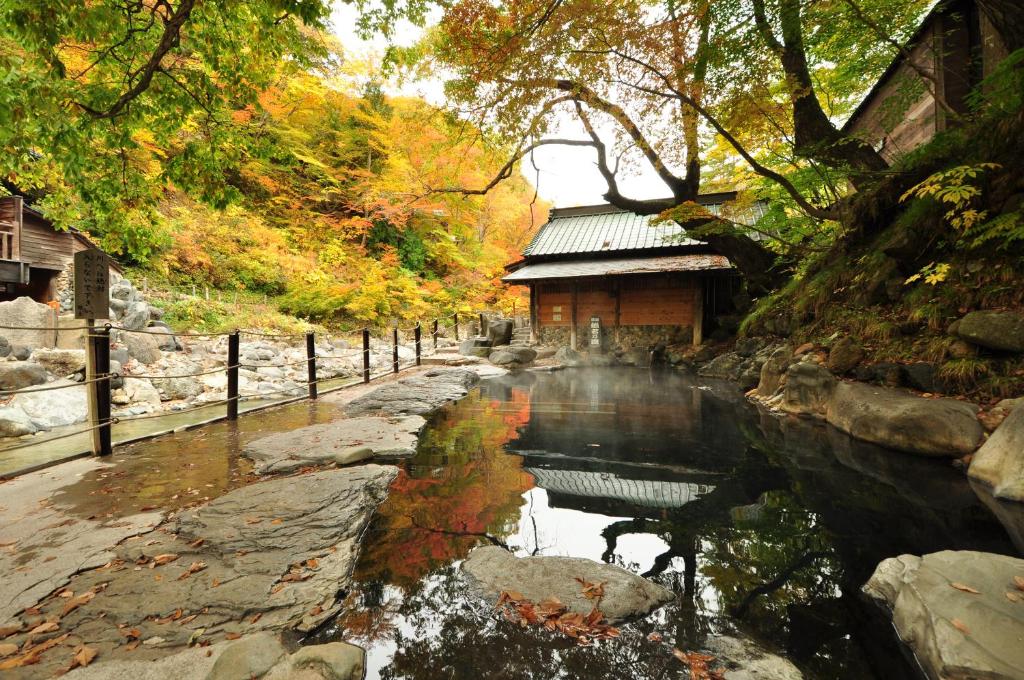
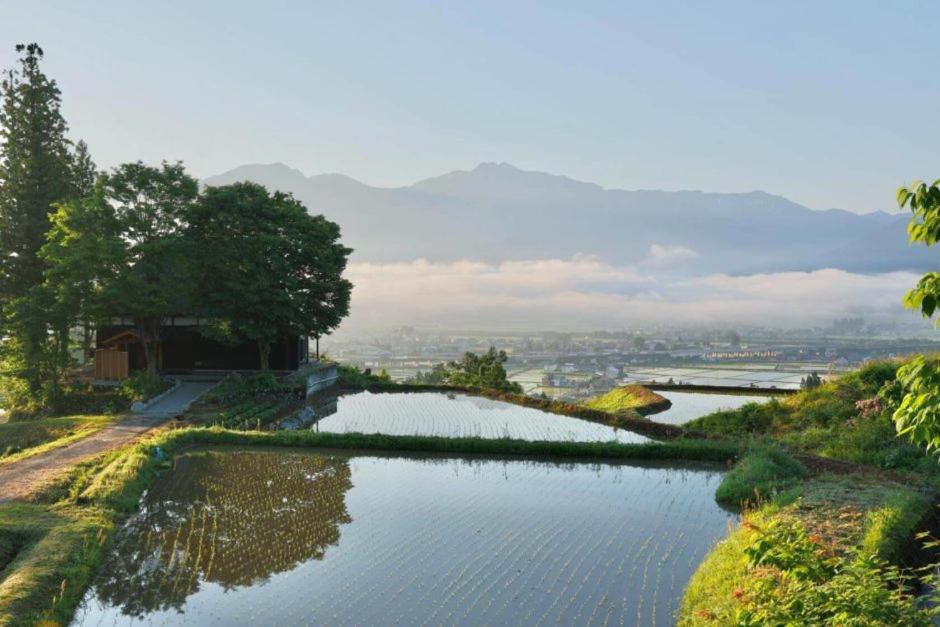
Shima Onsen has welcomed bathers for centuries and takes its name from a legend about water that could heal 40,000 illnesses. The town lies within Joshin’etsukogen National Park, where the bright blue Shima River, mountain forests, waterfalls, and old streets create an inviting setting in every season.
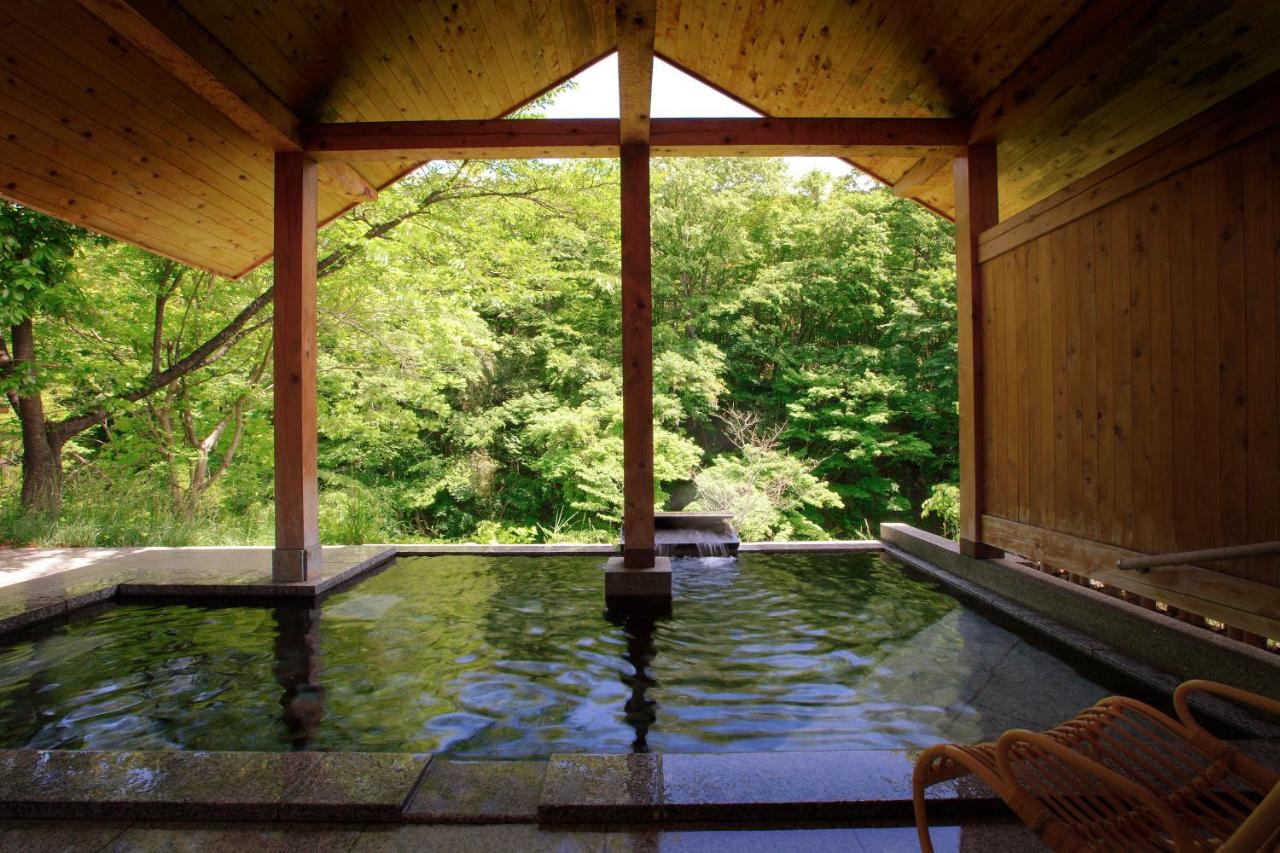
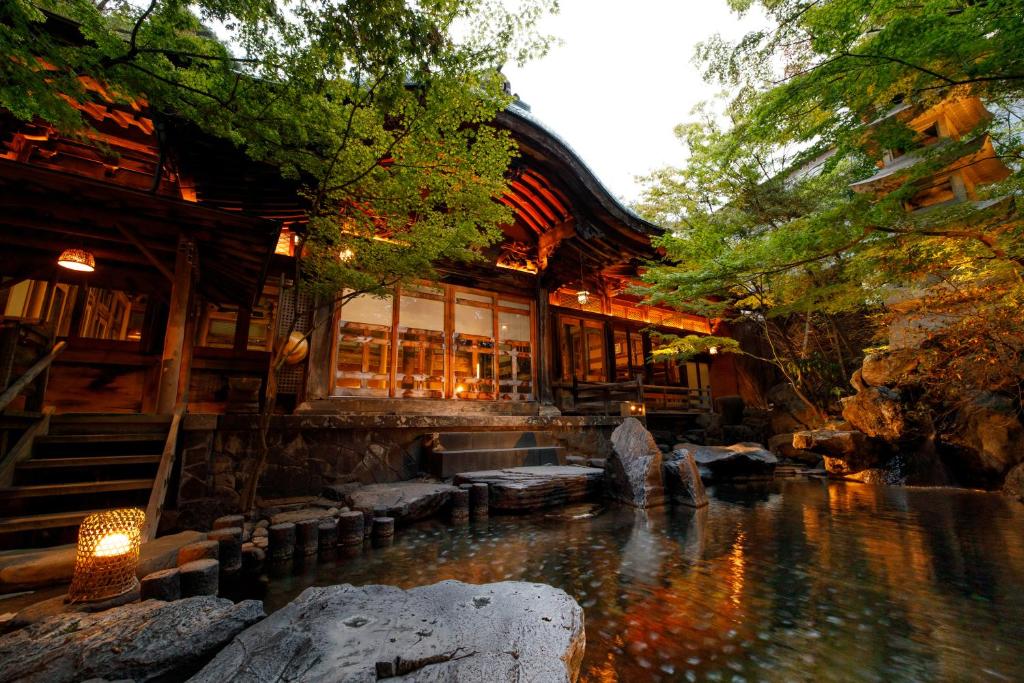
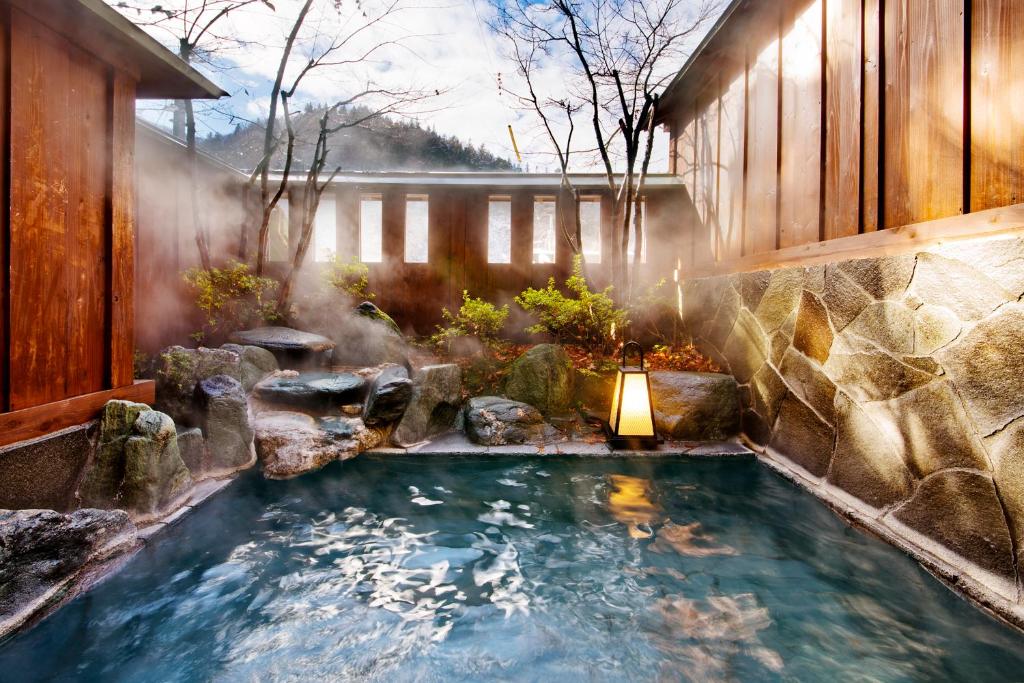
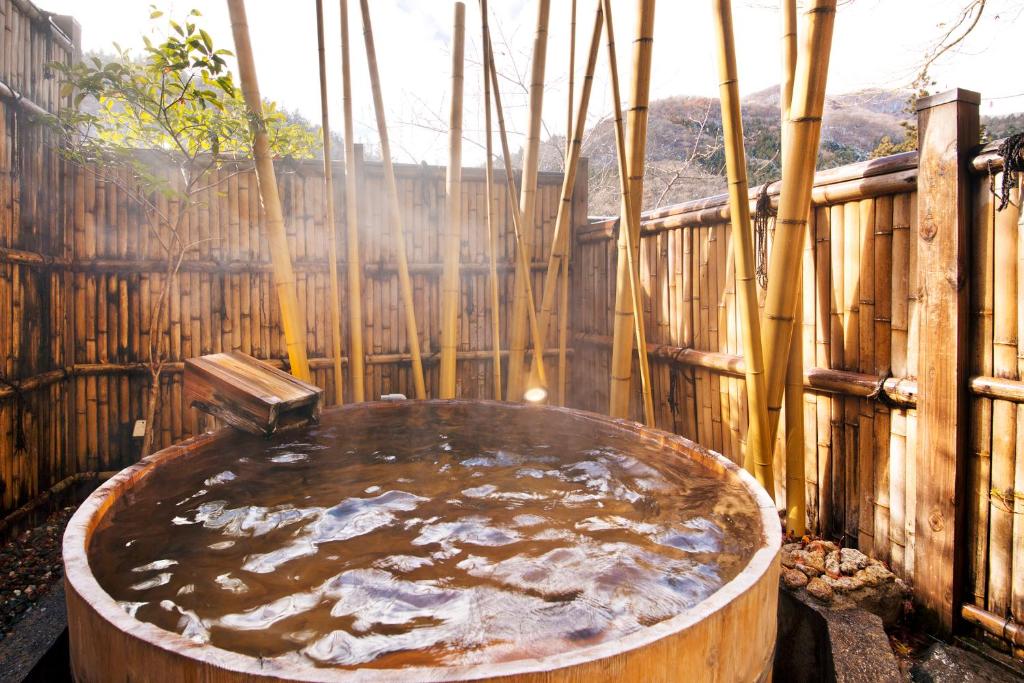
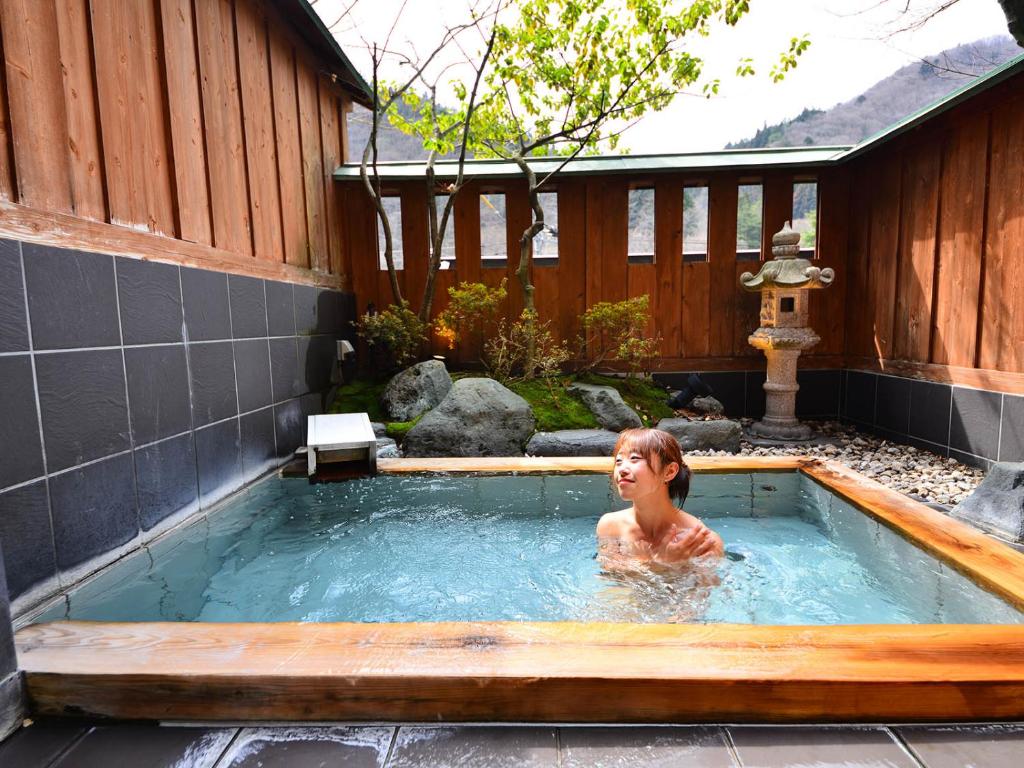
Kashiwaya Ryokan is especially known for its three private open-air baths. You do not need to reserve them, and you can use them as often as you like whenever they are free. Two rooms also include private open-air baths supplied with natural hot spring water.
Accommodation
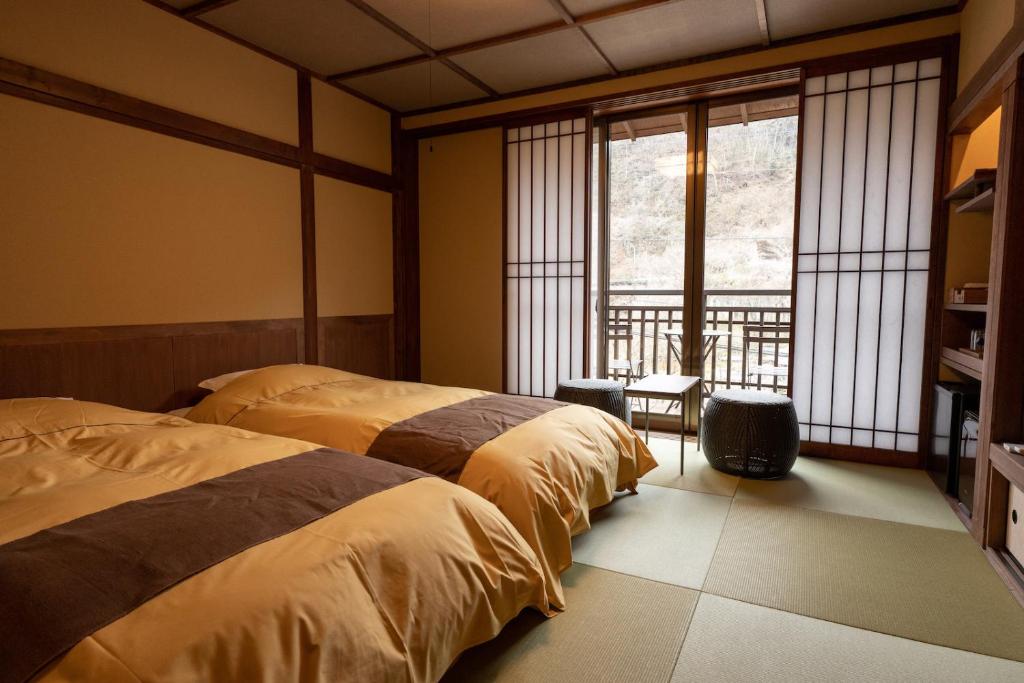
You can choose from Japanese rooms with futons, tatami rooms with Western beds, single rooms, river-facing rooms with outdoor decks, and two special rooms with private open-air onsen baths. Room designs differ, but each one keeps a clear connection with traditional Japanese living.
Hana is a 40-square-metre room with a tatami living area and two Western single beds. Its private open-air bath uses natural Shima Onsen water, allowing you to bathe whenever you like without leaving your room. A private shower and toilet are also included.
Kame is also 40 square metres and gives you a more traditional sleeping experience with futon bedding on tatami. A Showa-inspired veranda and river-facing terrace add to the nostalgic atmosphere. Your private outdoor bath receives fresh natural hot spring water, while a separate shower room, walk-in closet, and toilet provide useful space.
The Large Room with Footbath measures 32 square metres and includes tatami flooring, futon bedding, and a deck overlooking the river. A private hot spring footbath on the deck lets you warm your feet while listening to the flowing water and looking across the valley.
Standard Rooms with Decks measure around 24 square metres. These rooms combine tatami flooring and futon bedding with an outdoor river-view deck. You can sit outside with tea, listen to the river, and watch the colours of the trees change through the year.
Japanese Twin Rooms with Decks also measure around 24 square metres. Two Western single beds stand on the tatami floor, while the private deck faces the river. These rooms suit you when you want Japanese design but prefer sleeping in a bed.
The Japanese Twin Room measures around 21 square metres and combines tatami with two Western single beds. It does not include the river-view deck found in the larger twin category, but it gives you a comfortable and compact base close to the baths.
Two single-room styles make solo travel especially easy. The first-floor Single Room measures around 17 square metres and includes a Western bed, tatami flooring, and a river-facing deck. The second-floor Single Room measures around 18 square metres and has a Western bed on tatami without a deck.
Hana and Kame include private showers and open-air onsen baths. Most other rooms do not include a private bath or shower, so you use the shared or private hot spring facilities for bathing. Room equipment includes Wi-Fi, a television, refrigerator, electric kettle, safe, air conditioning, telephone, towels, yukata, toiletries, and a hairdryer.
Dining
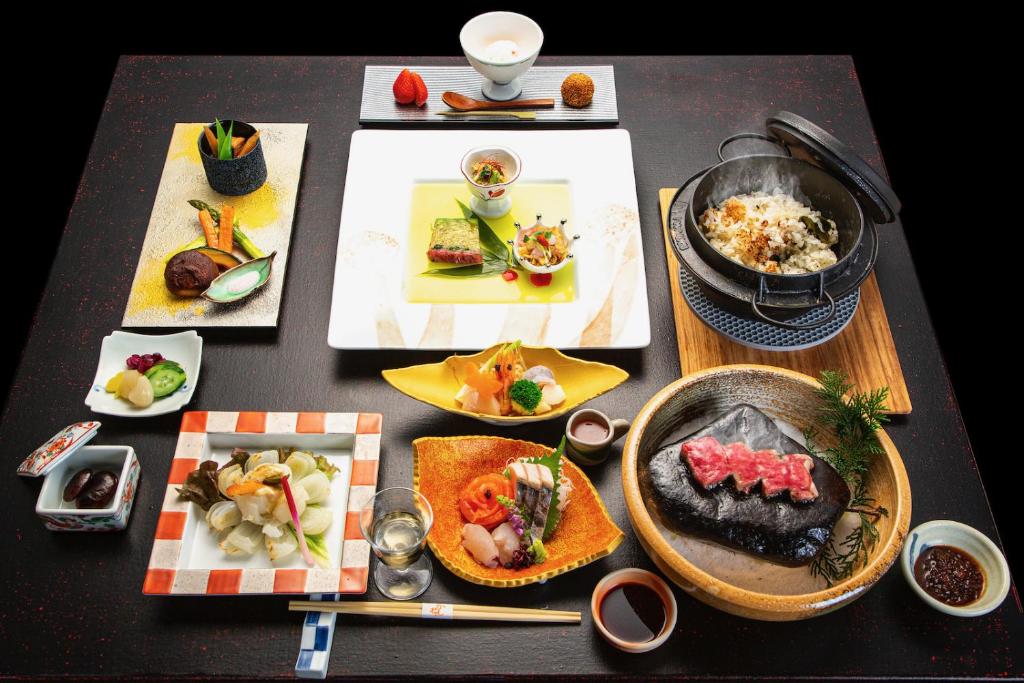
Dinner brings you seasonal Japanese kaiseki cuisine prepared with produce from Gunma and ingredients selected for the time of year. Rather than serving an excessive number of dishes, the kitchen focuses on a balanced meal with gentle flavours and carefully chosen portions.
The standard seasonal dinner may include stone-grilled Joshu beef, Gunma-grown vegetables, handmade konjac, Joshu pork, mountain vegetables, sashimi, soup, rice, and a sweet finish. Joshu beef is one of Gunma’s best-known foods, and the stone grill lets you cook each piece to your preferred level.
Menus change around five times each year. Spring may bring butterbur buds, bamboo shoots, and udo mountain vegetables, while later menus follow the ingredients available during summer, autumn, and winter. Dashi-based seasoning allows the natural flavours to remain clear.
Depending on your plan, you may choose a dinner centred on Joshu beef or a lighter course featuring river fish and vegetables from Gunma. A beef-focused menu introduces you to Joshu beef through more than one cooking style.
Dinner and breakfast take place in a semi-private dining area. Wooden partitions give you personal space while allowing each dish to arrive directly from the kitchen.
For breakfast, you can choose Japanese, Western, or brunch. The Japanese breakfast includes local ingredients, vegetables steamed with hot spring heat, and rice cooked in a Nanbu iron pot. The rice normally comes directly from producers in the local Nakanojo area.
The Western breakfast includes bread baked at the ryokan each morning, coffee made with beans roasted by Kashiwaya Café, and apple juice from the local Sawada area. The brunch option lets you sleep later and dine at Kashiwaya Café or Shima Terrace in the centre of the hot spring town.
A vegan dinner can be prepared when arranged in advance. Vegetarian requests can also be considered, including meals without meat or fish. You should explain whether you avoid bonito stock, eggs, or dairy products when booking. The kitchen cannot safely accommodate severe allergies, and halal meals are not available.
Onsen and Wellness
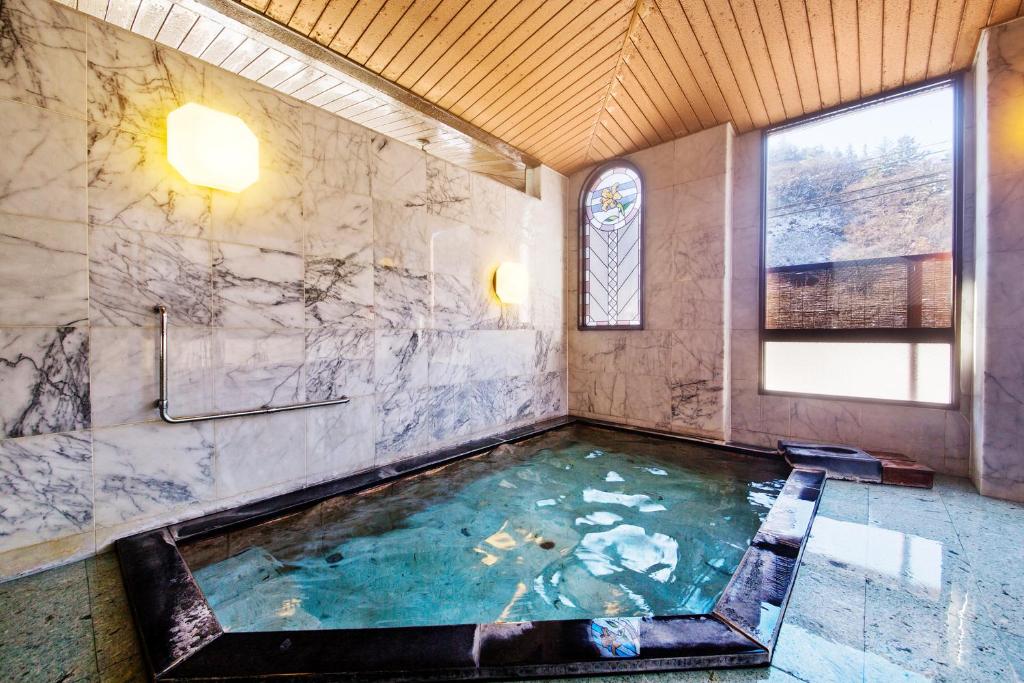
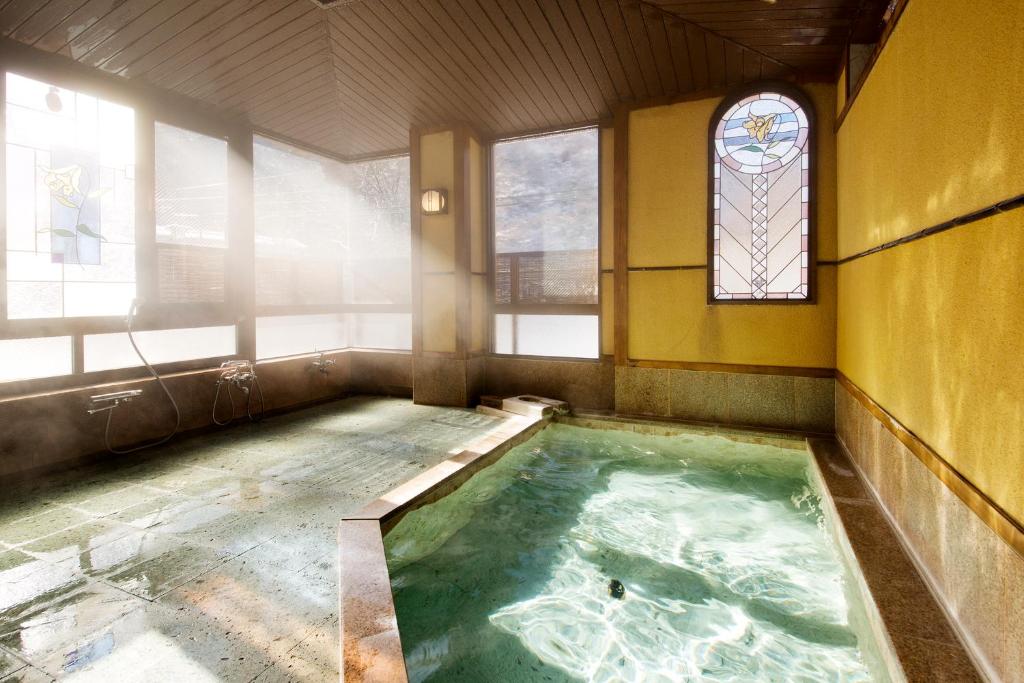
Kashiwaya Ryokan uses two Shima Onsen sources and fills seven bathing pools with natural hot spring water. These include two shared indoor baths, three private open-air baths, and the private outdoor baths in the Hana and Kame rooms.
The water is classified as a sodium-calcium chloride and sulfate spring. It is hypotonic, mildly alkaline, and naturally hot. The ryokan uses around 72 tonnes of spring water each day.
Traditional bathing indications include fatigue, neuralgia, joint discomfort, frozen shoulder, chronic digestive complaints, some chronic skin conditions, and sensitivity to cold. Sulfate ions and metasilicic acid in the water are also associated with softer-feeling skin.
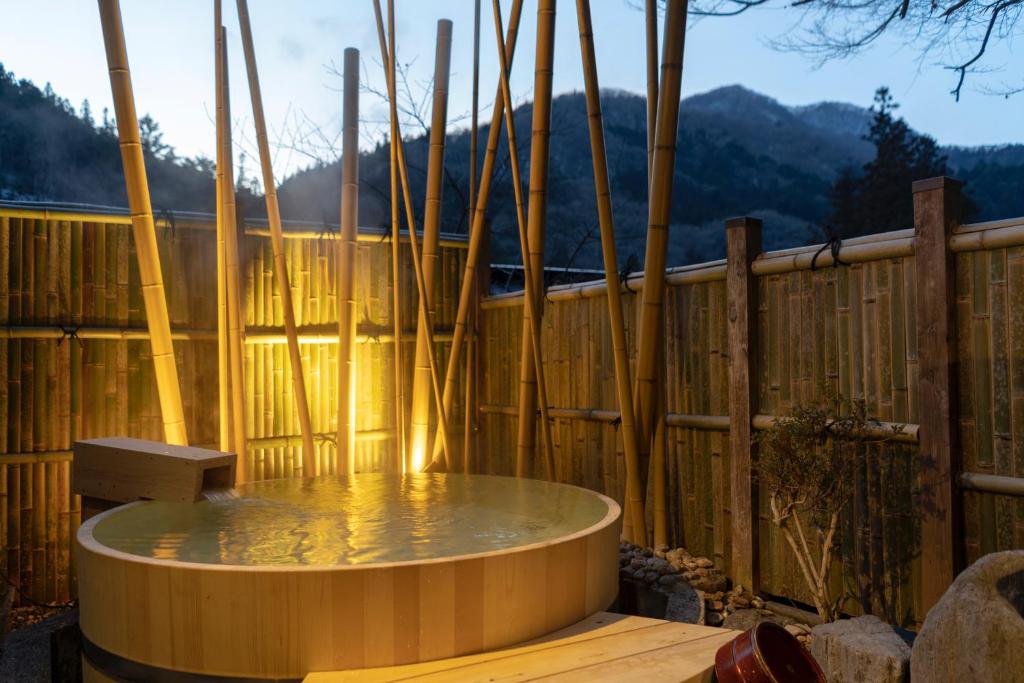
Tsuki-no-Yu is one of the three private open-air baths. Its name means “moon bath,” and its round wooden tub gives you an inviting place to soak beneath the night sky. The tub is made from Japanese umbrella pine, bringing a clean wood fragrance to the bathing area.
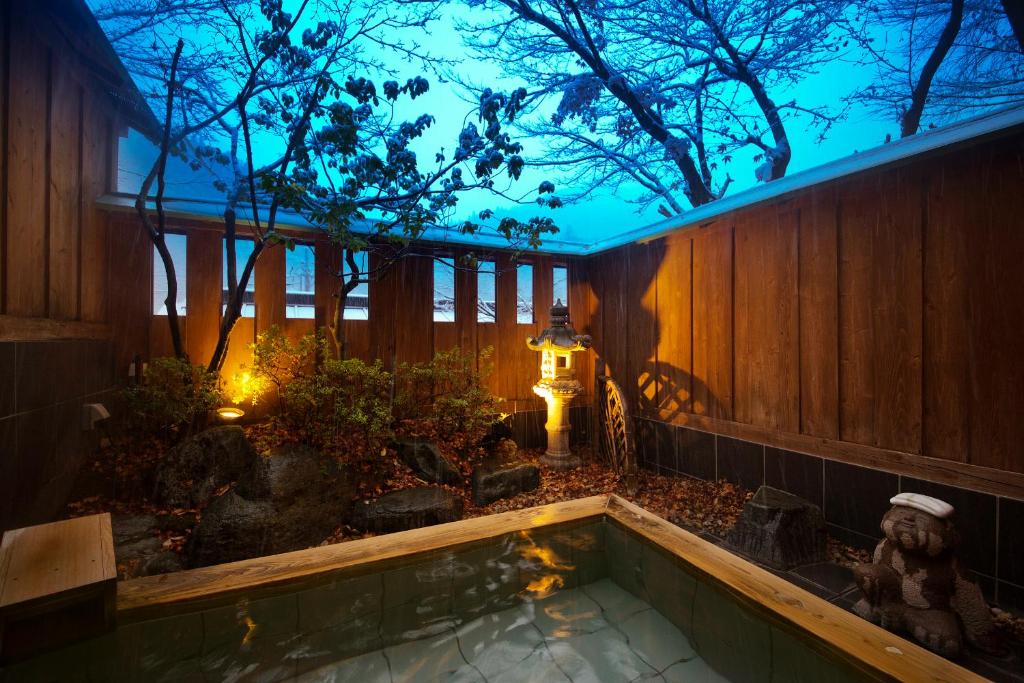
Sakura-no-Yu takes its name from the cherry blossoms that appear in spring. Trees and natural stone surround the bath, creating a different view as fresh leaves, autumn colour, and snow arrive through the year.
Kaede-no-Yu is named after the maple tree. Its outdoor setting becomes especially striking when the leaves change colour in autumn.
You do not need to reserve Tsuki-no-Yu, Sakura-no-Yu, or Kaede-no-Yu. A light in the corridor shows when each bath is occupied. When you find one free, enter, lock the door from the inside, and enjoy the entire space privately. You can return as many times as you like.
The private open-air baths normally operate from 15:00 until 01:00 and again from 05:00 until 11:00. Each outdoor bathing area has a washing space and shower, although outdoor showers may close during winter to prevent freezing.
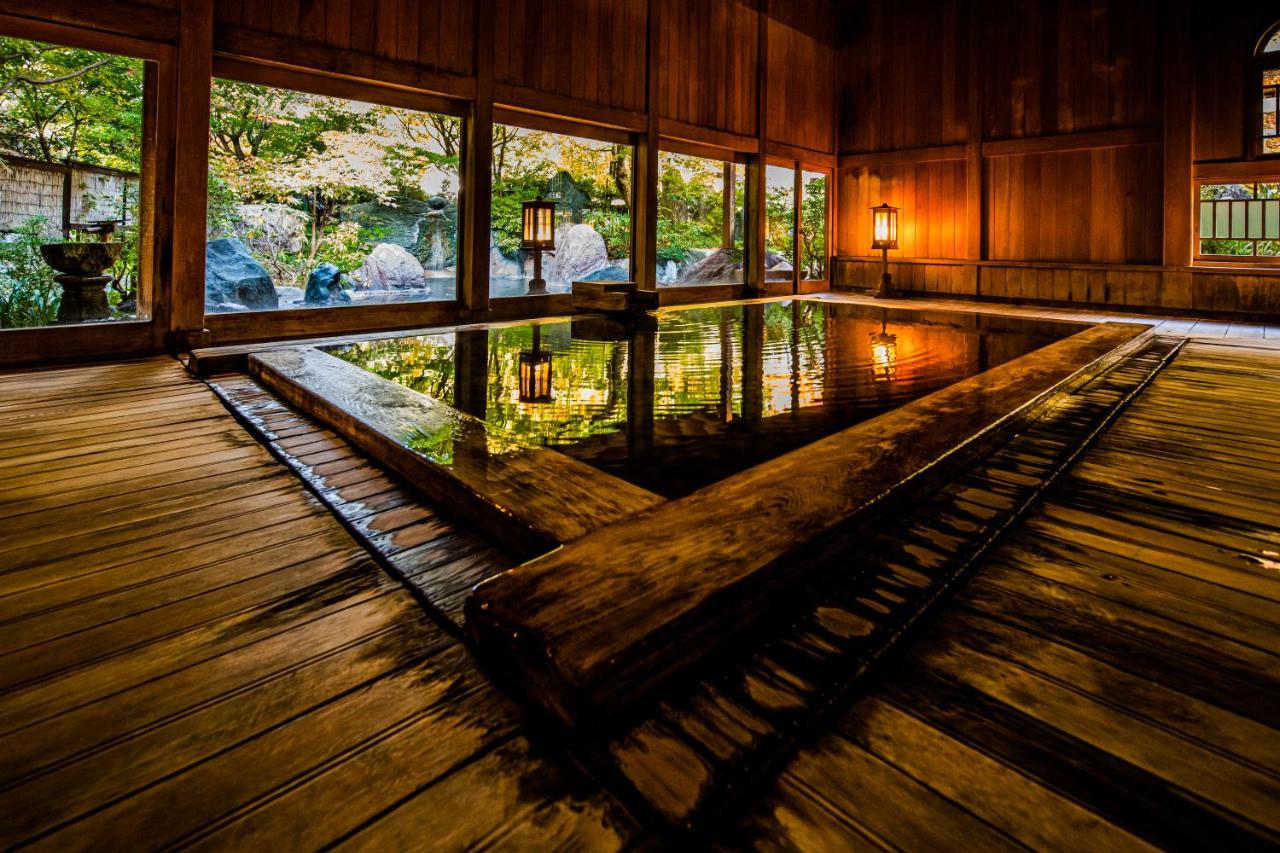
Yamayuri-no-Yu is the women’s shared indoor bath, while Hikari-no-Yu is the men’s shared indoor bath. These larger bathing areas give you more space to stretch out and enjoy the spring water.
The Hana and Kame room baths and Tsuki-no-Yu use free-flowing spring water. Sakura-no-Yu, Kaede-no-Yu, and the shared baths combine fresh spring flow with circulation. A small amount of water may be added, and the water may receive limited heating when needed to keep the bathing temperature comfortable.
Guests with Tattoos
You can use every hot spring facility at Kashiwaya Ryokan if you have tattoos, including the shared public baths. You do not need to cover them.
For greater privacy, you can use Tsuki-no-Yu, Sakura-no-Yu, or Kaede-no-Yu. These three private open-air baths are complimentary, require no advance reservation, and can be used whenever they are free. Hana and Kame also give you a private open-air onsen bath inside your room.
Facilities
Kashiwaya Ryokan includes a lobby with complimentary coffee and tea, a library where you can read between baths, a semi-private dining area, a small shop selling local gifts, and luggage storage at reception. Free Wi-Fi is available in the rooms and shared spaces.
You can borrow a bicycle and explore Shima Onsen without relying on a car. The complimentary bicycles were renewed in 2026 and are useful for travelling between the ryokan, the central hot spring streets, cafés, public baths, and riverside viewpoints.
The property is non-smoking, with a designated smoking corner on the second floor. Free parking is available beside and close to the building.
Activities
You can borrow a bicycle or walk beside the Shima River to explore the old hot spring town. The streets retain signs, shops, bathhouses, and buildings that recall the Showa period, giving you an easy setting for a slow afternoon in yukata.
Kashiwaya Café and Shima Terrace sit in the central part of the town. You can stop for coffee, curry, sweets, pizza, bread, or brunch while exploring the streets.
Oku-Shima Lake is known for the bright blue colour often called Shima Blue. The shade changes with the weather, light, season, and amount of water. You can admire the lake from the road or join canoe activities when seasonal services operate.
The Shima Potholes show how the river has shaped the rock over many years. Clear blue-green water flows through rounded pools and channels, creating one of the area’s easiest natural stops. Maya Falls and other forest paths give you further opportunities for walking.
Seasonal outdoor activities include canoeing, canyoning, hiking, and fishing. You can also explore public bathhouses and footbaths around the town, although each facility follows its own tattoo and access rules.
Additional Features
Kashiwaya Ryokan has 14 rooms across two floors. Check-in begins at 15:00, and check-out is at 12:00, giving you time for a final morning bath. When dinner is included, you should arrive by 17:00.
You can reach Shima Onsen from Tokyo in around three hours by public transport. A direct highway bus operates from Tokyo, or you can travel by train to Nakanojo Station and continue by local bus. Get off at Seiryu-no-Yu, which is close to the ryokan.
A regular collection service from Nakanojo Station is not provided. Free parking, luggage storage, complimentary bicycle rental, Wi-Fi, three private open-air baths, and the late check-out help you enjoy an unhurried stay in the mountains.