
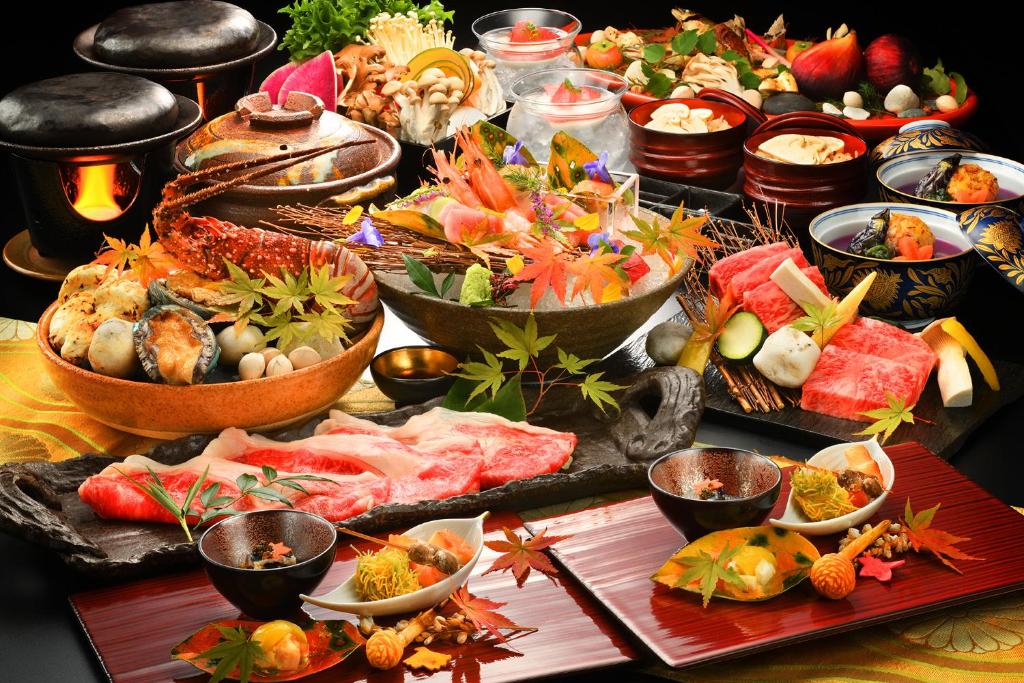
One of the pleasures of staying at a traditional ryokan in Japan is that dinner and breakfast are often included. After checking in, changing into a yukata and relaxing in the onsen, guests sit down to a generous multi-course dinner.
For first-time visitors, the number of dishes and unfamiliar course names can seem intimidating. Each course, however, has a purpose. Some announce the season, others showcase local ingredients, and others demonstrate a particular cooking technique.
This guide explains what kaiseki is, how a modern ryokan dinner usually progresses and the basic etiquette to know before you begin.
What is kaiseki?
Kaiseki is a multi-course Japanese meal shaped by seasonality, balance, presentation and respect for the natural character of each ingredient. Rather than following one fixed menu, it creates a carefully paced progression of flavours, textures, temperatures and cooking methods.
Two related traditions share the name kaiseki, although they are written with different kanji.
Cha-kaiseki 茶懐石 is the restrained meal served as part of a formal tea gathering, before the preparation of koicha 濃茶, or thick tea.
Kaiseki ryōri 会席料理 is a more elaborate banquet-style meal intended to be enjoyed with sake. Modern ryokan dinners are generally closer to this second form, while borrowing the seasonal sensitivity, pacing and aesthetics of tea kaiseki.
Ryokan adapt this framework to their surroundings. Local seafood, river fish, mountain vegetables, regional beef, handmade tofu and local ceramics may all become part of the experience.
Modern ryokan kaiseki is therefore not one perfectly preserved ancient ritual. It is a living regional cuisine: banquet-style in structure, tea-inspired in spirit and seasonal in expression.
A brief history of kaiseki
Kaiseki belongs to a wider history of formal Japanese dining.
Honzen ryōri 本膳料理 was the highly structured ceremonial cuisine of the warrior and elite classes. Food was arranged on multiple trays according to established rules.
Shōjin ryōri 精進料理, associated with Buddhist temples, developed sophisticated ways of preparing vegetables, tofu, grains and other plant-based ingredients. It emphasised restraint and careful attention to the character of each ingredient.
Tea kaiseki developed alongside Japanese tea culture. Its core is often described as ichijū-sansai 一汁三菜—one soup and three dishes—served with rice. Additional dishes might be offered with sake, but the meal remained secondary to the tea gathering itself.
Banquet-style kaiseki developed as a more sociable meal centred on eating and drinking. It placed rice near the end and allowed a broader succession of raw, grilled, simmered, steamed, fried and vinegared dishes. This became the main structural basis for the elaborate dinners now served at many ryokan.
What a Ryokan Kaiseki Meal Is Telling You
You arrive.
The ryokan tells you what season it is. (as it will become evident by the ingredients AND decoration)
It shows you where you are. (local ingredients that people are very proud of)
It demonstrates its control of water and fire.
It feeds you generously.
Then it returns you to rice and lets the evening end lightly.
A typical modern ryokan kaiseki sequence
There is no compulsory order followed by every ryokan. Courses may be combined, omitted or moved according to the region, season, accommodation plan and style of the inn.
The sequence below is a common modern pattern.
0. Shokuzenshu 食前酒 — the welcome
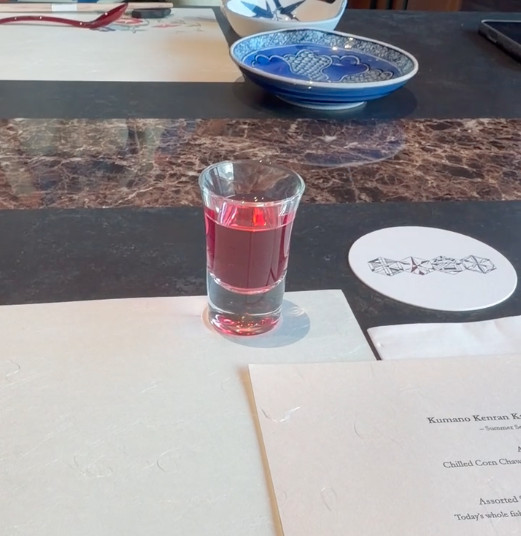
The literal meaning is “before-meal alcohol.”
Shokuzenshu is an optional aperitif, often umeshu, fruit liqueur, local sake or another regional drink. It is separate from the sakizuke, although the two may arrive together.
It represents arrival and hospitality. A local plum wine or sake may introduce the region before the first dish has even been tasted.
1. Sakizuke 先付 / 先附 — the opening greeting
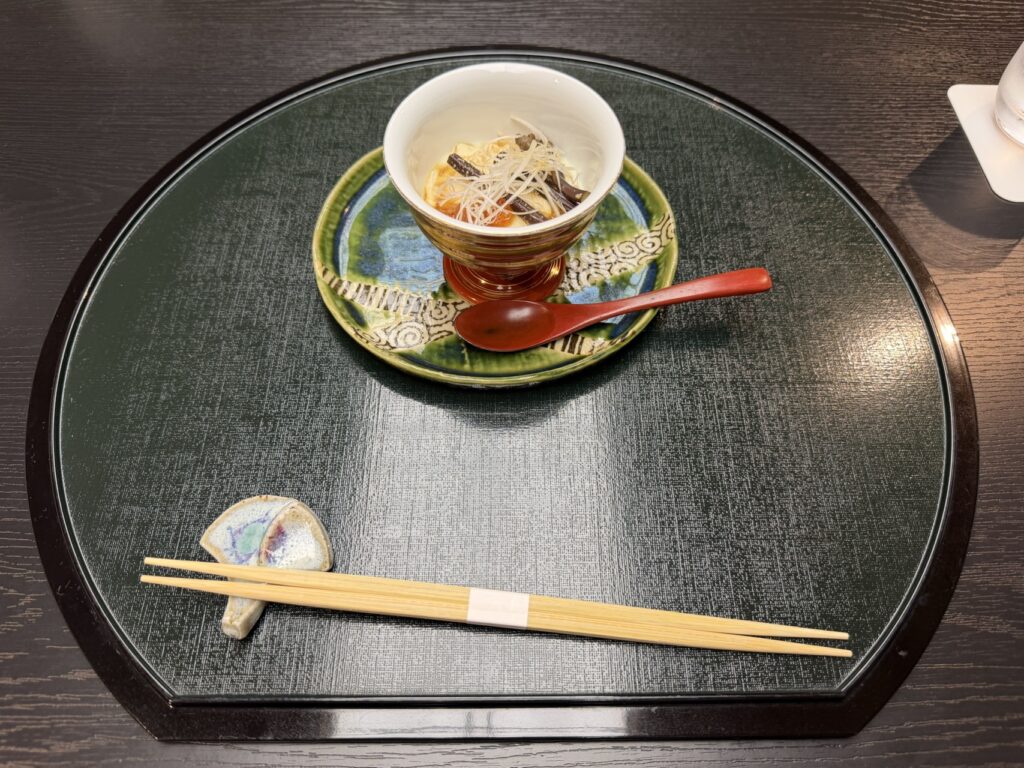
The name means something “placed first.”
Sakizuke is a small prepared appetizer served at the beginning of the meal, often alongside the first drink. It might contain tofu, shellfish, dressed vegetables, yuba or another delicate seasonal preparation.
It acts as the chef’s greeting, establishing the meal’s first flavours, textures and seasonal mood.
2. Hassun 八寸 or Zensai 前菜 — the seasonal landscape
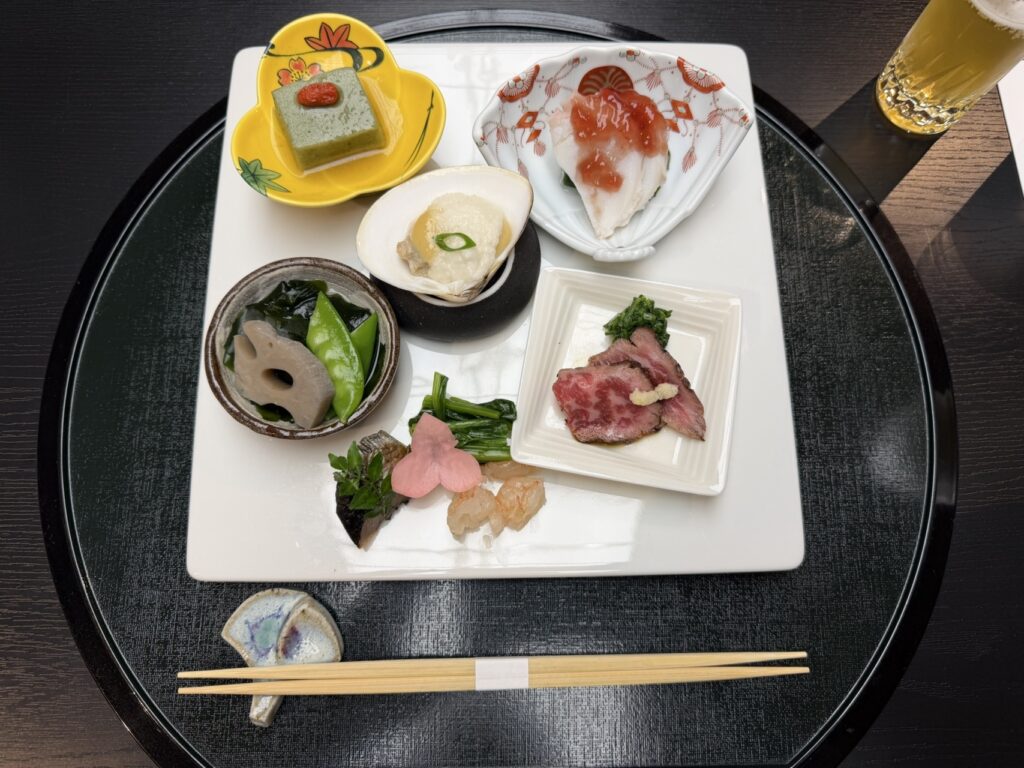
The name hassun means “eight sun.” A sun is an old unit of measurement of approximately three centimetres, and the term originally referred to a square cedar tray measuring about 24 centimetres across.
In formal tea kaiseki, hassun appears later in the meal and traditionally combines foods representing the sea and the mountains. Modern restaurants and ryokan have transformed it into an elaborate seasonal assortment that is often served near the beginning.
A modern hassun may contain five, seven or more small preparations. Ingredients, colours, leaves, flowers, preservation methods and tableware combine to place the meal within a particular season.
It may include a small piece of sushi, but sushi is not essential. A separate bite of sushi or noodles offered between courses may instead be called oshinogi お凌ぎ, something that temporarily “staves off” hunger.
Zensai 前菜 simply means appetizer. At many ryokan, the terms zensai, hassun and shunsai 旬菜 overlap.
3. Wanmono 椀物 / Suimono 吸物 — aroma, water and dashi
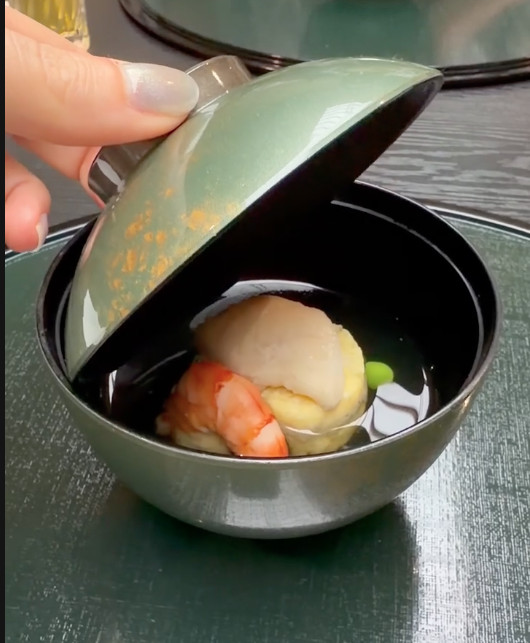
Wanmono means a bowl course, while suimono refers more specifically to a soup, usually clear or lightly seasoned.
The dish is often served in a lidded bowl. Lifting the lid releases the aroma of the dashi and its seasonal garnish before the soup is tasted.
A typical bowl might contain a fish dumpling, tofu, seafood or vegetables in a carefully seasoned stock. It reveals the kitchen’s control of dashi, salt, temperature, texture and timing.
Futamono 蓋物 simply means a lidded dish. It describes the style of vessel rather than a separate numbered category of soup
4. Mukōzuke 向付 / Otsukuri お造り — the immediate place and moment
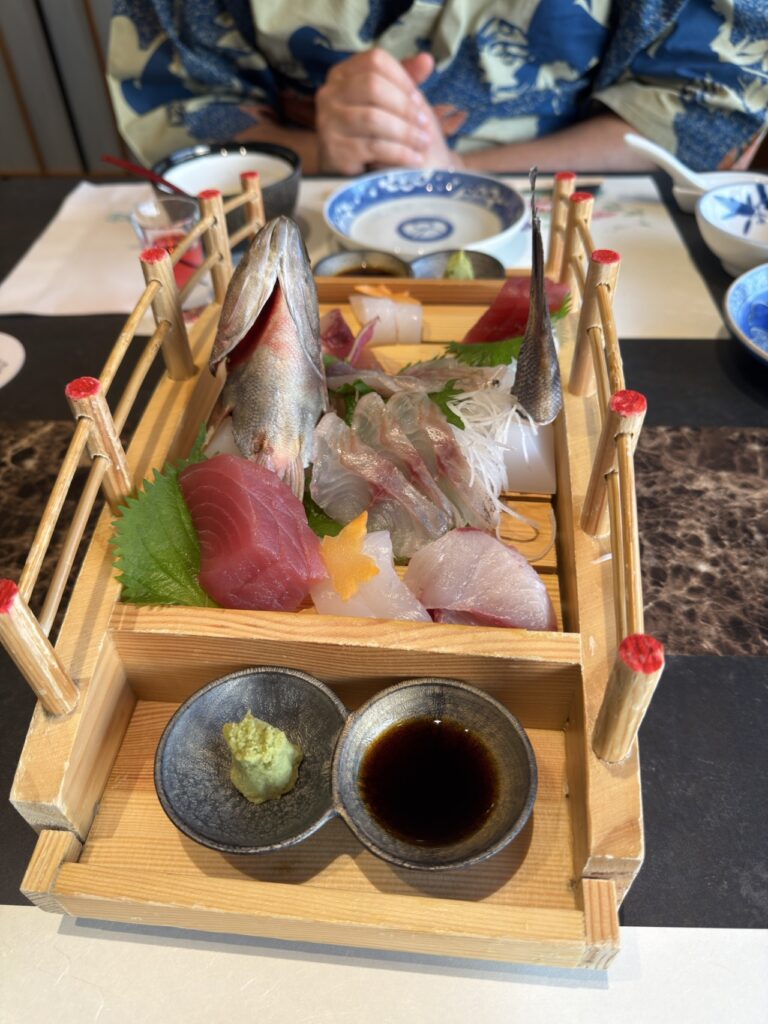
The name mukōzuke refers to the dish originally positioned on the far side of the tray, beyond the rice and soup from the guest’s perspective.
Historically, it could contain sashimi, namasu or another raw or vinegared preparation. In modern ryokan dining it is usually otsukuri, the polite culinary term for sliced raw fish.
This course often expresses geography more clearly than any other. A coastal inn might serve locally landed seafood, while a mountain ryokan may offer river fish, yuba, konnyaku “sashimi” or another regional interpretation.
The dish also displays the chef’s knife work, temperature control and choice of garnishes and condiments.
5. Yakimono 焼物 — fire and concentration
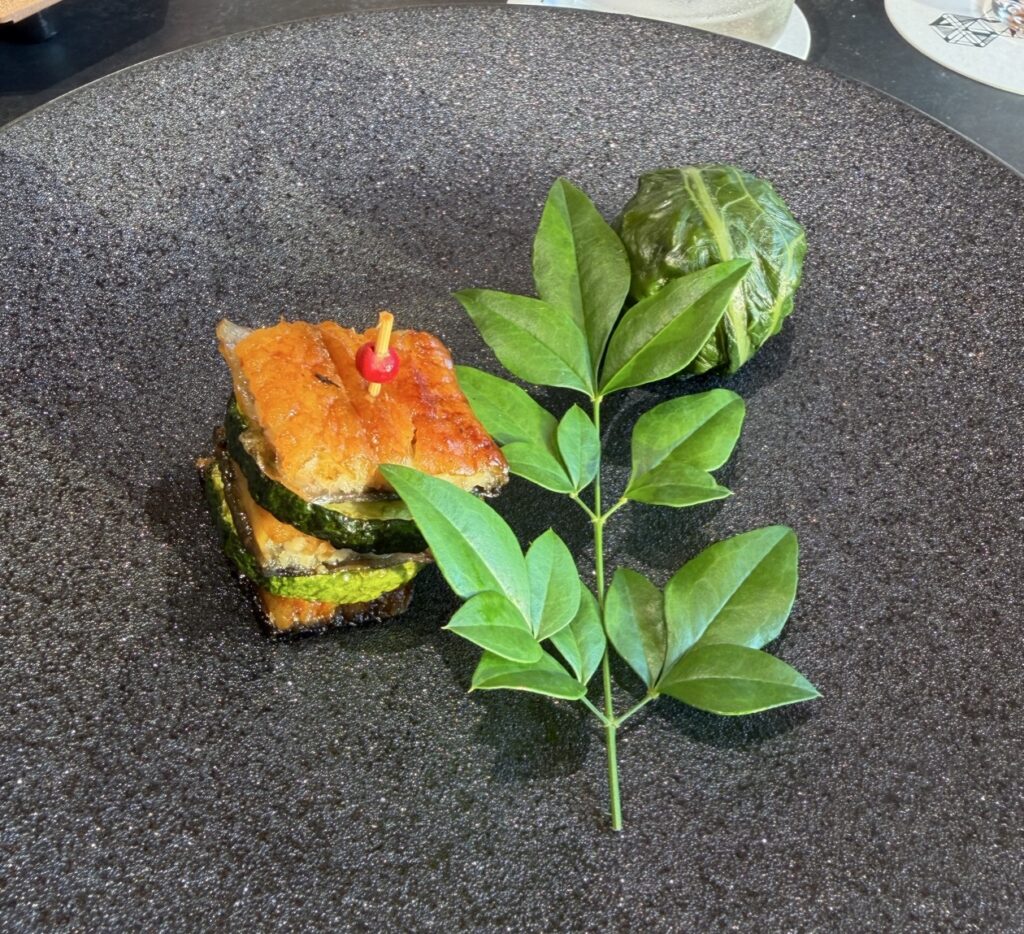
Yakimono simply means “grilled food.”
Fish is common, but the course may also feature shellfish, meat, tofu or vegetables. It might be salt-grilled, charcoal-grilled, glazed with miso or seasoned with herbs and seasonal pastes.
Grilling concentrates aroma, sweetness, fat and bitterness. It provides a stronger, warmer contrast to the delicacy of sashimi and clear soup.
Certain fish also act as seasonal markers. Ayu is associated with the warmer months, while sanma strongly evokes autumn, although availability varies by region.
When a whole grilled fish is served, it is customary to eat the upper flesh first, lift away the spine and then eat the flesh underneath rather than turning the fish over. This does not apply to fillets or every presentation.
6. Takiawase 炊き合わせ / Nimono 煮物 — harmony through separate treatment
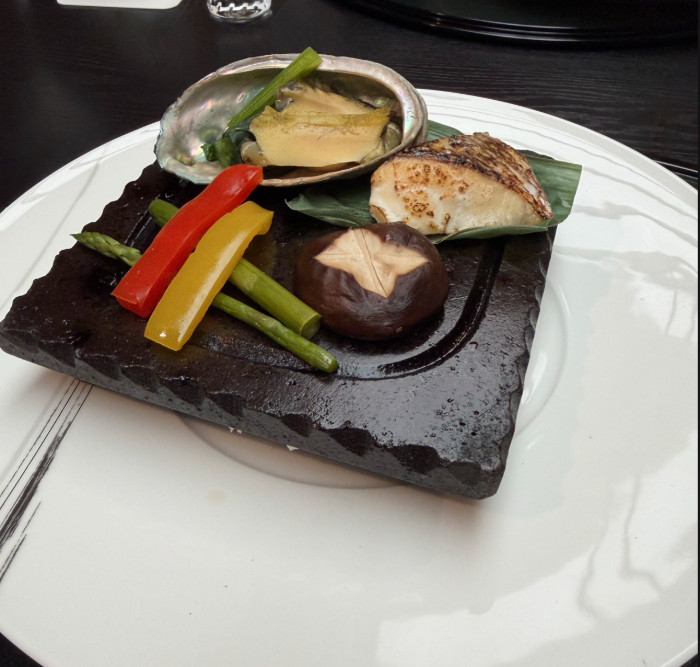
Takiawase brings several simmered ingredients together in one presentation.
Although the finished ingredients appear together, they may have been cooked separately. Vegetables, tofu, fish and meat often require different stocks, seasoning strengths and cooking times.
This allows each component to retain its own colour, texture and flavour while still belonging to a unified dish.
It represents harmony without uniformity: the ingredients complement one another without being made to taste the same.
7. Mushimono 蒸し物 or Agemono 揚げ物 — the chef’s optional technical course
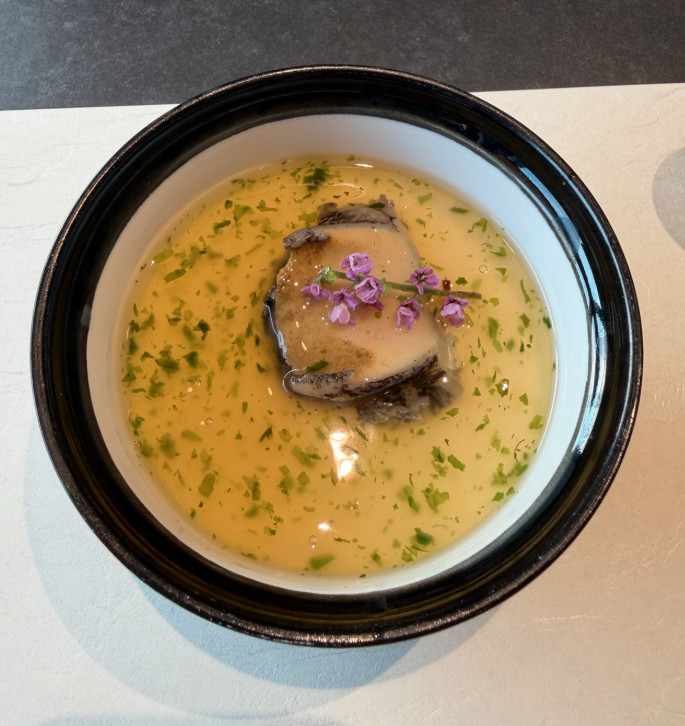
These are optional cooking categories rather than compulsory stages.
Mushimono means steamed food. Chawanmushi, a savoury steamed egg custard, is one of the most familiar examples. It may contain seafood, mushrooms, vegetables and a gingko nut.
Agemono means fried food. Tempura is common, although the course could also include fried tofu, croquettes or another regional preparation.
Steaming introduces softness, moisture and delicacy. Frying provides crispness, richness and contrast.
A ryokan may serve one, both or neither.
8. Shiizakana 強肴, Dainomono 台の物 or Nabemono 鍋物 — generosity and the regional centrepiece
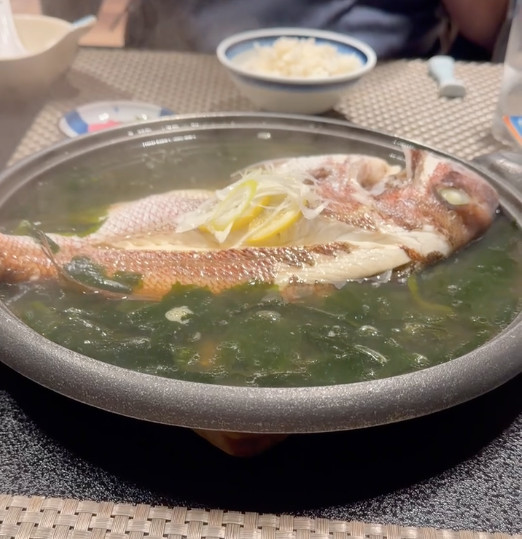
Shiizakana is sometimes translated too literally as a “forced dish.” Its meaning is closer to an additional dish that the host strongly encourages the guest to accept.
Historically, it was offered after the formal sake dishes to encourage further drinking. It was not necessarily large and could be simmered, dressed or vinegared.
At modern ryokan, however, shiizakana is often a substantial late course featuring wagyu, duck, braised fish, abalone or another regional speciality.
Dainomono literally means a “thing on a stand.” On a ryokan menu, it commonly refers to food cooked at the table over a small burner.
Nabemono means hotpot. It may contain meat, fish, tofu, mushrooms and vegetables simmered in broth. Sukiyaki is one familiar form of nabemono.
This part of the dinner often represents abundance, warmth and regional identity. It is where the inn may present its signature beef, crab, wild boar, river fish or local hotpot.
It is also the closest the meal usually comes to a Western-style main course.
9. Sunomono 酢の物, Tomezakana 留肴 or Naka-choko 中猪口 — the turn toward closure
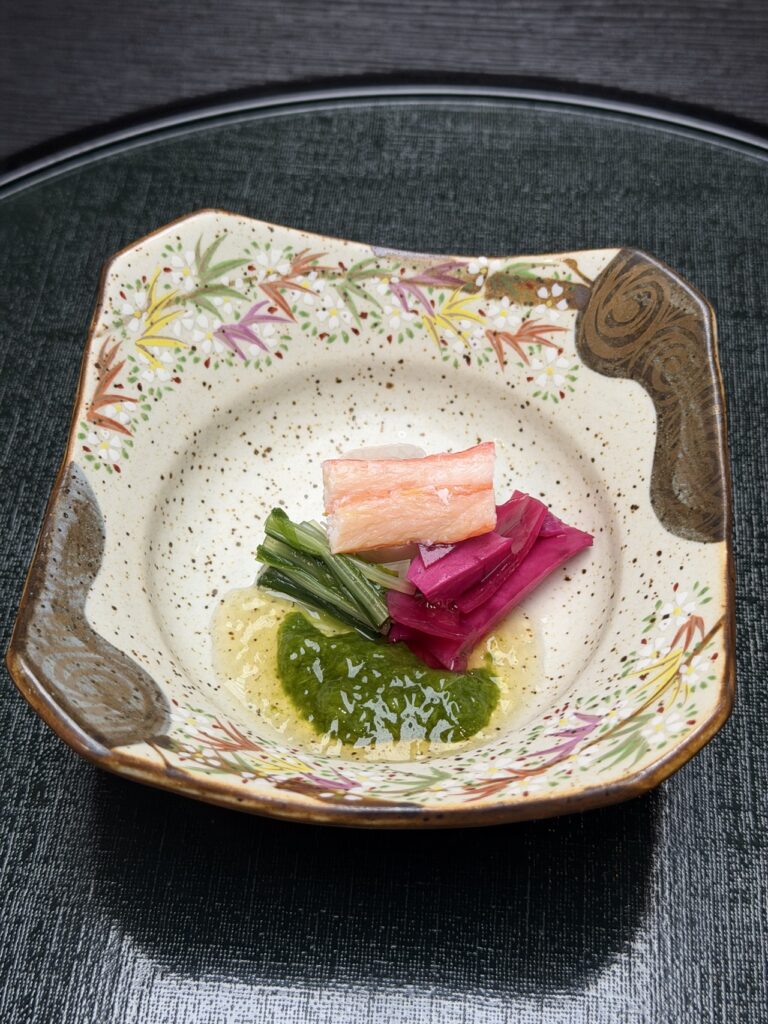
These terms describe related functions but are not interchangeable.
Sunomono is a vinegared dish, perhaps containing cucumber, seaweed, shellfish, crab or fish.
Tomezakana is a concluding sake accompaniment, signalling that the drinking portion of the meal is moving towards its end.
Naka-choko is a small palate-cleansing course. It may be chilled, acidic or soup-like.
A related term is hashiarai 箸洗い, literally “chopstick washing,” referring to a very lightly seasoned soup used to refresh the mouth.
These dishes provide acidity, coolness or delicate broth after the richer cooked courses. They prepare the palate for rice.
An inn will not normally serve every variation. One dish may fulfil the entire transitional role.
10. Shokuji 食事 — the meal within the meal
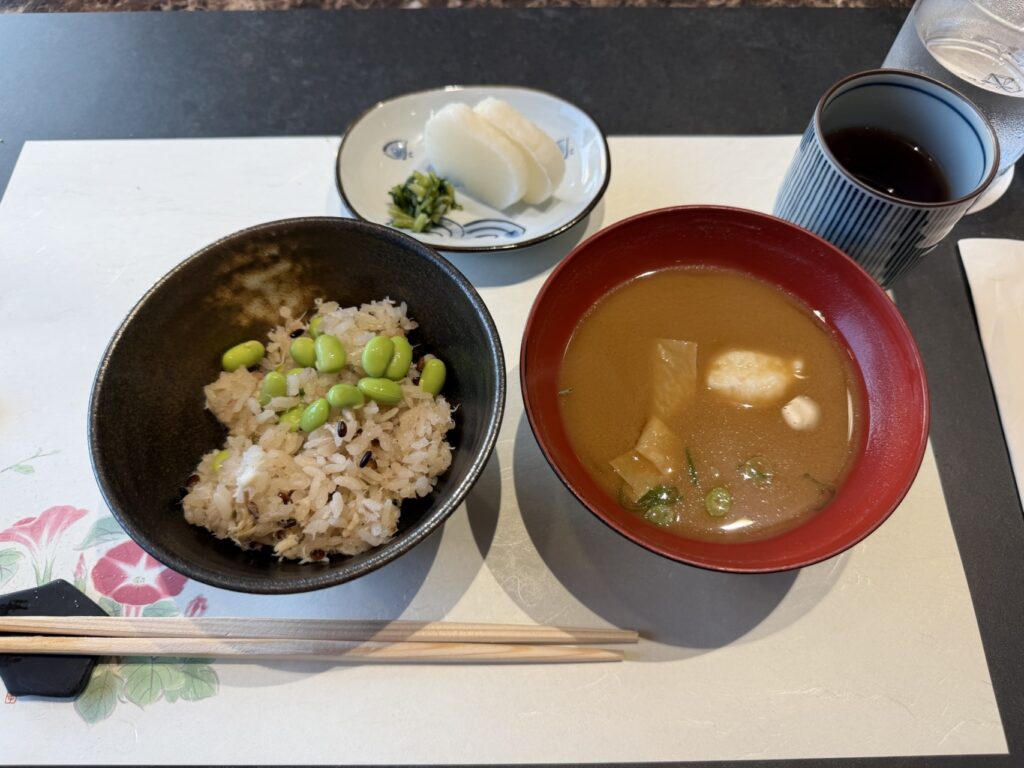
The final savoury stage usually consists of:
Gohan 御飯 — rice
Tome-wan 止椀 or 留椀 — concluding soup
Kōnomono 香の物 — pickles
The word shokuji simply means “meal.” This can seem strange after so many courses, but rice is traditionally the staple that completes the meal. The dishes that came before it can be understood as accompaniments to food and sake.
After increasingly elaborate preparations, the dinner returns to the fundamental structure of rice, soup and pickles.
The rice may be plain or cooked with seasonal ingredients such as bamboo shoots, mushrooms, chestnuts or seafood. Some ryokan serve rice prepared in a clay pot using locally grown grain.
Tome-wan is the closing soup and is often miso-based, although other soups may be served. It concludes the savoury portion rather than the entire dinner, as dessert still follows.
Kōnomono, literally “fragrant things,” refers to pickled vegetables. Their salt, acidity and crunch complement the rice.
11. Mizumono 水物 / Mizugashi 水菓子 / Kanmi 甘味 — the quiet ending
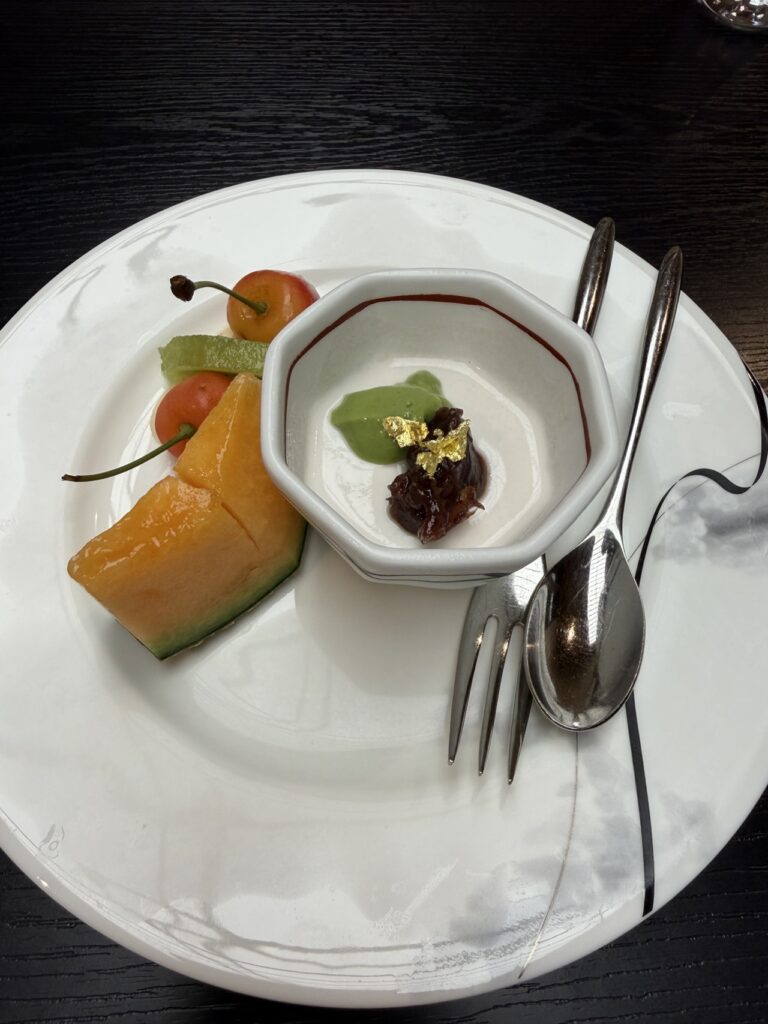
Mizumono literally means “water thing,” but in this setting it refers broadly to a refreshing dessert.
Mizugashi traditionally means fresh fruit, despite including the character for sweets.
Kanmi refers to a sweet course and may include wagashi, pudding, jelly, ice cream or another prepared dessert.
Modern ryokan desserts range from seasonal fruit and sorbet to panna cotta, cake or a regional speciality.
The intention is usually release rather than climax. After a long and complex dinner, freshness and modest sweetness allow the meal to end lightly.
Tea may be served alongside or afterwards. At a more tea-influenced inn, the experience may conclude with a Japanese sweet and matcha.
What to expect during a ryokan kaiseki dinner
Dinner is normally served at a set time, either in the guest room, a private dining area or the ryokan restaurant. Wearing the provided yukata is generally acceptable unless the inn advises otherwise.
Some courses may already be arranged when you sit down, while others arrive individually. Food cooked over a tabletop flame should be left until the staff indicate that it is ready.
Kaiseki depends heavily on temperature. Eat sashimi while it is cold, soup while it is hot and fried food while it is crisp rather than waiting for every dish to arrive.
Menus vary considerably. One ryokan may serve ten or more small courses, while another may combine several preparations on one tray. A more expensive menu may use rarer ingredients, but a longer meal is not necessarily a better one.
Basic kaiseki etiquette
Kaiseki etiquette is less intimidating than it appears. Follow the order in which courses arrive and pay attention to any instructions from the staff.
Small rice and soup bowls may be lifted towards the mouth. When opening a lidded bowl, lift the lid carefully and take a moment to appreciate the aroma.
Avoid mixing all the condiments together automatically. With sashimi, a small amount of wasabi can be placed directly on the fish before dipping it lightly into soy sauce, although this should not be treated as a rigid rule.
Decorative leaves and branches are not always edible, but some garnishes are. When uncertain, ask the staff.
Dietary restrictions and allergies should be communicated to the ryokan well before arrival. Japanese dashi frequently contains fish, and extensive last-minute substitutions may not be possible.
The lids of the bowls, goes upside down, beside the bowl.
The meaning of the meal
Modern ryokan kaiseki is not defined by one mandatory list of courses. Its identity lies in the way the dinner is composed.
The meal moves from welcome and seasonality through water, raw ingredients and fire. It becomes more generous and substantial before returning to rice, soup and pickles. It then ends with fruit or a restrained sweet.
At its best, a ryokan kaiseki dinner does more than feed you. It tells you when you are, where you are and how the inn understands its region.
