
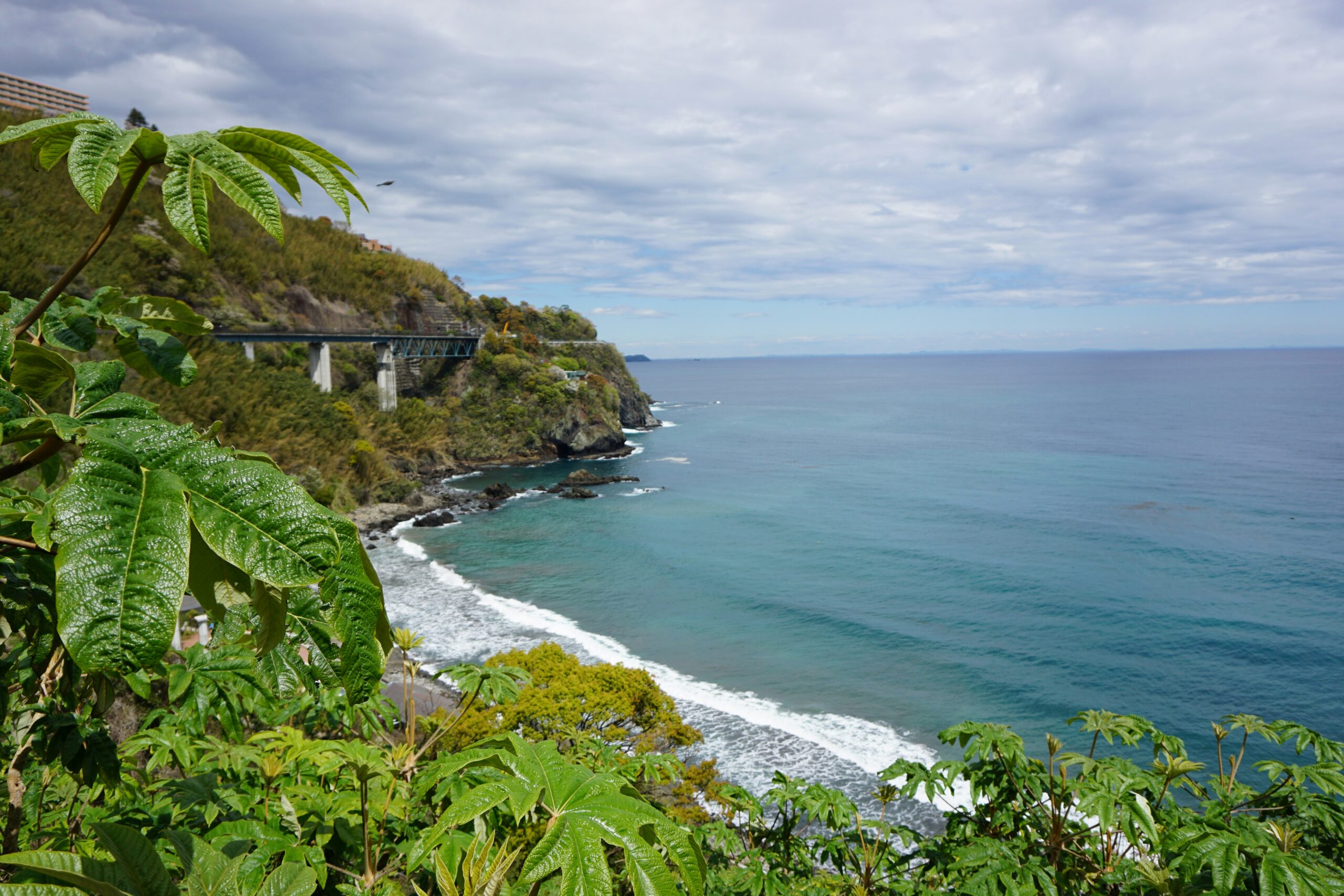
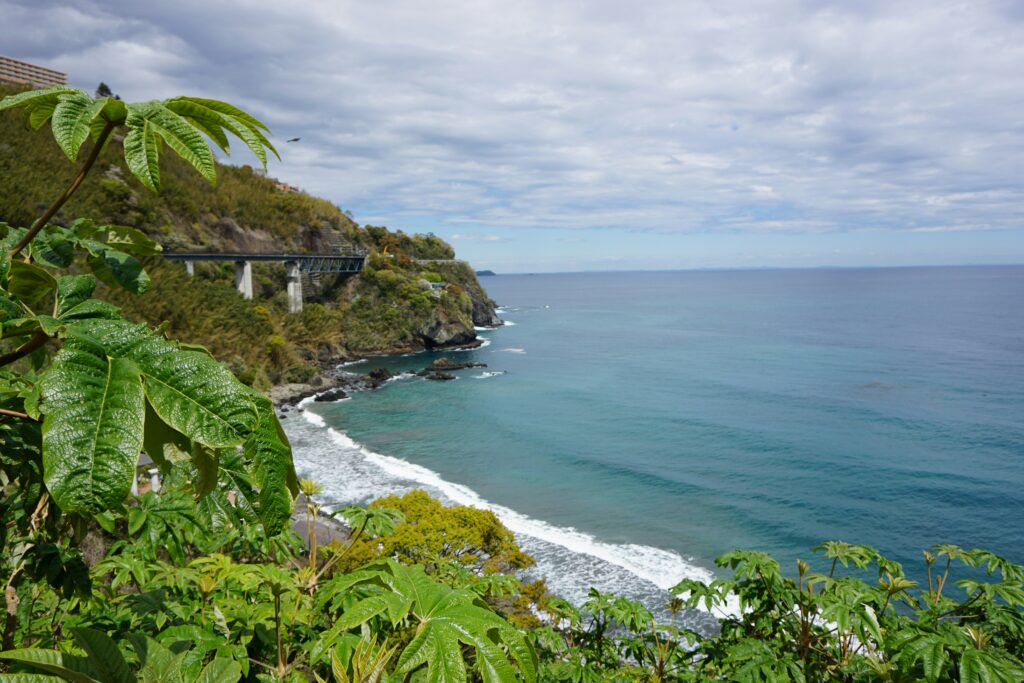
If you picture Japan’s Mediterranean coast, you’ll get close to Atami, one of the most famous onsen towns close to Tokyo. Atami climbs steeply up from Sagami Bay, its ryokans stacked in tiers above the water, their lanterns coming on at dusk in amber rows against the darkening sea. Atami is a small city, but it has occupied its corner of Japan with unusual confidence for over a thousand years.
The hot springs here were once so prized that Shogun Tokugawa Ieyasu had the water transported all the way to his castle in Edo, a journey that would have taken days by ox cart. He had transported 3643 barrels over 9 years.
Today Atami is a 35-minute Shinkansen ride from Tokyo and among the most accessible traditional onsen towns in Japan. What surprises visitors who expect a straightforward hot-spring resort is how much else is here: a museum that holds three National Treasures, a fireworks festival that runs almost year-round, and a creative energy that has drawn Japanese artists and writers to the hillside since the Meiji era.
This guide covers everything you need to plan your visit, from the character of the spring water to the best time of year to go, how to get here, and how long to stay.
Why Atami’s Onsen Are Different
Atami sits on one of the most geologically active patches of the Izu Peninsula, with over 500 individual spring sources bubbling up beneath the city. The water is primarily chloride and sulfate in character, dense with dissolved minerals that have a markedly softening effect on the skin. After an hour in a good Atami bath, your skin doesn’t feel dried out the way it does after a hot shower. It feels, for want of a less indulgent word, restored. And if you have curly or wavy hair, you will feel like you’re having the best hair day ever.
The salt content is high enough that the water retains heat well, which is why many outdoor baths called rotemburo, stay comfortable even in winter, when the cold air and the steaming water create the contrast that most onsen devotees consider the definitive experience. The temperature of most baths sits between 40–42°C: hot enough to be deeply penetrating, but cool enough to feel comfortable.
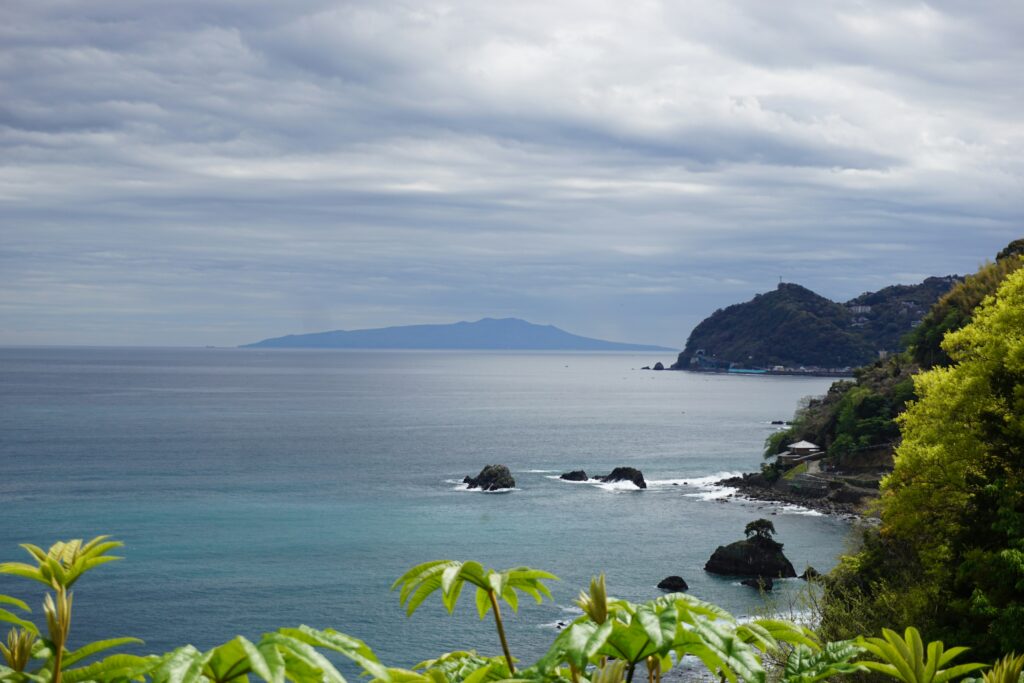
What distinguishes Atami from inland onsen towns is the view. Many of the ryokan here are built into the hillside above Sagami Bay, and the best rooms and baths look directly out over the water. The combination of oceanic scenery and volcanic spring water is unusual in Japan and almost unique this close to Tokyo. At Ocean Spa Fuua, on the seafront at the Acao Resort, an infinity-edge outdoor pool extends the eye straight out to the open sea, the onsen equivalent of a horizon pool, and one of the most distinctive bathing experiences in the Kanto region.
Things to Do in Atami
MOA Museum of Art
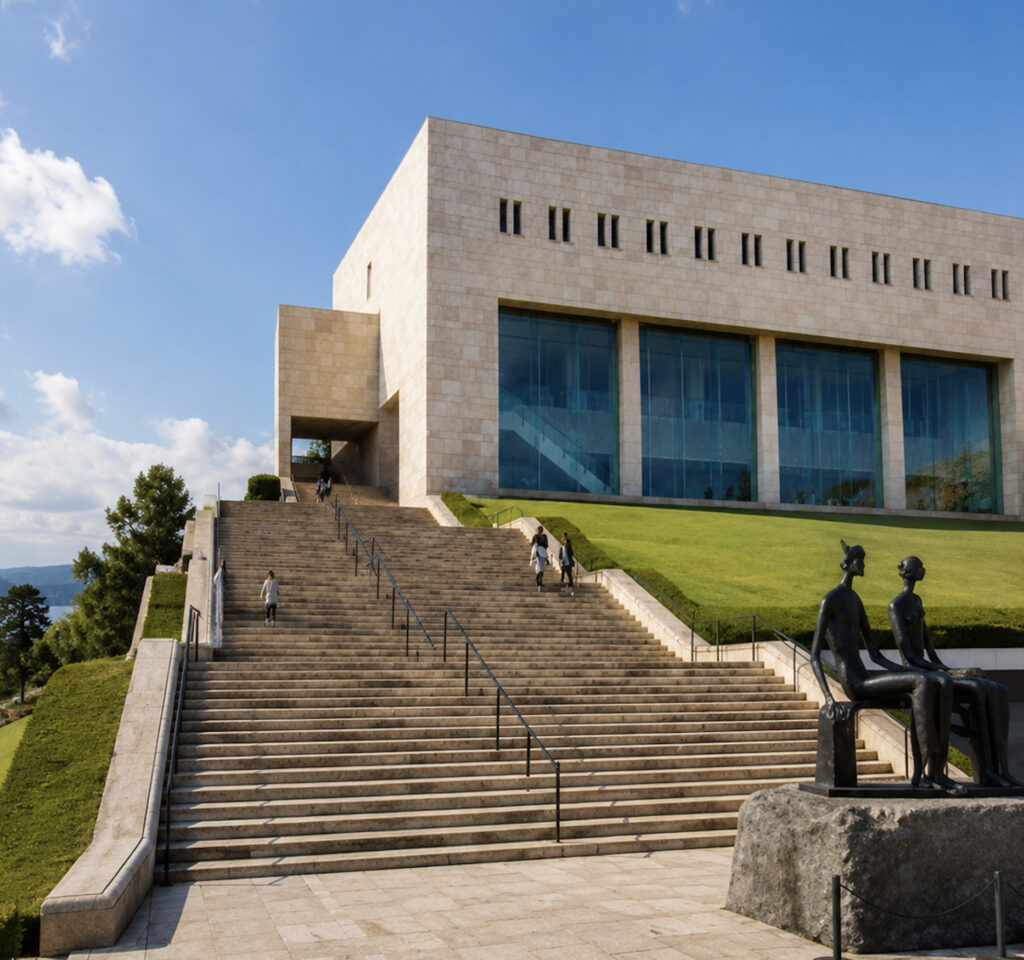
The MOA Museum of Art sits on a hillside above Atami Station, reached by a series of dramatic escalators that rise through curved stone tunnels, an entrance that already signals this is not an ordinary regional museum. It houses a collection of approximately 3,500 works spanning Japanese, Chinese, and Korean art across several millennia, and it contains three designated National Treasures.
The most celebrated is Red and White Plum Blossoms (紅白梅図屏風) by Ogata Kōrin, a pair of two-fold gold-leaf screens from the early 18th century, depicting a stylised stream flanked by white and red plum trees. It is considered one of the supreme achievements of Rinpa painting and is displayed for a limited period each February, when the real plum trees outside are in bloom. The second National Treasure is Tea-Leaf Jar with Design of Wisteria (色絵藤花文茶壺) by Nonomura Ninsei, an Edo-period ceramic work of extraordinary delicacy. The third is Calligraphy Album (手鑑鑑草), an anthology of classical Japanese calligraphy assembled across centuries.
The museum also contains a reconstructed Noh theatre and a golden tearoom, a replica of Toyotomi Hideyoshi’s portable gold tea room, which was carried to the Imperial Court in Kyoto in 1586. Even without the National Treasures, the building and its gardens, with views back over the bay, would justify the trip.

The Year-Round Fireworks
Atami operates one of the longest-running fireworks festivals in Japan, with displays held over Atami Bay more than ten times a year, from late February through to December, with peak frequency in summer. The displays last around 20 minutes each but are concentrated into a narrow bay, which gives the sound a resonance and scale that larger, more diffuse festivals don’t achieve. The best vantage points are Atami Sun Beach, the waterfront promenade, and, if your timing is right, the balcony of a hillside ryokan.
Because fireworks happen year-round, you don’t need to plan around them. But checking the festival calendar before you book and matching a stay to a fireworks night takes the experience from incidental to genuinely memorable.
Kiunkaku Villa
Kiunkaku is a villa built in 1919 and once ranked among the “Three Great Villas of Atami” alongside estates that no longer exist. The name translates roughly as “House of Lucky Clouds.” The property changed hands across the Meiji and Taisho eras before operating as a ryokan and eventually opening to the public. The Japanese garden, Sukiya-style architecture, and preserved interiors are exceptional, it’s the kind of place where Japanese literary culture made itself tangible, and where a slow walk through the grounds in late morning, before the tour groups arrive, is genuinely pleasurable.
Atami Plum Garden
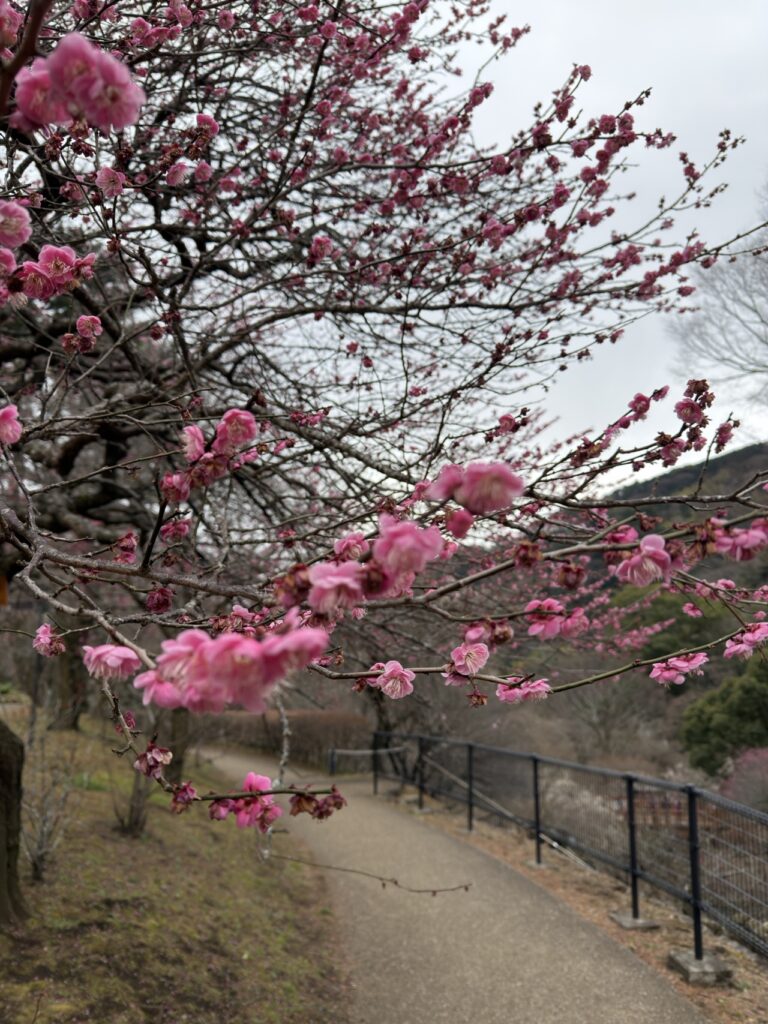
Most visitors think of cherry blossoms as Japan’s signature seasonal bloom, which is why the Atami Plum Garden is perpetually underrated, and less crowded than it deserves to be. Established in 1886 and covering some 44,000 square metres along the Ichigawa River, the garden holds 469 plum trees across 60 varieties, including specimens over a century old. Atami’s warm microclimate means the earliest trees begin flowering in mid January making this one of the first plum gardens in Japan to bloom, weeks ahead of Tokyo. The Atami Plum Festival runs from early January to early March, and if your visit falls in February, the garden coincides with the MOA Museum’s annual display of Red and White Plum Blossoms by Ogata Kōrin a pairing that is either a happy accident or very good planning. The garden is a 10-minute walk from Kinomiya Station on the Ito Line.
Kinomiya Shrine
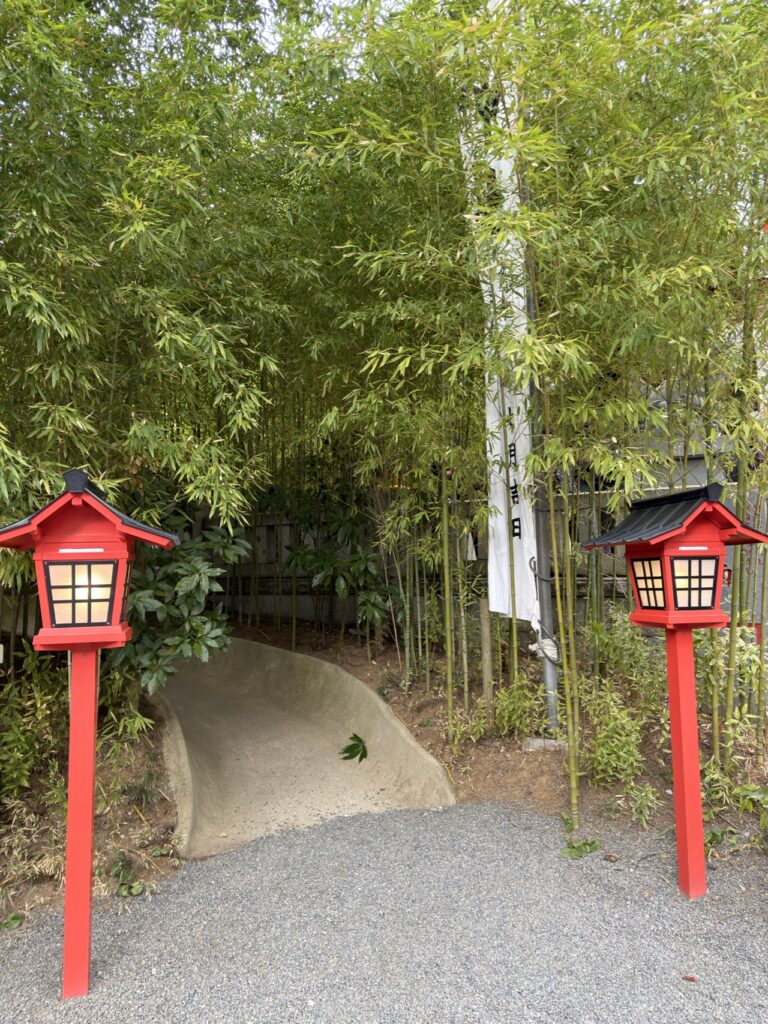
A short walk from Kinomiya Station, Kinomiya Shrine is one of the oldest sacred sites on the Izu Peninsula and home to one of the most remarkable trees in Japan. The shrine’s centrepiece is the Ookusu, a sacred camphor tree approximately 2,100 years old, 26 metres tall, and with a trunk circumference of nearly 24 metres. It is designated a National Natural Monument and is the second-largest camphor tree in Japan. The traditional ritual is to walk around the trunk slowly, touching the roots, said to grant an additional year to your life. Whether or not you engage with the ritual, standing at the base of a tree that was already ancient when the Edo period began is a genuinely humbling experience. The shrine grounds are free to enter, peaceful in the early morning, and often overlooked by visitors who go no further than central Atami. There are food carts next to the shrine, and I suggest eating the mitarashi dango with seaweed and soy glaze.
The Atami Nanayu: Seven Hot Springs Walking Route
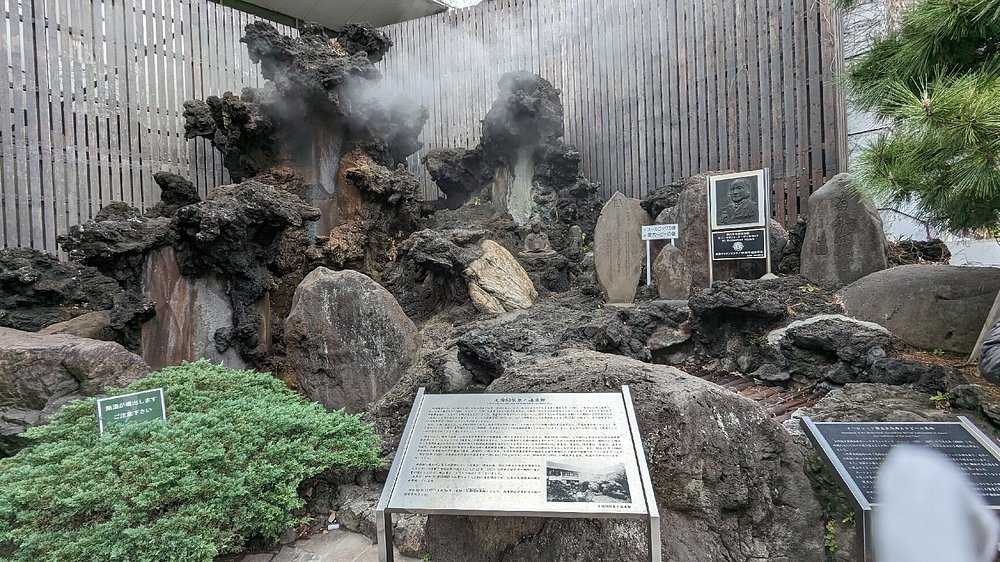
Long before Atami was a resort town, it was a landscape of geysers and mineral vents , raw thermal activity that had been shaping this stretch of coastline for millennia. The Atami Nanayu (七湯) is a self-guided walking route through the historic heart of the spring town, visiting the sites of the original seven hot springs that gave Atami its character. The route takes roughly 30 minutes to complete and passes through the older streets of the city, with small monuments at each historic source. Most of the original springs are no longer open for bathing, but Kosawa-no-Yu (古沢の湯), one of the seven, preserves a practical remnant: a steam vent where visitors can cook hot spring eggs using a raw egg purchased at a nearby shop. The route also passes the Oyu Geyser, which erupts on a roughly four-minute cycle and was once the most famous natural geyser in Japan. The Nanayu walk is a good way to spend an hour between arriving in the afternoon and checking into your ryokan.
Atami Sun Beach and the Shotengai
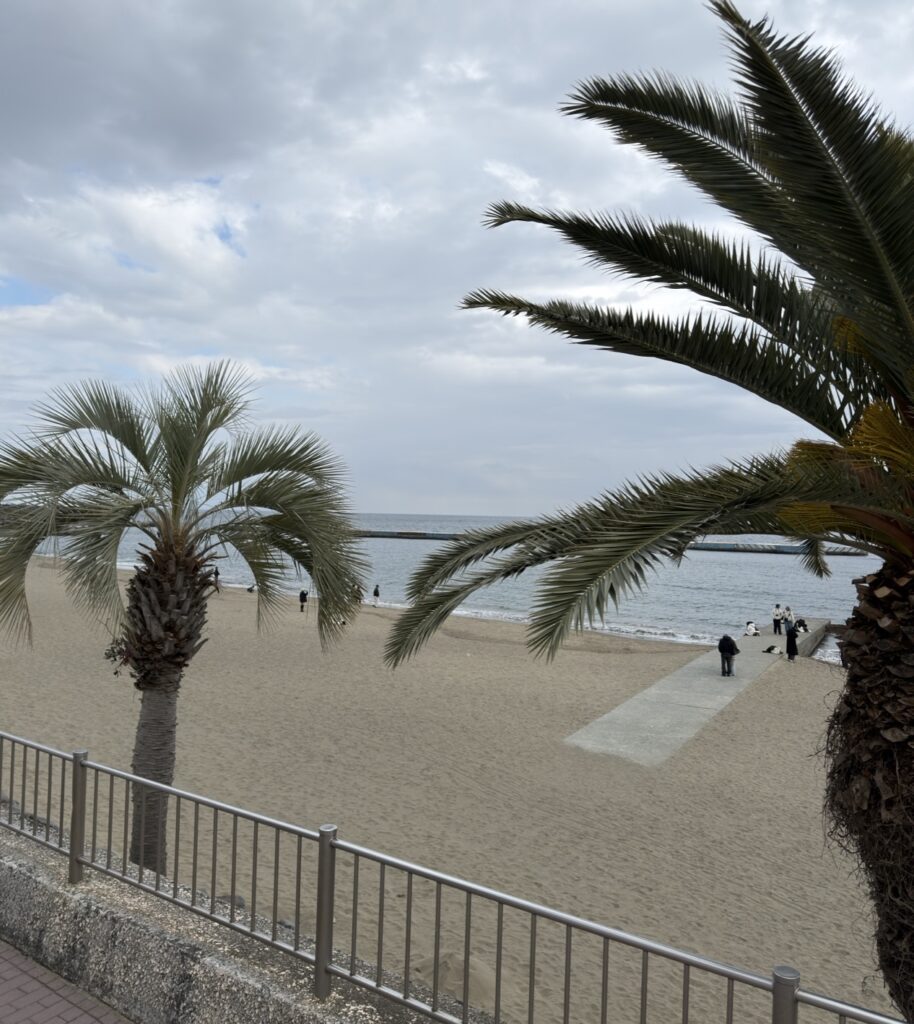
Atami Sun Beach is a short walk from the station, a crescent of sand sheltered by the headlands on either side, with the town rising steeply behind it. It’s a swimming beach in summer (July–August, with lifeguards), a walking beach the rest of the year, and the best free view in town after dark when the hillside lights reflect across the water. Behind the beach, the Atami Shotengai (covered shopping arcade) runs for several blocks through the older part of town and it offers dried seafood, wagashi, local citrus, and the particular unhurried atmosphere of a Japanese shopping street that serves a real community rather than tourists alone.
Marine Spa Atami
For families or anyone who wants a different kind of water experience, Marine Spa Atami sits directly beside Sun Beach and is one of the few facilities in Japan where swimwear is required rather than prohibited. The three-storey complex houses an indoor lazy river, a 25-metre lap pool, a water slide, 11 types of baths fed by genuine Atami hot spring water, four types of sauna, and, during summer, a rooftop pool overlooking the bay. It’s tattoo-friendly, family-friendly, and notably different in atmosphere from a traditional onsen. Admission is ¥1,360 for adults. Note that it closes on Tuesdays, Wednesdays, and Thursdays.
Ajiro Harbour
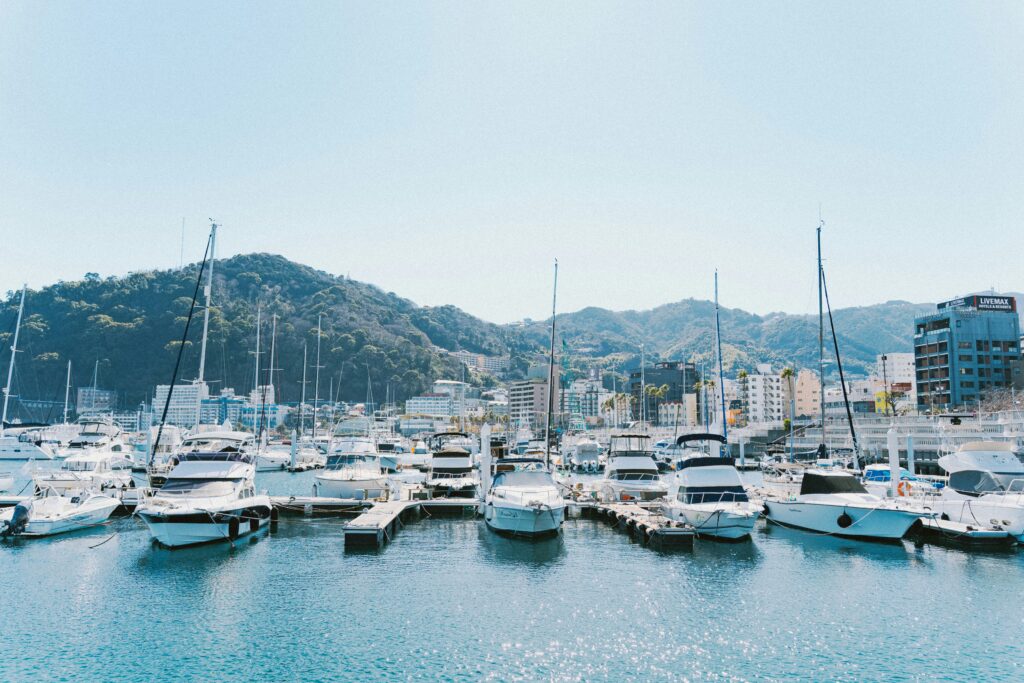
A short bus or taxi ride south along the coast, Ajiro is a small fishing harbour that most Atami itineraries skip entirely. It’s worth the detour. The harbour itself is picturesque in an undecorated, working-port way, the seafood restaurants around it serve lobster and abalone at prices that would be unremarkable locally and extraordinary in Tokyo, and the surrounding hillsides have walking trails with views back towards the bay that are among the least-crowded decent walks on the peninsula.
Where to Stay in Atami
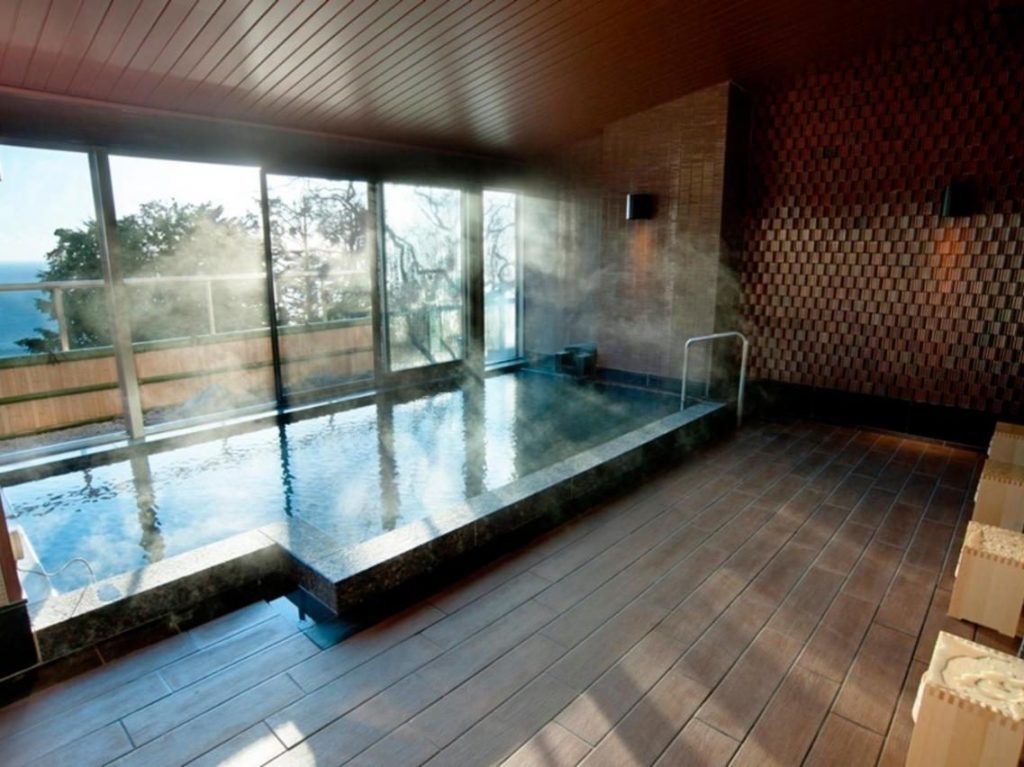
Atami Sekaie is the most architecturally distinctive ryokan in town. A modernist property on Mount Izusan with private open-air rotemburo in every room, all looking directly over Sagami Bay. The theme is “Inbound and Health,” which in practice means the staff speak English, the food is calibrated to international as well as Japanese palates, and the general atmosphere is simultaneously genuinely traditional and unusually welcoming of first-time ryokan guests. If budget allows one splurge in the Izu region, Sekaie is a strong candidate. [View listings →]

Hotel Mujuan occupies a quieter position on the hillside, with a strong reputation for private open-air baths and a kaiseki dinner experience that emphasises local Izu Peninsula seafood. The rooms are smaller than Sekaie but the atmosphere is more intimate, and the staff-to-guest ratio is notably high. For a couples’ trip where private onsen time is the priority, Mujuan consistently delivers. [View listings →]
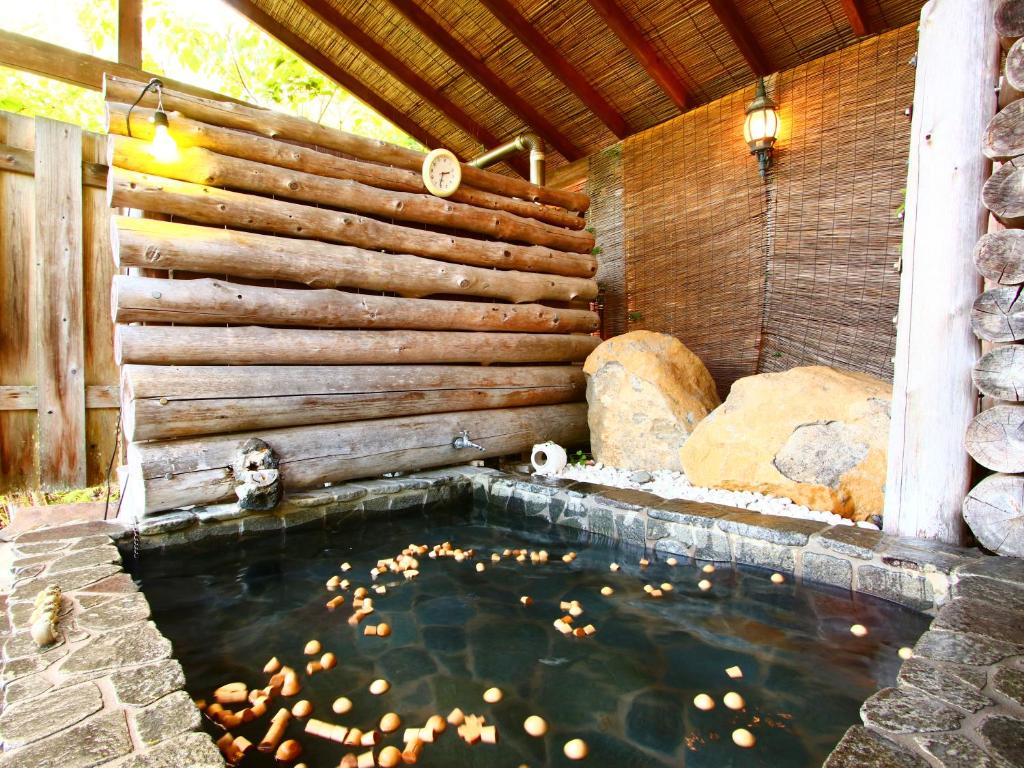
Pension Todoroki is the honest budget recommendation — a pension-style property close to the seafront with an open-air communal bath and simple Western and Japanese rooms. The rating from recent guests is consistently above 9/10, which for a property at this price point is unusual. It’s the right choice for travellers who want Atami’s atmosphere without the kaiseki price tag. [View listings →]
Best Time to Visit Atami
Winter (December–March) is the pure onsen season. Cold air outside and hot water inside is the combination the format was designed for, and Atami’s chloride-rich water holds heat particularly well against an ocean breeze. Clear winter skies also give the best conditions for seeing Mount Fuji from the higher ryokan, the mountain appears more frequently and more sharply defined in winter than at any other time of year. Crowds are at their lowest outside of the New Year period, and room rates reflect this. If your primary reason for coming is the onsen experience itself, come in winter.
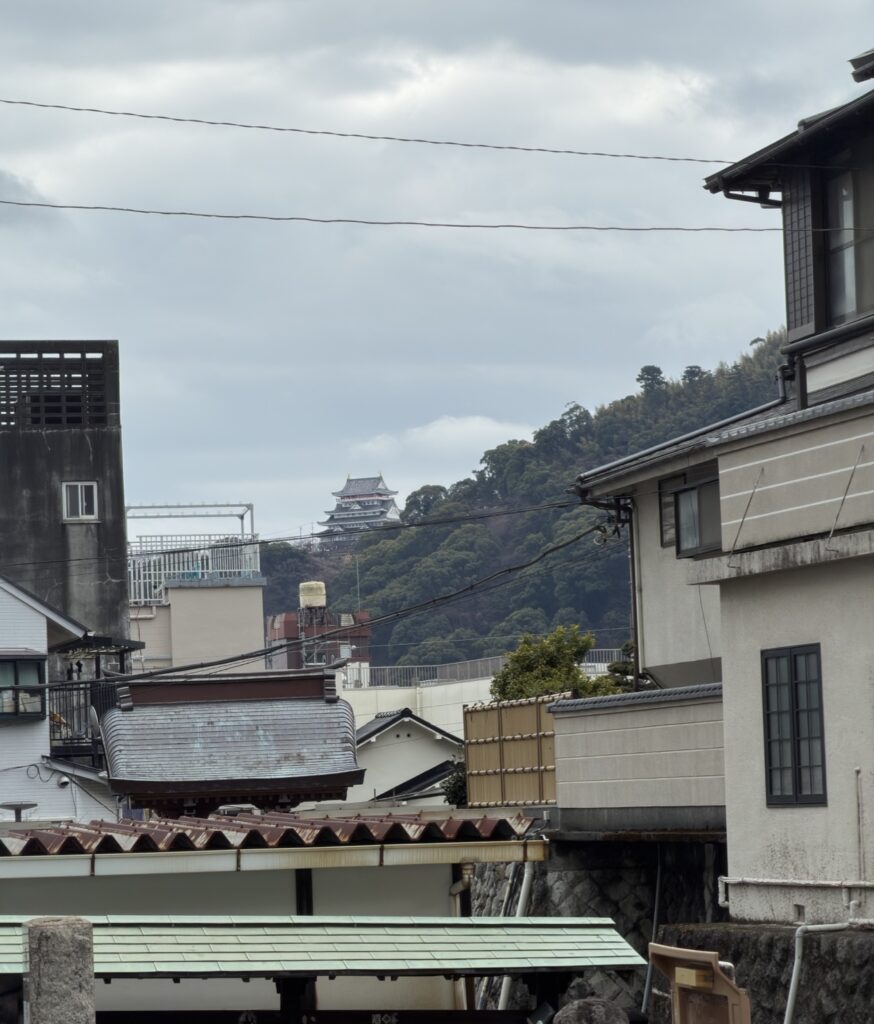
Spring (March–April) brings cherry blossoms and significantly more company. Atami’s sakura blooms early, it’s typically one of the first cities in the Kanto region to peak after Kawazu, sometimes as early as mid-March, and the combination of blossoms above the bay is genuinely beautiful. The Atami Castle grounds and the seafront promenade are the best viewing spots. Book accommodation well ahead: spring is the most popular season and availability in good ryokan tightens weeks in advance.
Summer (July–August) is beach season. Atami Sun Beach draws swimmers and families, the fireworks festival hits its highest frequency, and the whole town is visibly alive in a way it isn’t in the quieter months. It is also humid, busy, and significantly more expensive. The outdoor onsen remain excellent and there’s an atmospheric quality to a hot summer night in a hillside ryokan that has its own appeal. Go with realistic expectations about crowds.
Autumn (September–November) is the most underrated season. The summer crowds have thinned, the outdoor baths are comfortable in the cooling air, the foliage on the hillsides turns across October and November, and prices ease back from their summer peak. The sea is still warm enough to swim in September. If you have flexibility in your schedule and are choosing between two dates, autumn is often the answer. One note: fireworks continue through autumn, so you haven’t missed the season.
On the fireworks: with more than ten displays scheduled annually, spread from late February to December, there is genuinely no bad month for Atami from this angle.
How to Get to Atami from Tokyo
Atami is the most accessible stop on the Izu Peninsula from Tokyo — the only one reachable by Shinkansen without a transfer.
| Route | Time | Cost | JR Pass? |
|---|---|---|---|
| Tokaido Shinkansen (Tokyo/Shinagawa → Atami) | 35–50 min | ~¥4,000 | ✓ |
| Limited Express Odoriko | ~80 min | ~¥3,500 | ✓ |
| Local Tokaido Line | ~100 min | ~¥1,980 | ✓ |
| Shinjuku via Odakyu to Odawara + JR | ~2 hrs+ | ~¥1,330 | Partial |
The Shinkansen is the obvious choice if you’re coming from central Tokyo or have a JR Pass as it’s covered in full, and the travel time is short enough that even a late-morning departure leaves you most of the day in Atami. The local Tokaido Line is a reasonable option if cost is the priority and time is not. The Shinjuku–Odawara route via Odakyu makes sense for travellers based in west Tokyo; the Romancecar is comfortable and the scenery between Odawara and Atami on the local connection is pleasant.
Day Trip or Overnight Stay?
A day trip to Atami from Tokyo works if you’re coming specifically for the MOA Museum or a single onsen experience at a day-use facility. The Shinkansen makes the logistics straightforward: leave Tokyo after breakfast, spend four to five hours in Atami, and be back in time for dinner. This is a legitimate way to visit and it’s genuinely better than skipping Atami entirely.
But in my opinion, one night is the sweet spot for most visitors and the format that makes Atami make sense. It allows you a full day to explore Atami, check into your ryokan, change into a yukata, and make your first visit to the onsen while the hillside is still catching afternoon light. Dinner is kaiseki, almost certainly the best seafood of your trip. You wake to the bay at dawn. By mid-morning you’ve had a second onsen, walked to Kiunkaku or along the seafront, and you’re back at the station by noon with hours of the day still ahead. This is how Atami is designed to be experienced, and there is a qualitative difference between having done this and having done the day trip.
Two nights is the right call if you want to use Atami as a base for the Izu Peninsula. Both Shuzenji and Ito are easy day trips by train. Two nights gives you the unhurried ryokan rhythm and the surrounding territory without feeling like you’re rushing.
Atami Onsen FAQ
Does Atami have onsen?
Yes, Atami is one of Japan’s most famous onsen destinations, with hot spring water flowing throughout the town. The springs are naturally rich in chlorides and sulfates and have been in use for over a thousand years. You’ll find onsen in ryokan, hotels, day-use bathhouses, and public foot baths near the station.
Can you wear underwear in an onsen?
No. Traditional Japanese onsen require you to bathe completely nude, underwear and swimwear are not permitted in shared baths as they are considered unhygienic. You enter with only a small towel, which should not touch the water. If this feels daunting, many of Atami’s finest ryokan offer private baths (kashikiri onsen) bookable by the hour, where you bathe alone or with your partner in complete privacy.
Is Atami onsen good for couples?
Atami is one of the best places in Japan for a couples’ onsen trip. Several ryokan, including Hotel Mujuan and Pension Todoroki, offer private open-air baths either attached directly to your room or bookable exclusively, meaning you and your partner can soak together with a sea or mountain view and total privacy. A ryokan dinner, a private outdoor bath, and the Atami fireworks from your balcony is a combination that is genuinely hard to beat.
What is the water like at Atami onsen?
Atami’s hot spring water is primarily chloride and sulfate in character, warm, deeply penetrating, and notably softening on the skin. The quality was so renowned that Shogun Tokugawa Ieyasu had it transported to his castle in Edo. Most baths sit at 40–42°C. Some ryokans also use the onsen water for the showers, making your hair have the best hair day ever.
What is Atami known for?
Atami is best known for its onsen, its dramatic hillside setting above Sagami Bay, and the MOA Museum of Art, one of the finest art museums in Japan, housing three National Treasures. It’s also known for its year-round fireworks festival, one of the longest-running in Japan, and for being the closest traditional onsen town to Tokyo.
Is it OK to talk in an onsen?
In shared public baths, quiet is appreciated as loud conversation is considered poor etiquette, though soft talking between companions is generally fine. In private baths booked exclusively for your group, there are no restrictions. Most ryokan onsen have a peaceful, contemplative atmosphere that tends to make you want to speak softly regardless of the rules.
Is Atami or Hakone better?
They suit different trips. Hakone is more famous, better connected from Shinjuku via the Romancecar, and has the iconic Fuji views from Lake Ashi, but it’s significantly more crowded and more commercialised. Atami is quieter, more authentically Japanese in atmosphere, and has better onsen water by most accounts. If you’ve already done Hakone, or want something that feels less like a tourist circuit, Atami wins. Besides, from Atami, you can easily take a day trip to Mishima to enjoy stunning views of Mount Fuji as well.
Do people swim in Atami?
Yes, Atami Sun Beach, a short walk from the station, is a popular swimming spot. The main swimming season runs July through August when the water is warm and lifeguards are on duty. Outside those months the beach remains pleasant for walking but is not ideal for swimming. The sea here is calm and sheltered compared to the wilder Pacific coasts further down the peninsula.
Is it worth visiting Atami?
Yes, Atami is well worth visiting, especially if you stay at least one night. Atami is the kind of place that can feel underwhelming on a rushed day trip but reveals itself once you slow down. The MOA Museum alone justifies the journey from Tokyo. Time your visit to coincide with a fireworks night and it becomes genuinely unforgettable.
How many days should you spend in Atami?
One night is the minimum to experience it properly. Two nights is ideal, enough for MOA, a morning at the beach, a full evening in the onsen, and a slow start the next day. For a pure onsen retreat, two nights at a good ryokan is the sweet spot.
