
I stumbled across Izu Peninsula by accident, a spontaneous road trip out of Tokyo that turned into one of the best decisions I’ve ever made. I’ve been going back ever since, and I don’t see that changing. And once you experience it, you’ll understand why.
Tucked along the Pacific coastline of Shizuoka Prefecture, the Izu Peninsula is one of Japan’s most extraordinary and underrated destinations. It sits just two hours from Tokyo, yet most visitors sail straight past it on the Shinkansen on their way to Kyoto. It remains refreshingly uncrowded compared to the more heavily trafficked Hakone.
This guide covers everything you need to plan your visit: Izu’s most famous onsen towns, the top things to do on the peninsula, and exactly how to get there.
Introduction to Izu Onsen
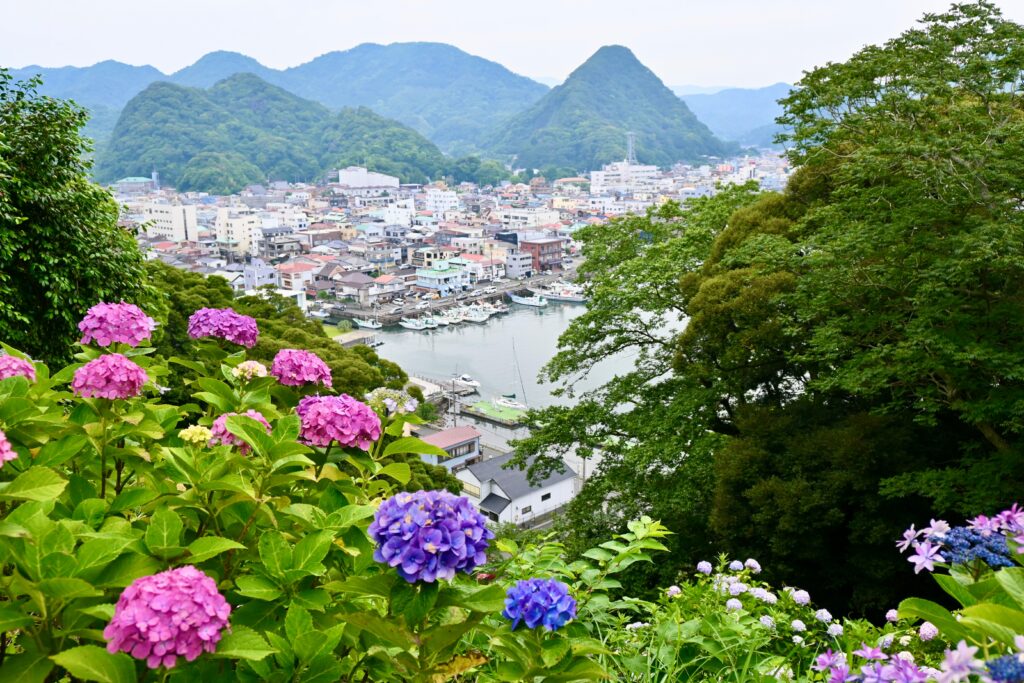
Due to Izu’s rich volcanic history, the peninsula is blessed with hot spring water naturally rich in salts, sulfates, and minerals that have been used in Japan for centuries to treat all manner of ailments. From the earliest samurai seeking recovery after battle to celebrated Japanese novelists retreating to write their greatest works, people have been drawn to Izu’s healing waters for over a thousand years.
For onsen lovers, Izu offers something for every taste: grand indoor bathhouses, open-air rotenburo with panoramic sea views, private in-room baths, mixed-gender pools, riverside soaks beside waterfalls, and public neighbourhood baths where locals go every day. I seldom see foreign tourists in Izu, which surprises me every single time. My favorite places in Izu are ryokans with unique features such as this gorgeous cave onsen in Yoritomo-No-Yu Honjin.
Onsen resort towns are dotted all along Izu’s coastline and tucked into its mountain valleys. On the east coast, Atami and Ito are among the most accessible and popular. In the heart of the peninsula, Shuzenji and Izu Nagaoka have been welcoming travellers for centuries with the kind of quiet, refined hospitality that defines traditional Japanese culture at its best.
Shuzenji — The Soul of Izu
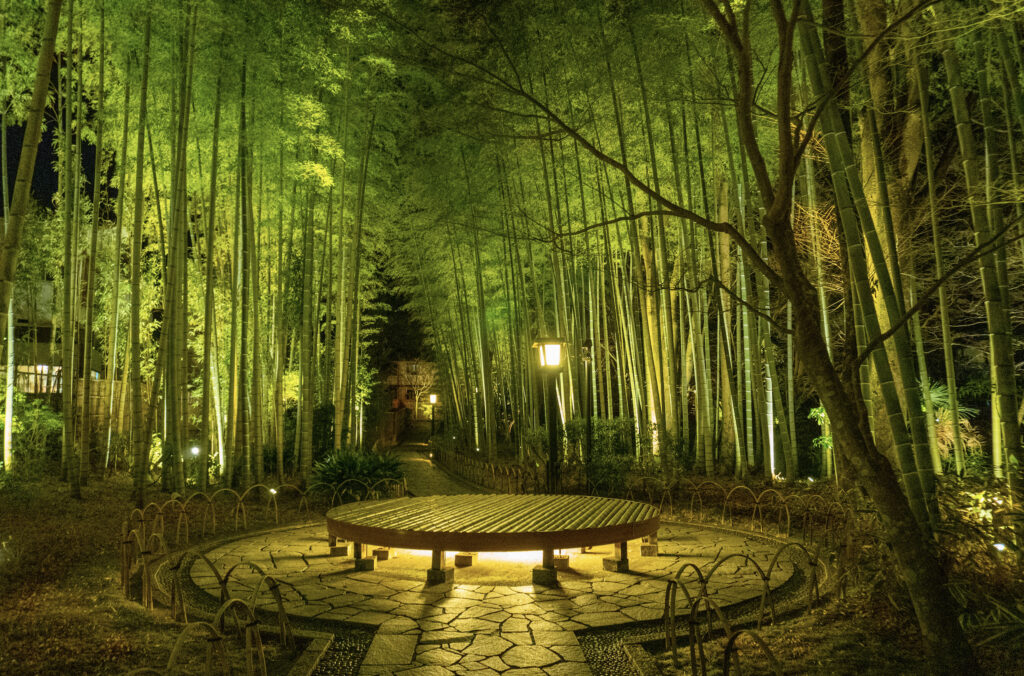
Shuzenji is the oldest onsen town on the Izu Peninsula, and the moment you arrive, you feel it. Nestled in a forested river valley deep in the heart of the peninsula, it carries an atmosphere that is almost impossible to describe, the soft sound of water everywhere, wooden bridges arching over a fast-running stream, bamboo groves swaying overhead, and the scent of pine and mineral water in the air. It is often called “Little Kyoto,” and the comparison is earned.
The town’s history stretches back over 1,200 years to the legendary Buddhist monk Kobo Daishi, who is said to have discovered the original spring, known as Tokko no Yu, in the early 9th century. The spring sits right in the centre of the river and is no longer open for bathing, but standing beside it, you’re standing at the birthplace of Izu’s entire onsen culture.
Writers and artists have long been drawn here. The novelist Natsume Soseki, Japan’s most celebrated literary figure, whose portrait appears on the 1,000-yen note, famously recovered from serious illness in Shuzenji, crediting the onsen waters with restoring his health. The great writer Ryunosuke Akutagawa wrote from his room at Arai Ryokan that bathing there felt like being inside an aquarium, with koi fish drifting past through the glass.
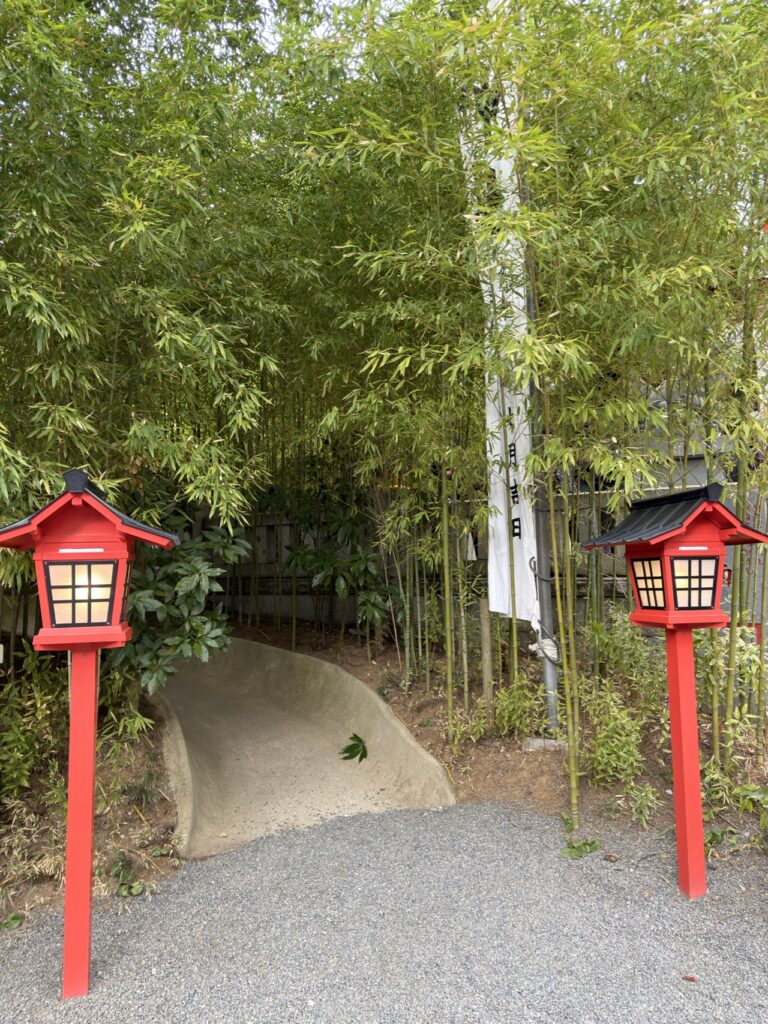
Shuzenji rewards those who slow down. Walk the Hekiunrou Promenade along the riverbank at dusk, when lanterns begin to glow and the water reflects the last of the light. Visit the Shuzenji Temple, founded by Kobo Daishi himself, and the quiet bamboo forest path that leads behind it. This is Izu at its most timeless.
Where to stay in Shuzenji
Sagasawakan
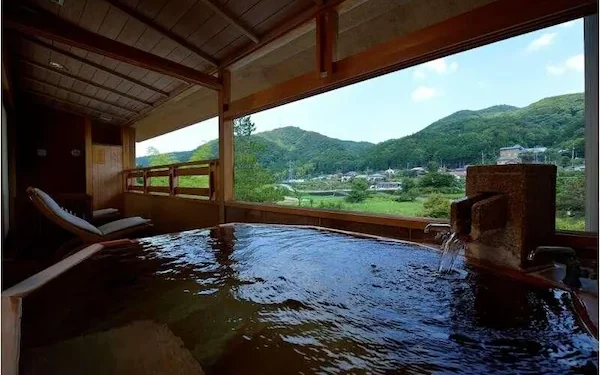
Sagasawakan offers spacious Japanese and Japanese-Western rooms overlooking the Kano River, many with private open-air baths and views of the surrounding mountains. The ryokan is especially known for its seven natural hot spring baths, including indoor, outdoor, public, and private options, each offering a different atmosphere for relaxation and wellness.
Hotel Laforet Shuzenji Sanshi-Suimei
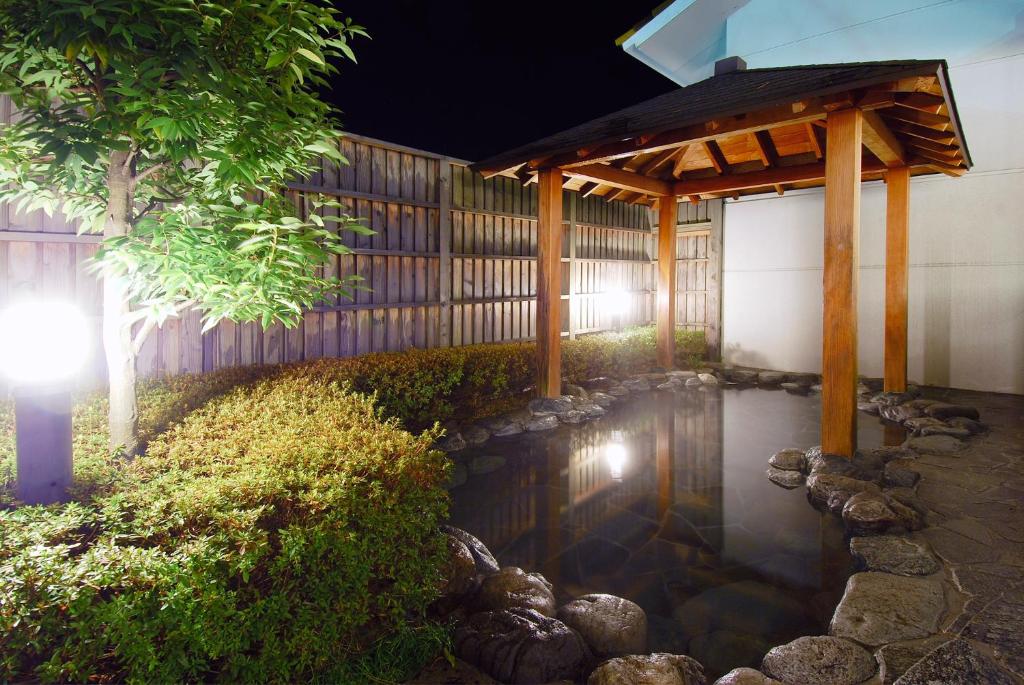
Sanshisuimei offers peaceful Japanese-Western rooms surrounded by the forests and mountains of Shuzenji. Every room features a private open-air hot spring bath, with views toward Mount Fuji, the Amagi mountains, or the surrounding trees, depending on the building. Guests can bathe privately at any time or visit Mori no Yu, the resort’s shared indoor and outdoor baths with a sauna and mountain views.
What to Do in Shuzenji
Walk the Hekiunrou Promenade — The riverside walkway that winds through the heart of the onsen town is at its most beautiful at dusk, when the stone lanterns come on and the ryokan facades glow against the darkening forest. A short, easy walk that takes no more than 20 minutes but feels like stepping into another century.
Visit Shuzenji Temple — The temple founded by Kobo Daishi sits at the top of the town and is one of the most atmospheric in the entire region. Behind it, a short path leads through a dense bamboo grove that filters the light into something extraordinary.
Explore the Bamboo Forest Path (Chikurin no Komichi) — One of Shuzenji’s most photographed spots, this curved path through tall bamboo connects the temple to the river and takes about 15 minutes to walk. Early morning is the best time to go.
Soak in a Day-Use Onsen — Several of Shuzenji’s finest ryokan open their baths to day visitors, making it possible to experience the town’s legendary onsen culture even without an overnight stay. The alkaline, mineral-rich waters here are renowned for their skin-softening properties.
Try Shuzenji Manju — The town’s famous sweet dumplings, sold at small shops along the main street, are a local institution. Soft, warm, and subtly sweet — the perfect thing to eat while wandering.
Getting to Shuzenji from Tokyo
The most straightforward route is by Shinkansen from Tokyo Station or Shinagawa to Mishima (around 45–55 minutes, approximately ¥4,500), then transfer to the Izuhakone Railway for the 35-minute ride to Shuzenji Station (¥550). The Izuhakone Line is not covered by the Japan Rail Pass, but the Shinkansen portion is.
Alternatively, some Limited Express Odoriko trains from Tokyo Station run directly to Shuzenji without any transfer, taking approximately 2 hours and costing around ¥4,500. Note that the Mishima–Shuzenji section carries a ¥550 supplement for Japan Rail Pass holders. A direct highway bus from Shinjuku Expressway Bus Terminal to Shuzenji takes roughly 2 hours 50 minutes and costs around ¥2,000–3,500, a comfortable and affordable option if you prefer not to transfer.
Atami — Where the Mountains Meet the Sea
Why It’s Special
Atami tumbles down steep volcanic hillsides toward the ocean in a way that feels almost Mediterranean with narrow lanes, tiled rooftops, and the blue shimmer of Sagami Bay visible from almost everywhere in town. It is the most accessible onsen destination on the Izu Peninsula, and historically one of the most significant.
Atami’s hot springs are principally chloride and sulfate in character, the kind that warm you from the inside and leave your skin feeling genuinely restored. They were prized so highly that the Shogun Tokugawa Ieyasu is said to have had the water transported all the way back to his castle in Edo (present-day Tokyo). When a Shogun does that, you know the onsen is good.
Today, Atami has reinvented itself as both a classic Japanese resort town and a creative hub attracting younger visitors from Tokyo alongside the traditional ryokan crowd. The result is a surprisingly layered place, ancient bathhouses and modern art galleries sitting comfortably side by side.
The MOA Museum of Art, perched high on the hillside above town, is one of the finest art museums in Japan, housing internationally important collections of Japanese and East Asian art including three National Treasures. The approach, through illuminated tunnels and a series of escalators, is theatrical, and the views from the terrace over the bay are outstanding.
Atami also holds one of Japan’s best-loved seasonal celebrations: fireworks festivals held over Atami Sun Beach from summer through into autumn. If you happen to be staying during one of these, the display viewed from a hillside ryokan room or open-air onsen is unforgettable.
Where to Stay
Atami Sekaie
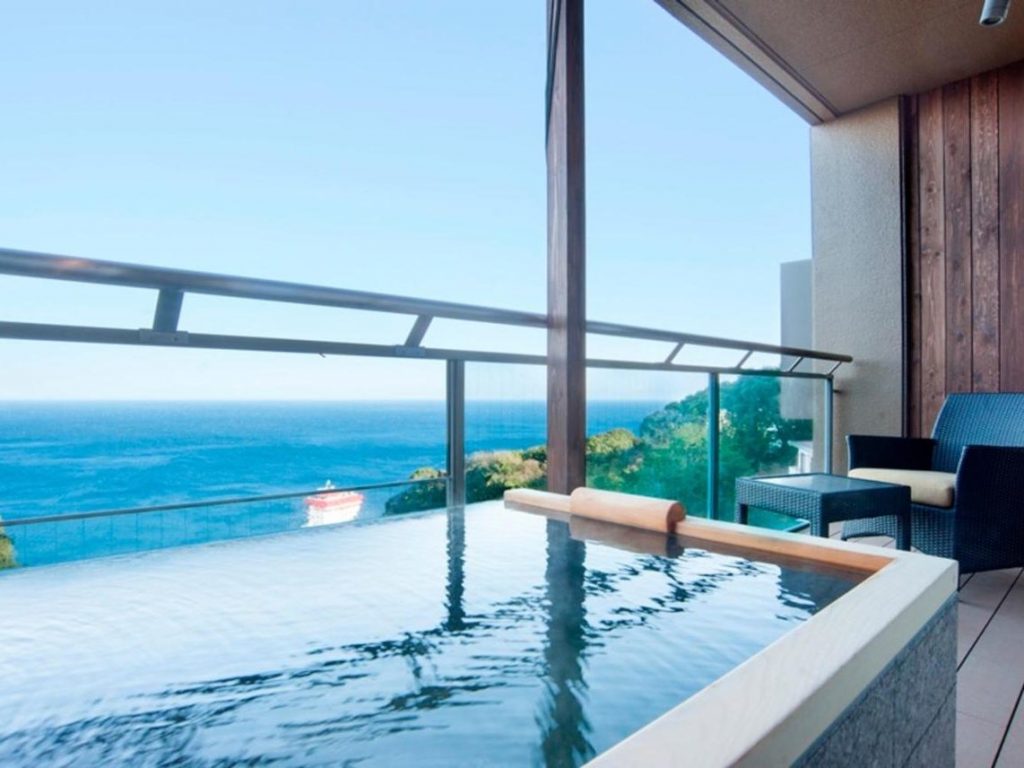
Atami Sekaie offers spacious ocean-view rooms and suites, all featuring private open-air hot spring baths overlooking the Pacific. Accommodation ranges from elegant superior rooms to expansive penthouses with private kitchens, chef service, and butlers. Guests can also enjoy the ryokan’s public natural hot spring baths, along with separate dry and mist saunas.
Hotel Mujuan

Hotel Mujuan is an intimate three-room retreat offering spacious private-floor suites with panoramic views of Sagami Bay and Atami Castle. Each suite has its own ocean-view bath supplied with natural weak-alkaline hot spring water, allowing guests to soak privately at any time. With no shared bath facilities, the experience is quiet, secluded, and suitable for guests with tattoos.
Pension Todoroki

Pension Todoroki is an intimate hillside retreat with just five groups per night, offering comfortable twin rooms with views of Sagami Bay or the surrounding mountains. Guests can privately reserve the open-air bath and two indoor baths, with the outdoor bath providing distant ocean views by day and a peaceful starry setting at night. All baths are tattoo-friendly due to their private-use system.
What to Do in Atami
Visit the MOA Museum of Art — Allow at least two hours for this. The collection spans Japanese lacquerware, ceramics, and paintings of extraordinary quality, and the building itself, terraced into the hillside with panoramic ocean views, is a destination in its own right.
Walk Atami Sun Beach — The town’s main beach is a pleasant 10-minute walk from the station and is the venue for the famous fireworks festivals. Even outside festival season, the promenade is a lovely place to watch fishing boats cross the bay.
Explore Kiunkaku Villa — This early 20th-century villa, once a favourite retreat of Japan’s wealthy elite, is now open to visitors. The blend of Japanese and Western architectural styles is a fascinating window into a particular moment in Japanese history.
Soak at Ocean Spa Fuua — This day-use onsen offers one of Atami’s most spectacular experiences: an Infinity Bath where the water seems to dissolve into the ocean on the horizon, creating the surreal sensation of floating in the sea. A free shuttle from Atami Station makes it easy to visit.
Browse Atami’s Shotengai — The covered shopping street near the station is an old-fashioned arcade full of local snacks, souvenirs, and small cafes that haven’t changed much since the Showa era. A lovely way to spend an hour.
Getting to Atami from Tokyo
Atami is the easiest destination on this list to reach. The JR Tokaido Shinkansen from Tokyo Station reaches Atami in 40–50 minutes (around ¥4,000), and from Shinagawa in around 35 minutes (slightly cheaper). Both are covered by the Japan Rail Pass.
The Limited Express Odoriko from Tokyo Station takes approximately 80 minutes and costs around ¥3,500. For the most budget-conscious travellers, local trains along the JR Tokaido Line reach Atami in around 100 minutes for ¥1,980 — and if you’re coming from Shinjuku, the Odakyu Railway to Odawara followed by a JR transfer brings the fare down to roughly ¥1,330, though journey time increases to over two hours.
Ito — A Living Onsen Town
Why It’s Special
Ito is one of those places that still feels genuinely lived-in. Where some onsen towns exist primarily for tourists, Ito has a working, breathing local culture at its heart, residents who visit the public baths every day, a fishing harbour that still sends boats out at dawn, and a rhythm of life that hasn’t been entirely packaged for visitors.
It is also, remarkably, the third largest source of hot spring water in the entire country. Ten public bathhouses (sentō) are scattered through the town, most charging just ¥250 for a soak, one of the great bargains in all of Japan, and an experience that puts you shoulder-to-shoulder with the people who actually live here.
Ito’s connections to Japan’s engagement with the wider world are also significant. In the early 1600s, the English navigator William Adams, on whom James Clavell based the protagonist of his novel Shōgun, built Japan’s first Western-style ship here on the orders of the Shogun Tokugawa Ieyasu. A small museum and monument commemorate this extraordinary moment in history.
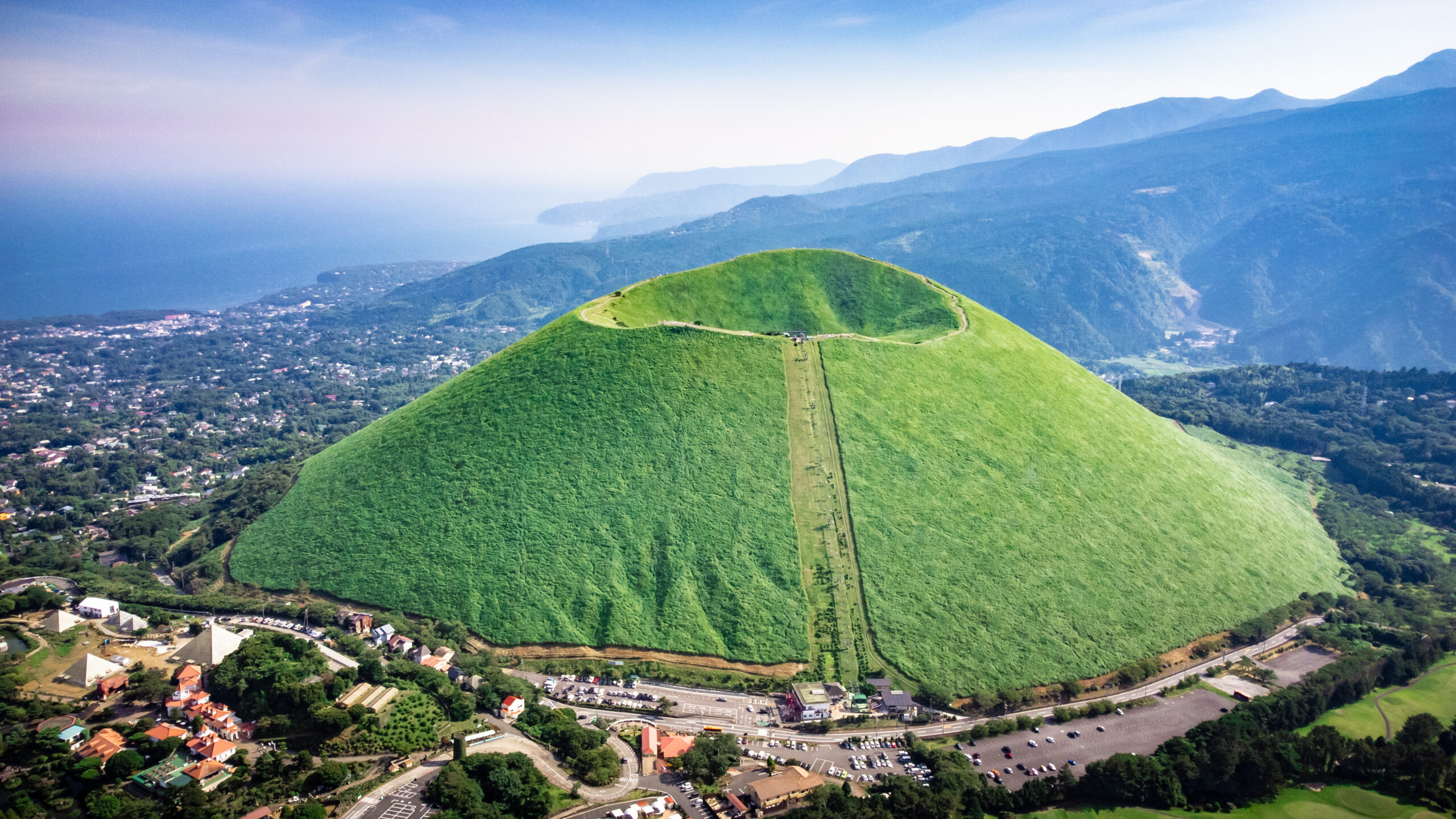
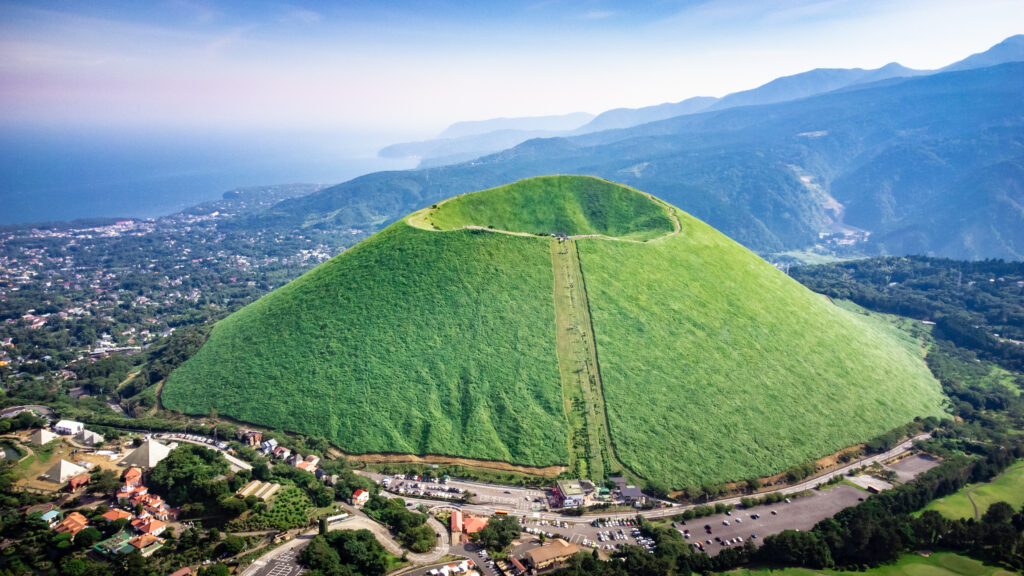
To the south of the city, the Jogasaki Coast is one of the most dramatic stretches of shoreline in Japan with volcanic rock sculpted by the sea into sea arches, blowhole caves, and a rugged cliff path that extends for kilometres. Above it, Mt. Omuro, a perfectly symmetrical volcanic cinder cone, rises from the landscape like something from a painting.
Where to Stay
ABBA Resorts Izu – Zagyosoh
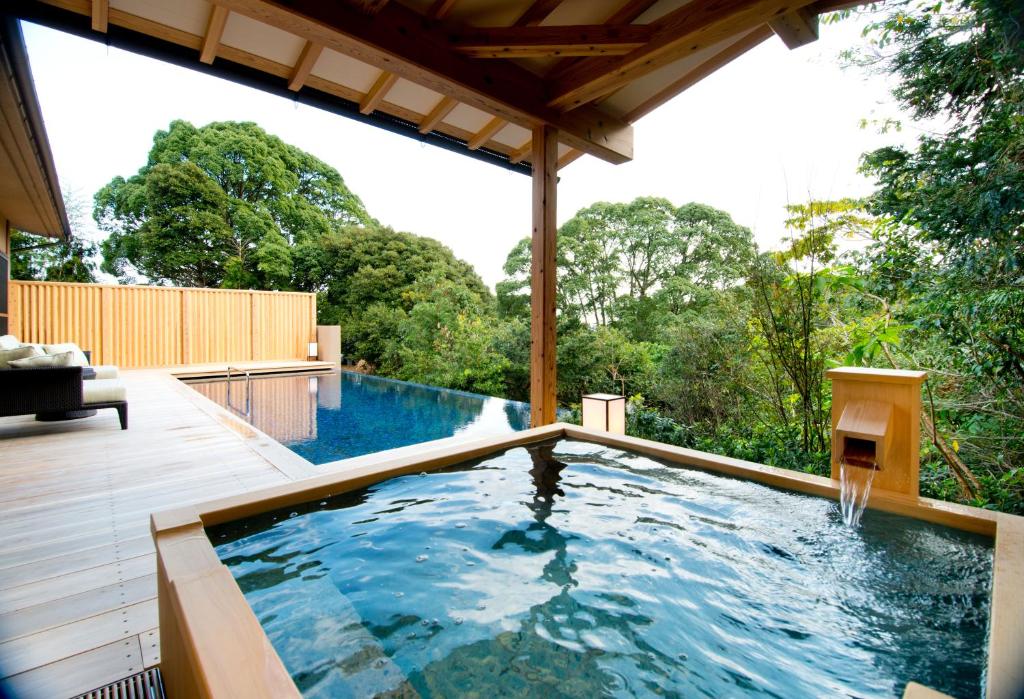
ABBA Resorts Izu, also known as Zagyosoh, offers tranquil Japanese-style rooms and private villas surrounded by historic gardens and mature trees. Rooms feature tatami interiors, natural materials, and private gardens or terraces, while the villas provide additional space and seclusion. Guests can enjoy atmospheric garden open-air baths as well as private outdoor baths overlooking the bayberry trees and Izu Sea.
Izu Coco Glamping Resort

Glamping Izu Coco offers private bell and dome tents overlooking Sagami Bay, each equipped with beds, air-conditioning, Wi-Fi, a shower, toilet, and its own wooden deck. Larger tents include features such as projectors, playrooms, a dog run, or a private open-air bath. Guests also receive access to several private natural hot spring baths, including scenic open-air and rock baths with sea views, all suitable for guests with tattoos.
Ito Hotel Juraku
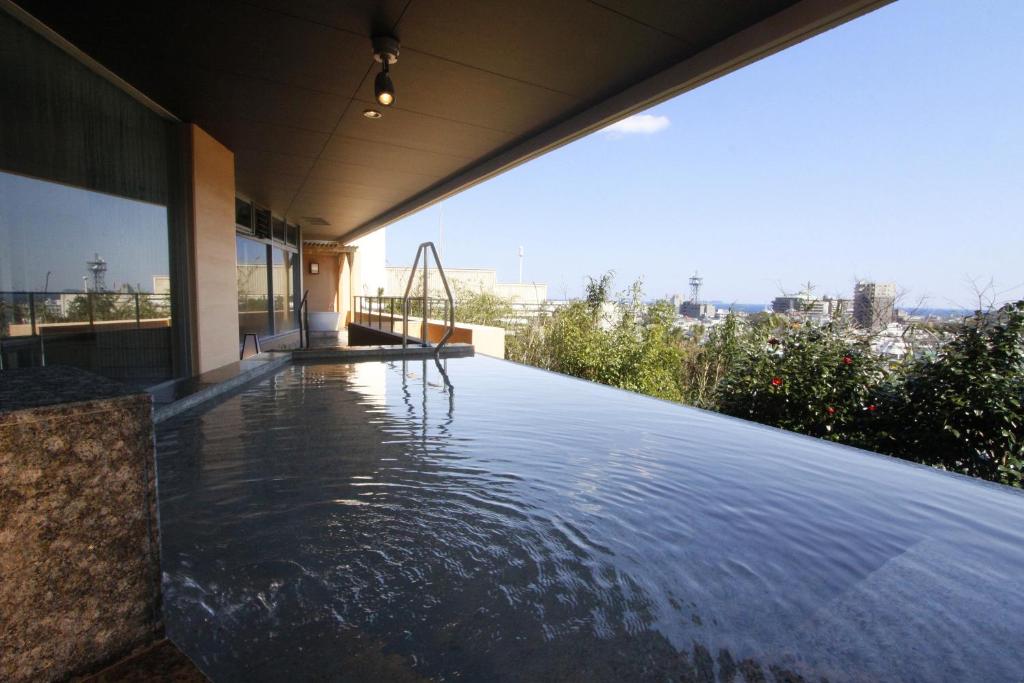
Ito Hotel Juraku offers spacious, non-smoking rooms with balconies and sweeping Pacific Ocean views, ranging from family-friendly multi-bed rooms to premium suites with private open-air hot spring baths. Guests can also enjoy several sea-view public baths supplied by seven hot spring sources, along with saunas, waterfall baths, lying baths, and cold-water pools.
What to Do in Ito
Bathe at a Public Sentō — Don’t miss this. Pick any of Ito’s ten public bathhouses and do what the locals do. The water is warm, the people are friendly, and ¥250 is about as good as value gets in Japan.
Walk the Jogasaki Coast Trail — The coastal cliff path south of Ito winds through volcanic rock formations for about 9 kilometres, with the ocean crashing below and views stretching to Izu Oshima Island. The suspension bridge at Kadowakizaki is the trail’s most dramatic point. Allow 3–4 hours for the full walk.
Take the Ropeway to Mt. Omuro’s Crater Rim — A short ropeway ride lifts you to the rim of this 4,000-year-old volcanic cinder cone, where a circular walk gives you 360-degree views across Izu. In winter, the bowl of the crater is used as an archery ground for a traditional fire festival.
Visit the Ikeda 20th Century Art Museum — Set on the Jogasaki Coast with sea views, this intimate museum houses a personal collection of works by Picasso, Dalí, Chagall, and Matisse — an unexpectedly world-class collection in a quiet corner of the peninsula.
Explore Tokaikan — This preserved onsen ryokan, built in 1928, is no longer open for overnight stays but opens its historic baths to visitors on weekends and holidays. Walking through its wooden corridors is a step back in time.
Getting to Ito from Tokyo
The Limited Express Odoriko or Saphir Odoriko from Tokyo Station runs directly to Ito in approximately 100 minutes, costing around ¥4,000. This is the most comfortable and direct option. The Japan Rail Pass covers this journey in full.
Alternatively, take the Shinkansen to Atami (40–50 minutes from Tokyo or ~35 minutes from Shinagawa), then transfer to the JR Ito Line for the 25-minute local train ride to Ito (~¥330). From Shinjuku, the Limited Express Odoriko departs several times daily and is the simplest single-train option.
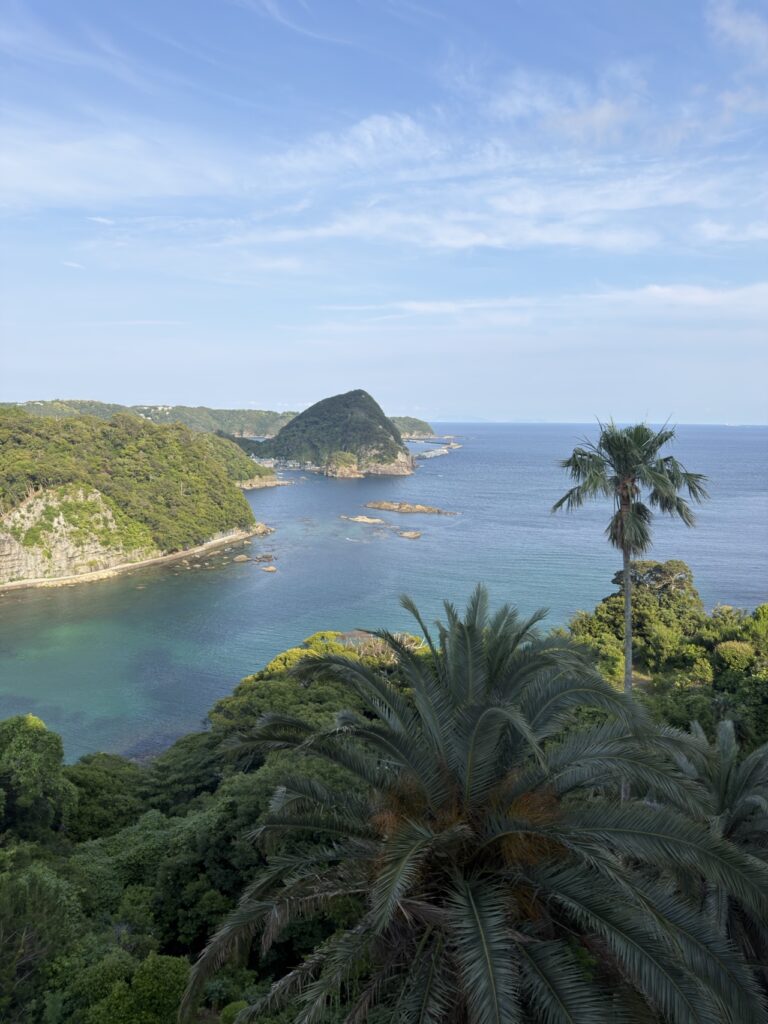
Shimoda — History, Beaches, and the End of the Line
Why It’s Special
Shimoda sits at the southern tip of the Izu Peninsula, and getting there feels like a genuine journey. By the time you arrive, the landscape has shifted, the coastline is wilder, the pace slower, and the light somehow different from the rest of the peninsula. This is Izu at its most elemental.
The town carries an extraordinary weight of history. In 1854, Commodore Matthew Perry’s “Black Ships” dropped anchor in Shimoda Bay, and the Convention of Kanagawa was signed here, the treaty that ended Japan’s centuries of self-imposed isolation and opened the country to the world. The consequences of what happened in this small harbour town were world-historical. Walking Perry Road, a willow-lined canal street where the American delegation once walked, knowing what it set in motion, is quietly profound.
The town’s beaches rival anything in Japan. Shirahama Beach, a short bus ride from the centre, is a sweeping crescent of fine white sand and vivid blue water that genuinely takes your breath away. Tatadohama and Kisami Ohama are equally beautiful and far less crowded.
Shimoda’s hot springs are mostly soft, gentle simple springs, low in minerals but wonderfully soothing for long soaks.
Where to Stay
Satoyama No Bettei Shimoda Central Hotel
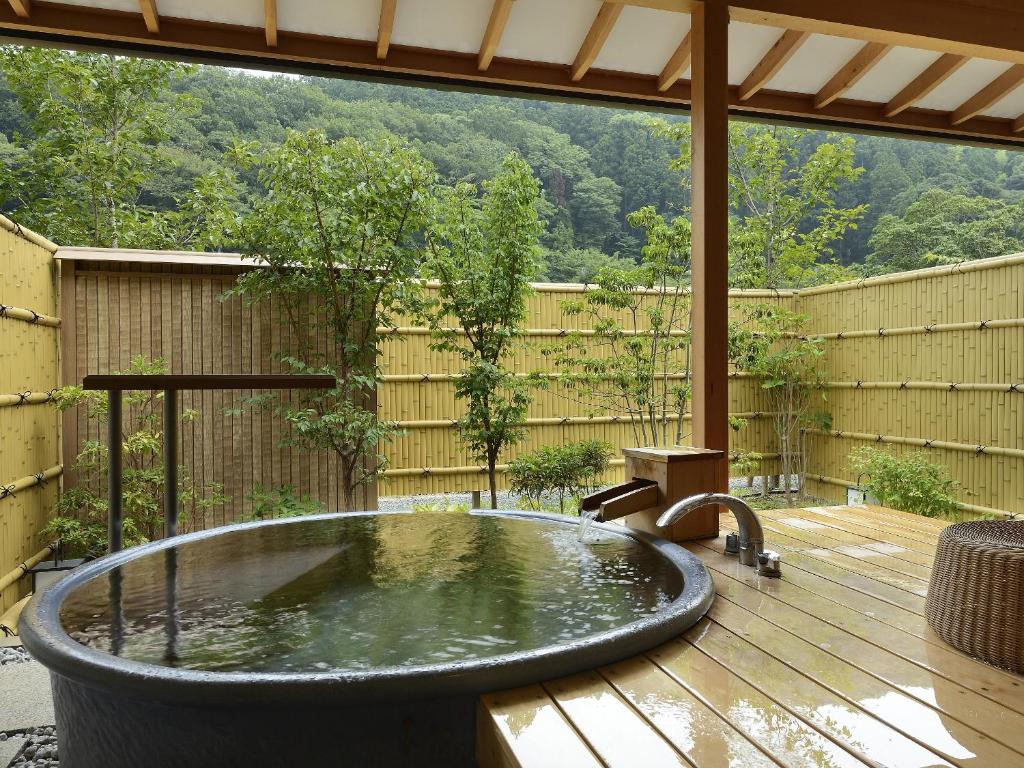
Satoyama no Bettei Shimoda Central Hotel offers spacious Japanese, Western, and Japanese-Western rooms in a peaceful countryside setting, with selected rooms featuring private open-air baths. Guests can also enjoy naturally sourced hot spring water in large indoor and outdoor baths, along with reservable private baths for additional privacy and tattoo-friendly bathing.
Hotel Izukyu
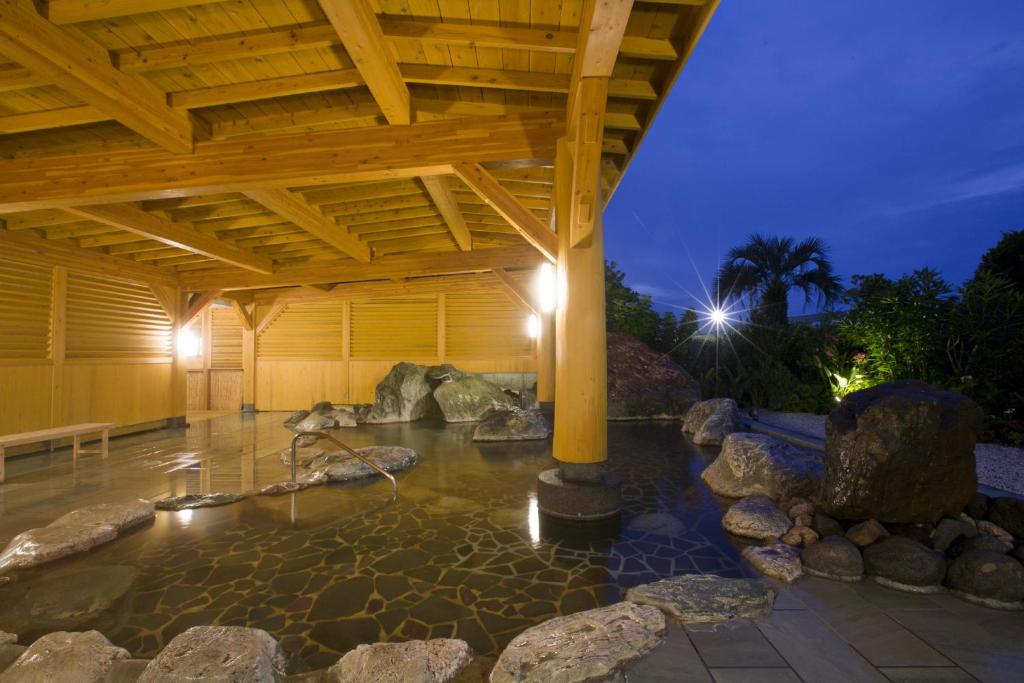
Hotel Izukyu offers spacious Japanese and Western-style rooms, all facing the Pacific Ocean and just steps from Shirahama Beach. Guests can enjoy two distinct hot spring sources in the large indoor bath, jet bath, and sea-breeze open-air bath, with a reservable private bath available for greater privacy and tattoo-friendly bathing.
Hotel Yamadaya
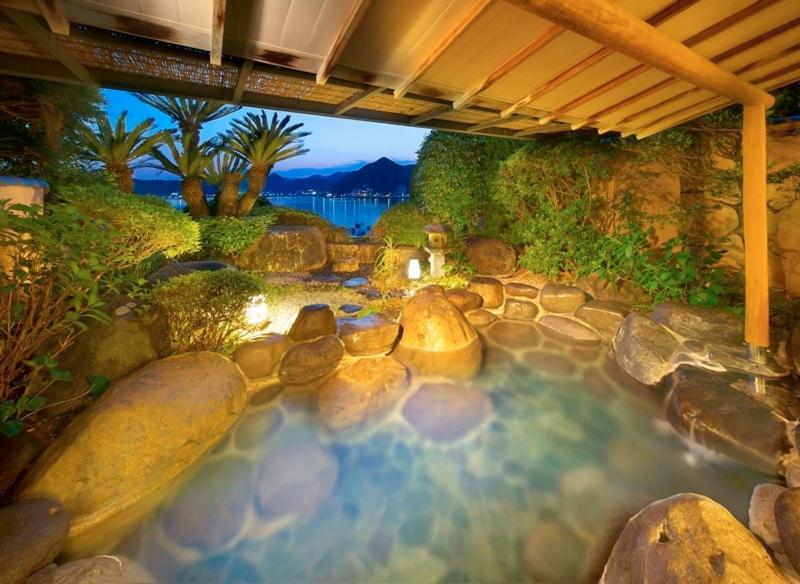
Hotel Yamadaya offers 24 traditional Japanese-style rooms with tatami floors and sweeping views of Shimoda Bay, especially beautiful at sunset. Guests can relax in natural alkaline hot springs, including scenic indoor and open-air baths overlooking the bay, or reserve the complimentary private hinoki bath for a quieter, tattoo-friendly experience.
What to Do in Shimoda
Walk Perry Road — This short, atmospheric street along the canal is where history was made. Small cafes, boutiques, and the Ryosenji Temple (where the Convention of Kanagawa was signed) make this an easy and rewarding half-day walk.
Swim at Shirahama Beach — One of the finest beaches in Japan, with white sand and startlingly clear water. The swimming season runs July to August, but the beach is spectacular to visit at any time of year.
Visit Cape Irozaki — The southernmost point of the Izu Peninsula, Cape Irozaki is a wild clifftop promontory covered in wild narcissus flowers in winter and surrounded by dramatic sea views year-round. Boat tours from the cape pass into sea caves along the coastline.
Take the Izukyu Shimoda Ropeway — A short cable car ride to the top of Mt. Nesugata gives panoramic views over the bay and town below. Simple, easy, and very beautiful.
Explore the Black Ship Festival (if visiting in May) — Held each May to commemorate Perry’s arrival, this is one of the liveliest local festivals on the entire peninsula, with parades, traditional performances, and the town in full celebratory mode.
Getting to Shimoda from Tokyo
The Limited Express Odoriko from Tokyo Station runs directly to Izukyu-Shimoda Station in approximately 2 hours 30 minutes, costing around ¥6,500. The premium Saphir Odoriko (Green Car only, advance reservation required) offers a more comfortable version of the same journey at a higher price.
Note that between Ito and Shimoda, trains run on the Izukyu Railway, a private line, which means Japan Rail Pass holders pay a supplement of ¥2,660 for this section. The JR Tokyo Wide Pass (¥15,000 for 3 days) is an exception: it covers the full journey to Shimoda without surcharge, making it excellent value for a multi-day trip down the peninsula. From Shinagawa, the same Odoriko service departs and saves a few minutes compared to boarding at Tokyo Station.
Izu Nagaoka Onsen — Understated Elegance in the Heart of the Peninsula
Why It’s Special
Izu Nagaoka Onsen sits in the Izunokuni basin in the geographic heart of the peninsula, and it occupies a very particular place in Izu’s onsen landscape: less famous than Atami, less visited than Shuzenji, and precisely because of that, among the most rewarding places on the entire peninsula to spend a night.
The town has been an important stop for travellers for centuries, positioned between the gateway cities of the north coast and the wilder south, and its ryokan have developed a culture of hospitality that is quietly exceptional. The onsen waters here are rich in sodium chloride, deeply warming and wonderfully softening on the skin, and the town’s baths tend towards the generous and unhurried.
The views from Izu Nagaoka are among the finest in all of Izu. On clear days, Mt. Fuji rises above the hills to the north in a scene of absolute Japanese classicism, the kind of view you feel almost unworthy of. Koganezaki Park and the hills above town offer elevated vantage points where the mountain floats above the landscape like something from a Hiroshige woodblock print.
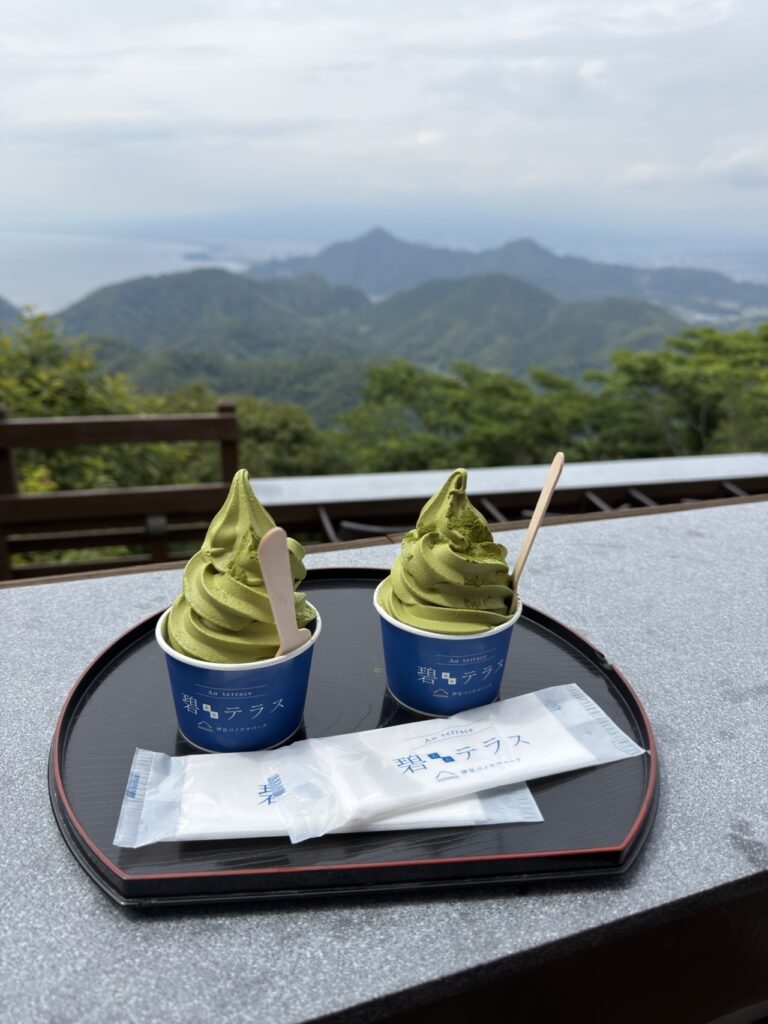
You won’t want to miss heading to the AO Terrace just opened in 2025. You need to take the ropeway all the way to the top, where you can enjoy lounges with Mount Fuji views, as well as matcha desserts, private gazebos and forested walks.
Izu Nagaoka is also the ideal base for exploring Shuzenji, just 10 minutes away by bus. Many visitors use Izu Nagaoka as their central hub, heading out each day and returning each evening to a long soak and a quiet dinner.
Where to Stay
Yoritomo-No-Yu Honjin
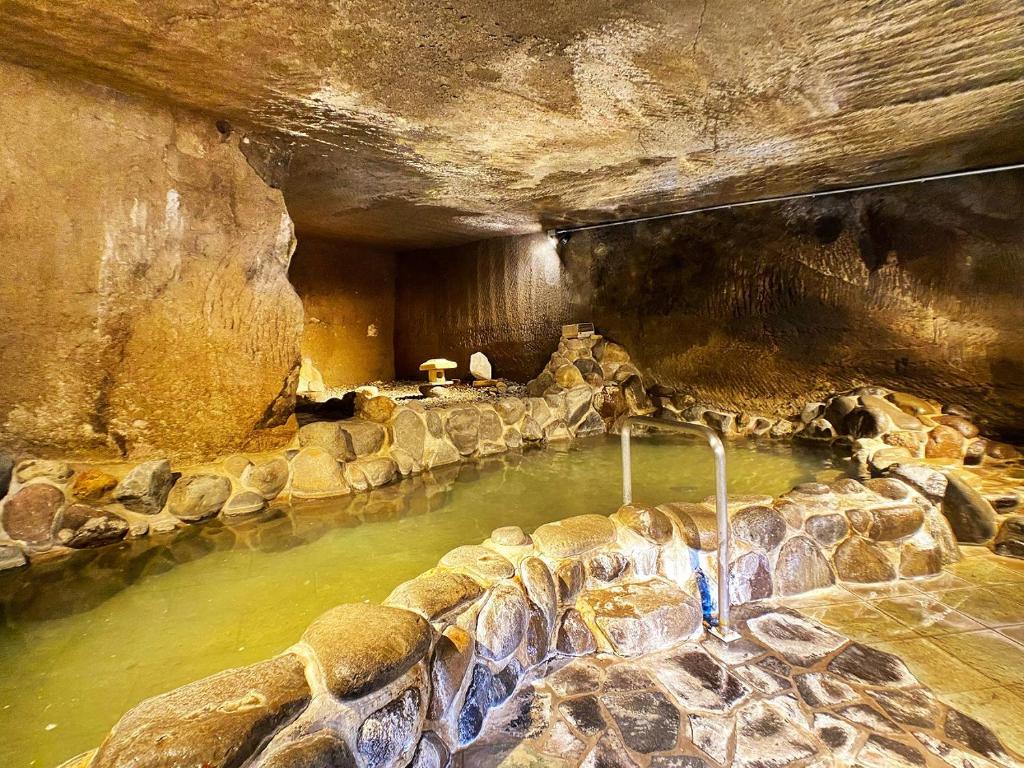
Yoritomo-no-Yu Honjin is an intimate historic ryokan with 15 traditional tatami rooms overlooking Mount Genji and its bamboo-covered slopes. Guests can enjoy four distinctive hot spring baths, including rock, hinoki cypress, cave, and open-air baths. The cave and outdoor baths may be reserved privately at no extra charge, providing a comfortable option for couples, families, and guests with tattoos.
Fugaku Hanabusa

This riverside ryokan offers spacious Japanese and Japanese-Western rooms, all overlooking the Kano River and Mount Fuji. Many rooms feature private, source-flowing open-air or semi-open-air hot spring baths, while other guests can enjoy the large public baths and three complimentary private outdoor baths. The soft alkaline spring water and spectacular mountain views create a peaceful, highly private onsen experience.
Kona Stay Izu Nagaoka

Kona Stay Izunagaoka offers relaxed Japanese-Western private rooms with comfortable beds, as well as dormitory accommodation for groups and budget-conscious travelers. Guests can enjoy source-fed alkaline hot spring water in two shared baths that alternate by gender, with morning and evening bathing hours. Tattoos are permitted when fully covered with foundation tape or a similar covering.
What to Do in Izu Nagaoka
Climb Katsuragi-yama for Views of Mt. Fuji — A ropeway takes you up to a viewpoint where, on clear mornings, Mt. Fuji rises perfectly above the surrounding hills. This is one of the most spectacular Fuji views accessible from the Izu Peninsula.
Day Trip to Shuzenji — Izu Nagaoka sits just 10 minutes by bus or taxi from Shuzenji onsen town. Walk the river promenade, visit the temple, stroll the bamboo forest, and return to your ryokan in the evening — the perfect day.
Visit Nirayama Reverberatory Furnaces — A UNESCO World Heritage Site, these 19th-century iron-smelting furnaces were built in the 1850s as Japan rushed to modernise its military capabilities ahead of the Western powers’ arrival. An extraordinary piece of industrial history in a quiet riverside setting.
Soak in the Onsen — This is primarily what Izu Nagaoka is for. The sodium chloride springs here are among the most restorative on the entire peninsula. Take your time.
Explore Izunokuni Panorama Park — Take the ropeway to the summit of Katsuragi-yama and walk the gentle trails through the park for views stretching across the entire central Izu basin.
Getting to Izu Nagaoka from Tokyo
Take the Tokaido Shinkansen from Tokyo Station or Shinagawa to Mishima (around 45–55 minutes, approximately ¥4,500), then transfer to the Izuhakone Railway for the 20-minute journey to Izu-Nagaoka Station (¥430). The Izuhakone portion is not covered by the Japan Rail Pass, but the Shinkansen section is.
Alternatively, the Limited Express Odoriko from Tokyo Station runs directly to Shuzenji (which shares the same Izuhakone Line), from where Izu Nagaoka is one stop back, around 2 hours total from Tokyo for approximately ¥4,500. From Shinjuku, the same Odoriko service departs several times per day and takes a similar length of time.
A Few Final Tips Before You Go
Rent a car if you can — Public transport in Izu is good, but a rental car — picked up at Atami or Mishima — opens up the west coast, the mountain roads, and the connections between areas in a way that trains simply can’t match.
Book ryokan in advance — The best rooms at the most sought-after ryokan fill up weeks ahead, particularly on weekends and during the cherry blossom season (February–March in Kawazu, late March–early April elsewhere).
Onsen etiquette — Tattoos are not permitted at most traditional onsen so please make sure to check the rules in advance. Always wash thoroughly before entering the bath. Towels should not touch the water. Many ryokan provide yukata robes for wearing around the premises. This is part of the experience.
Stay at least two nights — One night in Izu is better than none, but two nights in a single area, or one night each in two different towns, is when the peninsula really reveals itself.
Izu has a way of getting under your skin. You arrive thinking you’ll spend a weekend, and you find yourself planning a return before you’ve even left. I am now going back almost every month and I’m still amazed by the riches I continue to discover.
Izu Peninsula – FAQ
Is the Izu Peninsula worth it?
The Izu Peninsula is absolutely worth visiting, and for most travelers coming from Tokyo, it’s one of the best decisions they’ll make in Japan. Within two hours of the city you’ll find wild Pacific coastlines, natural hot springs, ancient cedar forests, and some of the country’s finest ryokan. In late January and February, Kawazu draws visitors from across Japan for its famous early-blooming cherry blossoms, weeks before the rest of the country sees a single petal.
What makes Izu genuinely special is how uncrowded it remains. Most visitors to Japan rush straight past it on the Shinkansen on their way to Kyoto, which means the peninsula still feels like a place locals actually use, quiet onsen towns, public bathhouses charging ¥250 a soak, fishing harbours that send boats out at dawn. If you’ve been to Hakone and found it too busy, Izu is the answer.
Can you swim in Izu Peninsula?
Yes, you can swim in Izu Peninsula, and the beaches here are among the finest in Japan. Shirahama Beach in Shimoda, a sweeping crescent of white sand and vivid blue water at the southern tip of the peninsula, is genuinely world-class. Further north, the Jogasaki Coast near Ito offers dramatic volcanic rock formations and hidden coves. The main swimming season runs from July through August, when the water is warm and calm. Outside those months the beaches are still beautiful to walk, just not ideal for swimming. You will also find that many come here to surf.
Is it easy to drive in Izu Peninsula?
Given how uncrowded Izu is, driving here is pure joy. An expressway carries you deep into the peninsula from Tokyo in under two hours, and once you exit, well-maintained coastal roads wind along the Pacific with almost no traffic.
While you don’t strictly need a car in Izu Peninsula, having one transforms the experience. The main towns — Atami, Ito, Shuzenji, Shimoda — are all reachable by train from Tokyo, and for a straightforward onsen weekend that’s perfectly fine. But the peninsula’s real magic is in between: coastal roads that hug dramatic cliffs, hidden beaches with no signposts, mountain passes through cedar forest that no train gets near.
What food is the Izu Peninsula known for?
The Izu Peninsula is known for its seafood, and for good reason, the Pacific waters surrounding the peninsula produce some of the finest fish and shellfish in Japan. Kinmedai (splendid alfonsino), sazae (turban shell), and fresh wasabi grown in the mountain streams of the interior are the dishes most closely associated with Izu. In Shimoda and Ito, harbourside restaurants serve seafood caught the same morning, and most ryokan kaiseki dinners are built around whatever came off the boats that day.
My recommendation is to head to Aoki, a local chain with branches across the peninsula, takes its fresh fish counter seriously. The selection changes daily based on the catch, and the quality is outstanding, sashimi platters, grilled fish, and local specialities that would cost three times as much in Tokyo. If you’re driving around Izu, stopping at an Aoki and picking up lunch is one of the genuine insider moves on the peninsula.
Can you see Fuji from Izu?
Yes, you can see Mount Fuji from the Izu Peninsula, and on a clear day the views are extraordinary. The best spots are on the western coast and in the central highlands, where the mountain rises dramatically above Suruga Bay in one of Japan’s most iconic scenes.
The most reliable viewpoint is Izunokuni Panorama Park, where a short ropeway ride takes you up to the Ao Terrace on a clear morning in winter, Fuji fills the horizon above the surrounding hills. Mishima Skywalk, Japan’s longest pedestrian suspension bridge at 400 metres long, is another spectacular spot near the northern gateway to the peninsula. Further south, the west coast village of Heda and the hot spring town of Dogashima both offer sweeping views across the bay. Dogashima is one of the rare places in Japan where you can watch Fuji while soaking in an open-air onsen.
